June 1389 – 1390
After Kosovo, 1389
Bayezid takes command when his father dies and is proclaimed sultan on the field. He has his brother Yakub, who commanded the other wing, called to the sultan’s tent and strangled, which leaves him the only heir. Murad’s internal organs are buried on Kosovo field, where Bayezid builds a tomb, the Meşhed-i Hüdavendigâr. His body is taken to Bursa and buried in his complex at Çekirge. Lazar is buried in the Church of the Ascension in Priština.
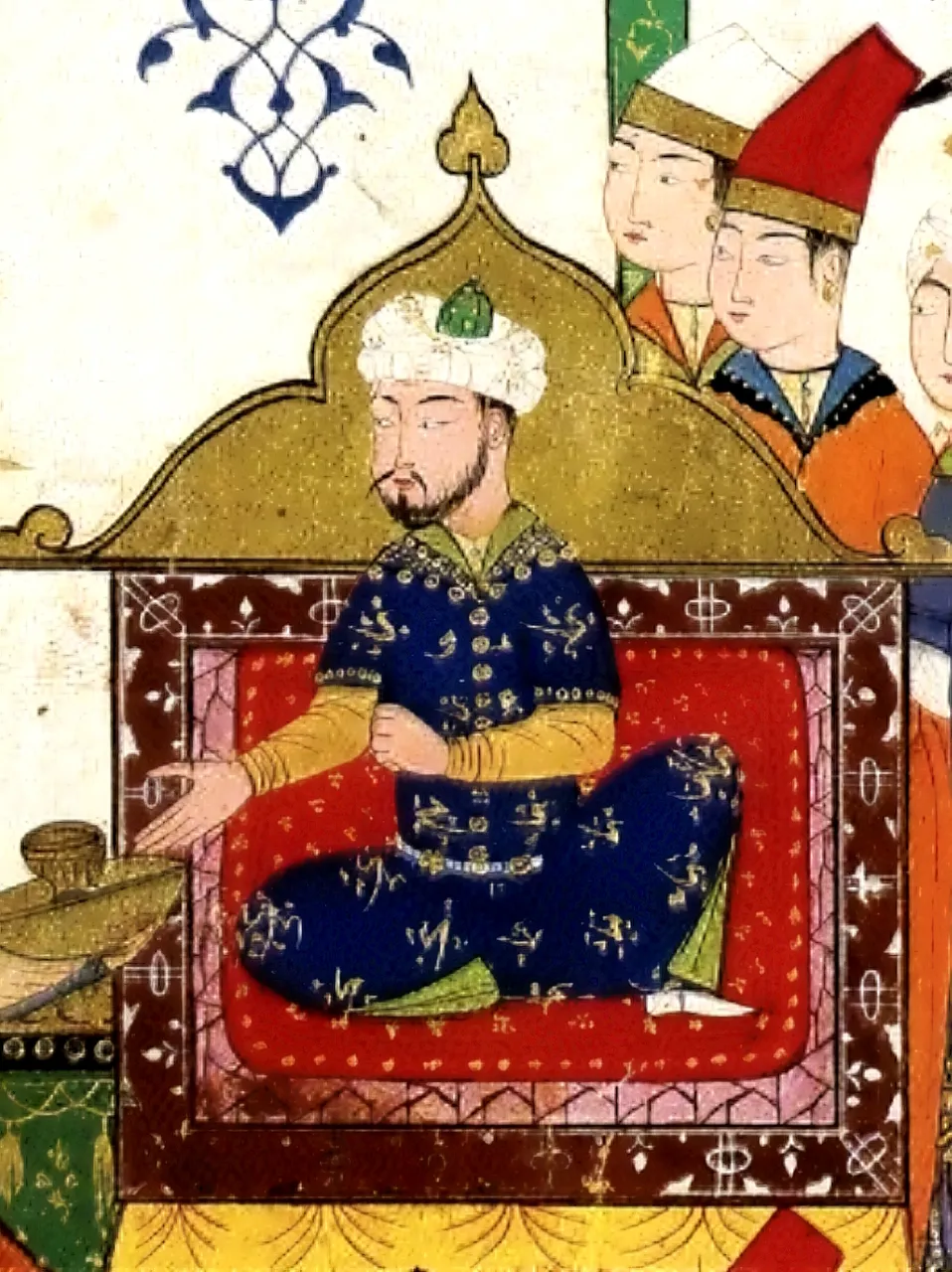 The accession of Bayezid I in a manuscript of Ahmedî’s İskendernâme, about 1460Wikimedia Commons, unknown Ottoman painter, Public domain (The accession of Sultan Bayezid I (enthroned). Ahmedî, Iskendername, VBNM, circa 1460., Cod. Or. XC (57), y. 240b.jpg)
The Ottoman army withdraws from Kosovo. Informed by Vlatko Vuković, King Tvrtko announces a victory over the Turks in a letter to Trogir on 1 August, and Florence replies with congratulations in October. Historians judge the battle a draw, but the losses fall much harder on Serbia, which brought almost all its fighting men to Kosovo, while the Ottomans can draw on fresh troops from Anatolia.
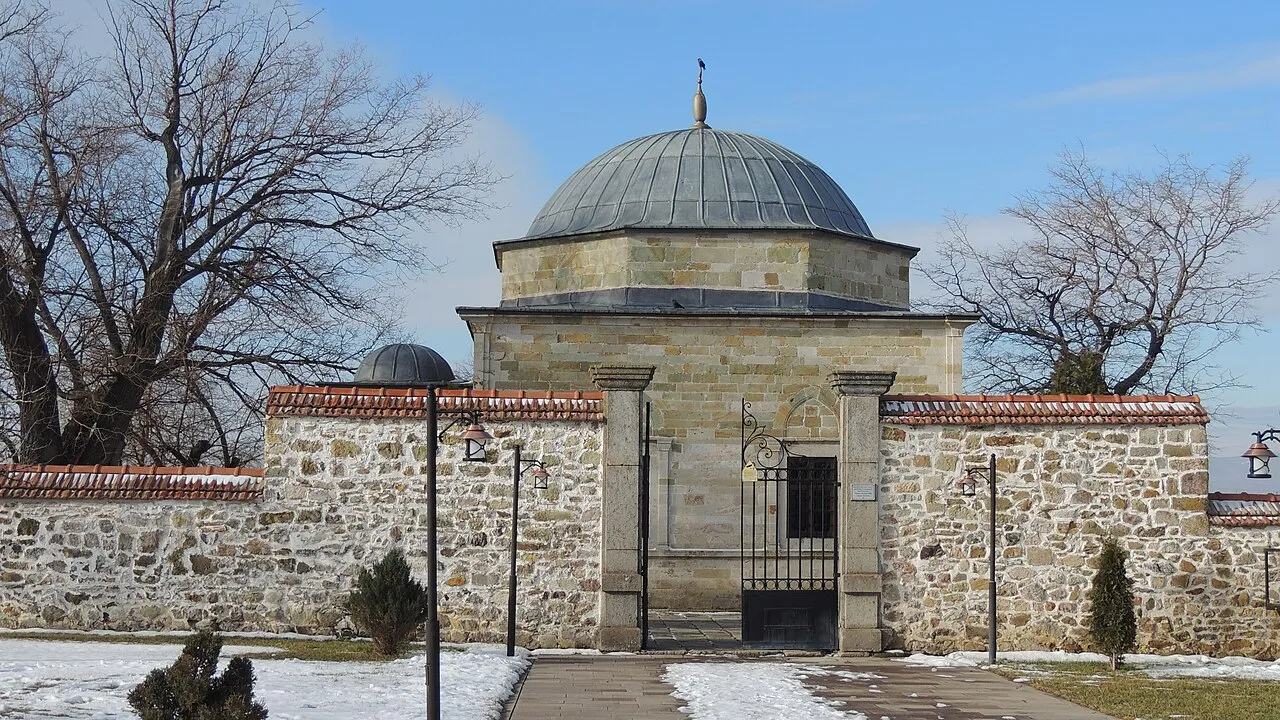 The Meşhed-i Hüdavendigâr, the tomb of Murad I on Kosovo fieldWikimedia Commons, IsmailGagica, CC BY-SA 4.0 (Tyrbaj e sulltan muratit DSCN0872.JPG)
Lazar’s son Stefan Lazarević is still a minor, and his mother Milica rules for him. King Sigismund of Hungary attacks Moravian Serbia from the north in November 1389. When Ottoman troops reach its borders in the summer of 1390, Milica accepts Ottoman overlordship, and her daughter Olivera marries Bayezid. Some accounts date the submission to late 1389. Vuk Branković refuses to submit and turns to Sigismund. The Ottoman state reaches from Ankara and Akşehir in Anatolia to Thessalonica, Sofia and Niš, and the Byzantine emperor, the Bulgarian tsars and the Serbian lords of Macedonia are its vassals.
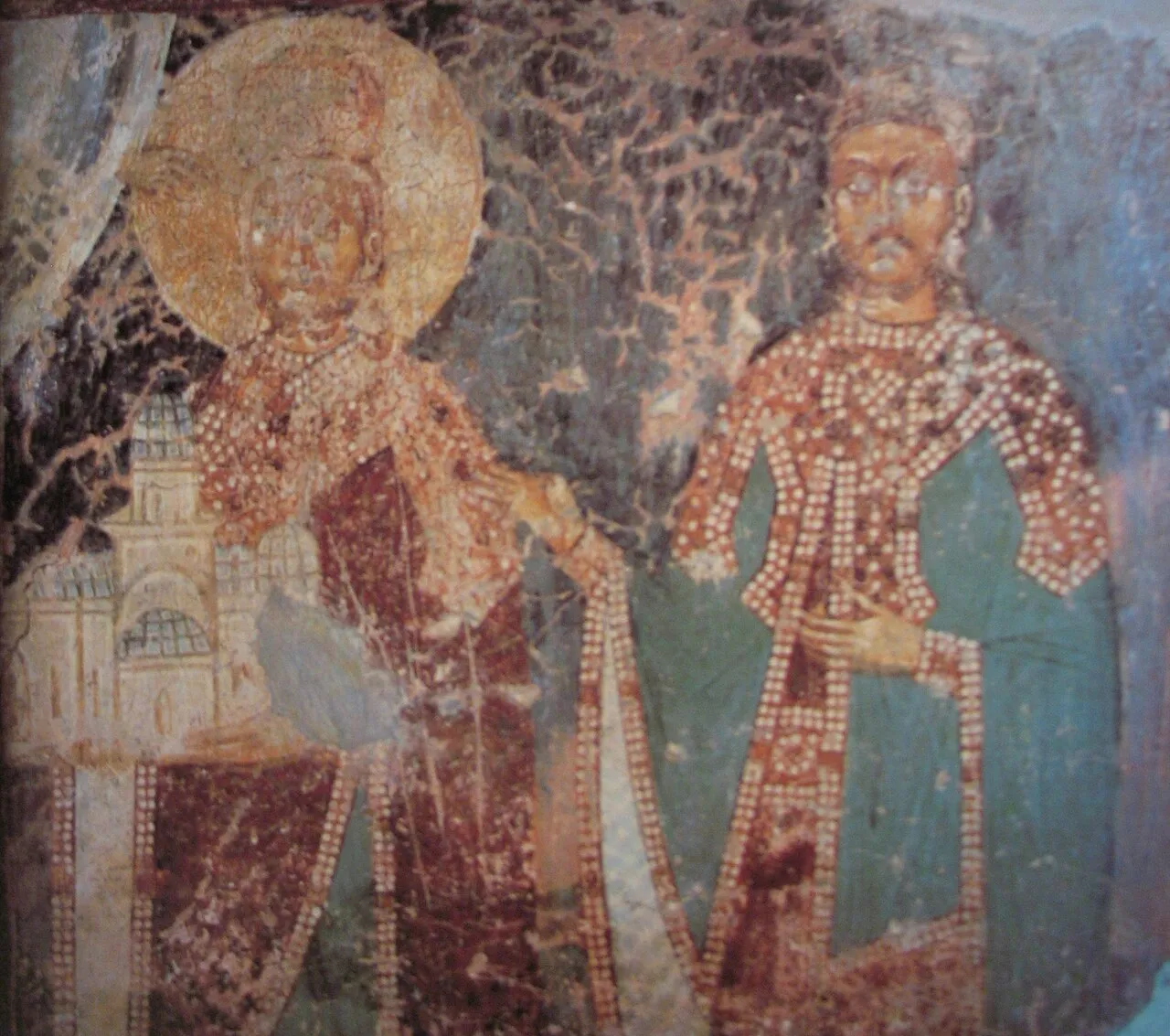 Stefan Lazarević and his brother Vuk in a fresco at Rudenica, 1402–1405Wikimedia Commons, unknown painter, Public domain (Stefan i Vuk Rudenica (1402-1405).jpg)
Sources
- John V. A. Fine, The Late Medieval Balkans (1987), 410–414.
- Noel Malcolm, Kosovo: A Short History (1998).
- Colin Imber, The Ottoman Empire, 1300–1481 (1990).
- Rade Mihaljčić, The Battle of Kosovo in History and in Popular Tradition (1989).
Prev: Bayezid’s counterattack