1361 or 1369
Adrianople, 1361 or 1369
By Ottoman tradition Lala Şahin defeats the governor (tekfur) of Adrianople at Sazlıdere, south-east of the city, and the governor escapes at night by boat down the Maritsa to Ainos (Enez). The next morning the townspeople surrender on condition that they may stay and keep their goods. A Byzantine account says instead that most of the people, the metropolitan among them, are carried off as captives.
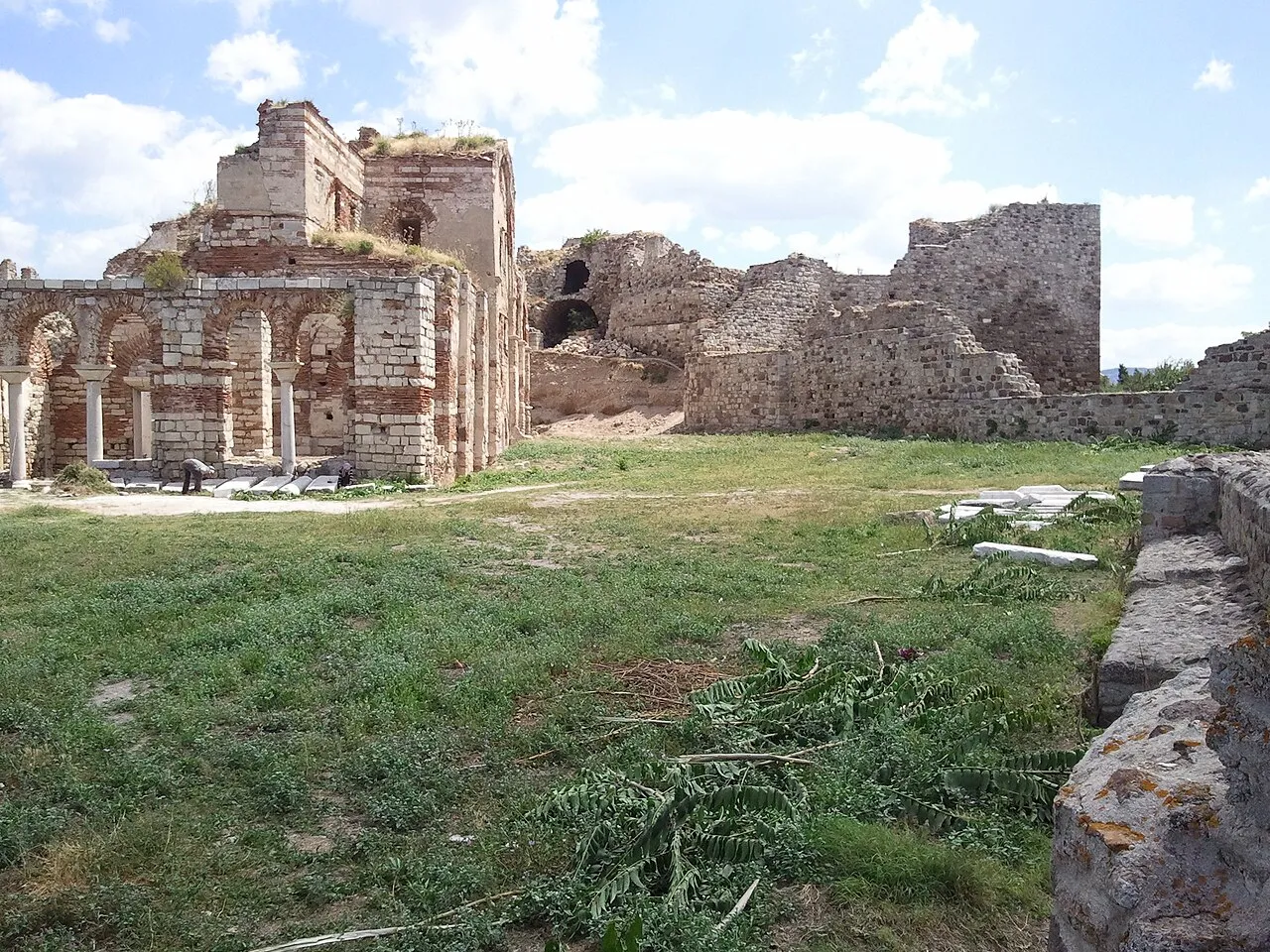 The castle of Enez, the Byzantine Ainos, at the mouth of the MaritsaWikimedia Commons, Aziz Akbiyik, CC BY-SA 3.0 (Enez Kalesi - Ainos Castle - panoramio.jpg)
The date is disputed. Ottoman tradition, and historians who follow it such as Halil İnalcık, place the conquest in 1361 or 1362, as a chronicle records a solar eclipse in the year of the fall and one took place on 5 May 1361. Elizabeth Zachariadou, citing a poem that shows the city still Byzantine at Christmas 1366 and the Byzantine short chronicles, dates it to 1369, and most historians now follow her. Some think the city fell to independent Turkish frontier bands rather than to Murad’s army.
Adrianople, called Edirne by the Turks, becomes the seat of Lala Şahin as the first beylerbey of Rumelia and the main Ottoman base in the Balkans, while Murad’s court stays at Bursa and Didymoteicho. Turkmen from Anatolia cross to Europe in growing numbers and settle the plains of Thrace.
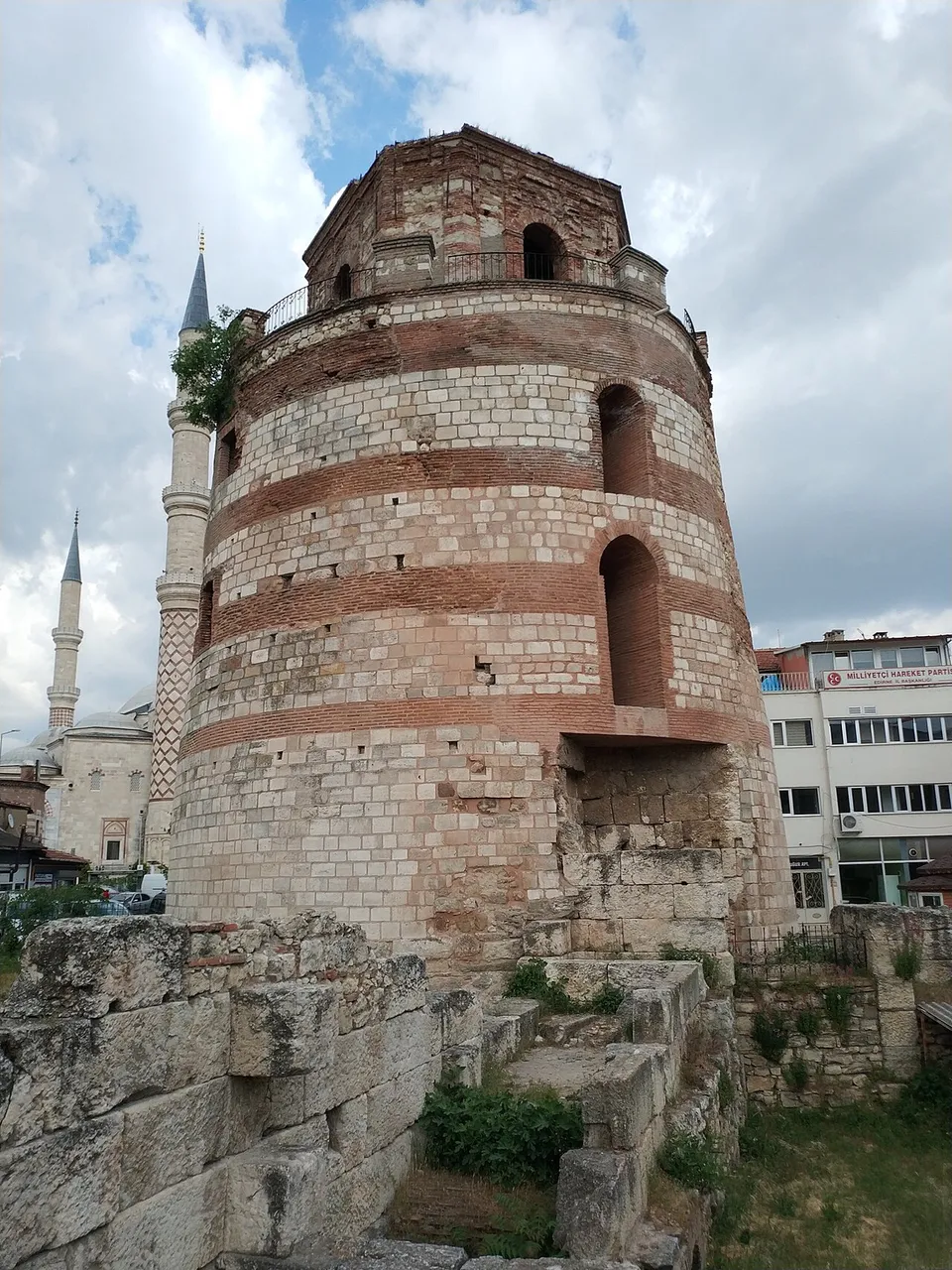 The Macedonian Tower, a tower of the Roman and Byzantine walls of Adrianople, in EdirneWikimedia Commons, Balkanique, CC BY-SA 4.0 (Macedonian Tower in Edirne.jpg)
Sources
- Halil İnalcık, “Edirne’nin Fethi (1361)”, in Edirne: Edirne’nin 600. Fetih Yıldönümü Armağan Kitabı (1965).
- Elizabeth A. Zachariadou, “The Conquest of Adrianople by the Turks”, Studi Veneziani 12 (1970).
- John V. A. Fine, The Late Medieval Balkans (1987).
Prev: Murad becomes sultan, 1357–1362Next: Philippopolis and Sırpsındığı, 1363–1365