December 1437 – 1438
The raid into Transylvania, 1438
Emperor Sigismund dies on 9 December 1437, and his son-in-law Albert of Habsburg is elected King of Hungary nine days later. Sigismund’s death and a peasant uprising in Transylvania weaken Hungary, and Vlad II of Wallachia goes to Edirne, swears fealty to Murad and promises to pay a yearly tribute and to join the sultan’s campaigns. Murad gathers his army at Vidin, and King Albert writes to Vlad, ordering him to protect Transylvania.
In the summer of 1438 Vlad joins Murad in Wallachia and serves him as a guide. The Ottoman and Wallachian troops break into Hungary at Orșova, rout the Vlach knez Cândea near Hațeg and march along the Mureș, taking Câlnic and Sebeș (Mühlbach). Vlad persuades the leaders of Sebeș to surrender without a fight by promising to protect their property if they come with him to Wallachia. The army besieges Sibiu (Hermannstadt) for eight days and loses many men to the resistance of the townspeople, and then it burns the outskirts of Brașov (Kronstadt).
After 45 days in Hungary the army leaves with its plunder and more than 30,000 captives, and it returns over the Carpathians into Wallachia and by Giurgiu to Edirne. Among the captives taken at Sebeș is a student of fifteen or sixteen, Georgius de Hungaria, known as the Captive of Mühlbach. He lives for about twenty years as a slave among the Ottomans, and his treatise on their customs and their faith is printed about 1480.
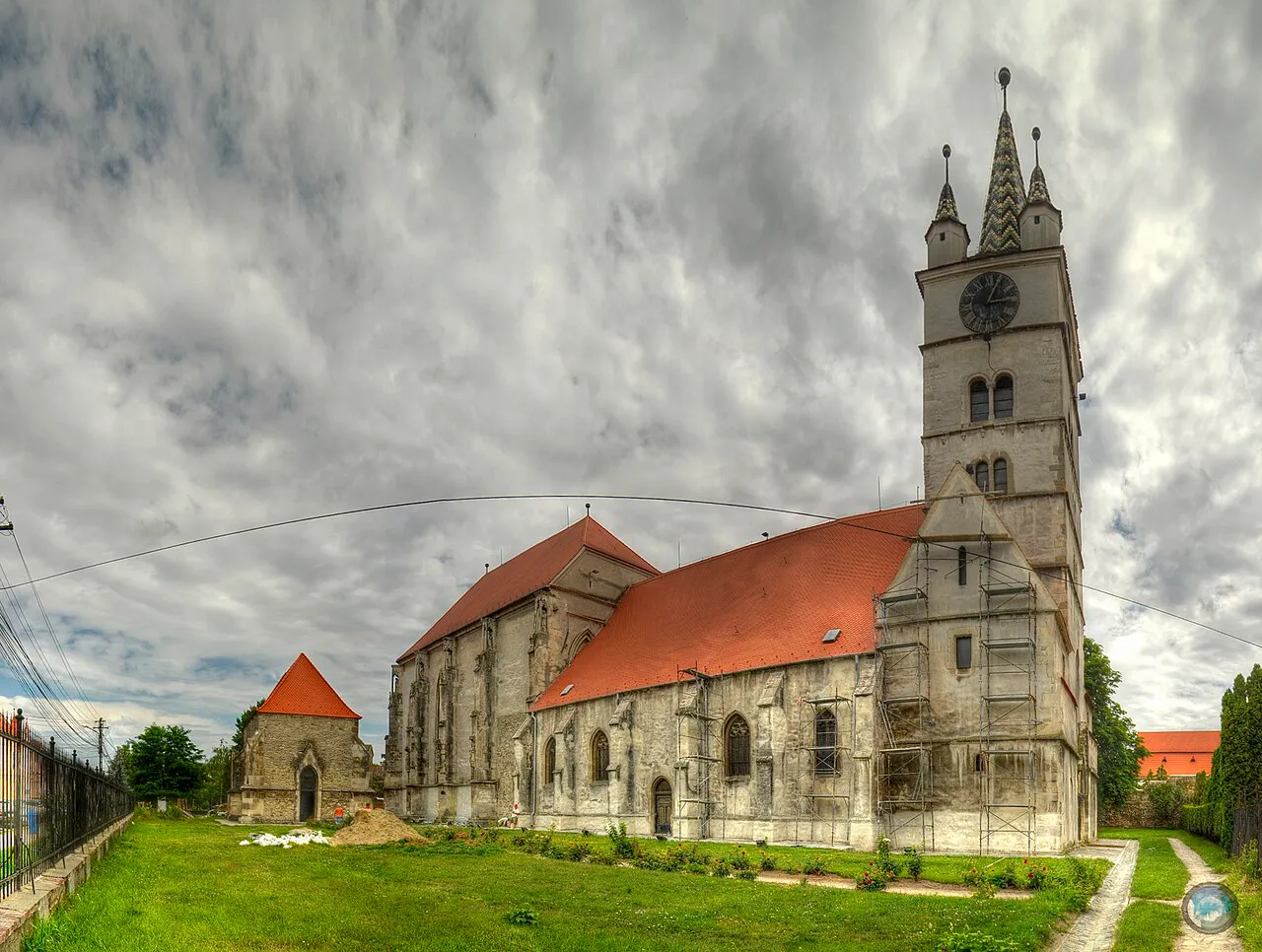 The Evangelical church of Sebeș, the Saxon town of MühlbachWikimedia Commons, Levente Nuber, CC BY-SA 4.0 (Ansamblul bisericii evanghelice din Sebeș 4.jpg)
Sources
- Georgius de Hungaria, Tractatus de moribus, condictionibus et nequicia Turcorum (about 1480).
- Mehmed Neşri, Kitâb-ı Cihan-nümâ (late 15th century).
- Kurt W. Treptow, Vlad III Dracula: The Life and Times of the Historical Dracula (2000).
- John Jefferson, The Holy Wars of King Wladislas and Sultan Murad: The Ottoman-Christian Conflict from 1438–1444 (2012).
- Pál Engel, The Realm of St Stephen: A History of Medieval Hungary, 895–1526 (2001).
Prev: Karaman, 1433–1437Next: Smederevo, 1439