May 1423 – February 1424
Thessalonica goes to Venice, 1423–1424
Turahan Bey, governor of Thessaly from early 1423, leads his horsemen south into the Morea. On 21 or 22 May 1423 they break through the Hexamilion, the wall across the Isthmus of Corinth that Manuel II had repaired in 1415, and raid the peninsula unopposed. They attack Mistra, Leontari, Gardiki and other Byzantine towns before they turn back.
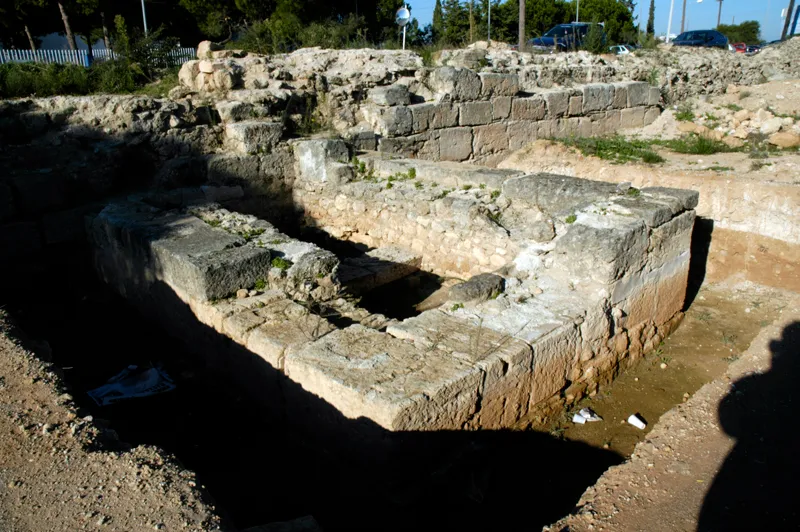 Remains of the Hexamilion, the wall across the Isthmus of CorinthWikimedia Commons, Nefasdicere, CC BY 2.5 (Hexamilion-1.jpg)
Thessalonica has been under Ottoman blockade since June 1422, and when the Ottomans offer peace if Despot Andronikos leaves the city, its people riot in favour of terms. Persuaded by a group of nobles, Andronikos offers the city to Venice on condition that its people keep their property, customs and church. The Great Council of Venice accepts on 7 July 1423 and has ships made ready at Negroponte and its other colonies. On 14 September six Venetian galleys and one Byzantine galley sail into the harbour, and the people greet them as saviours.
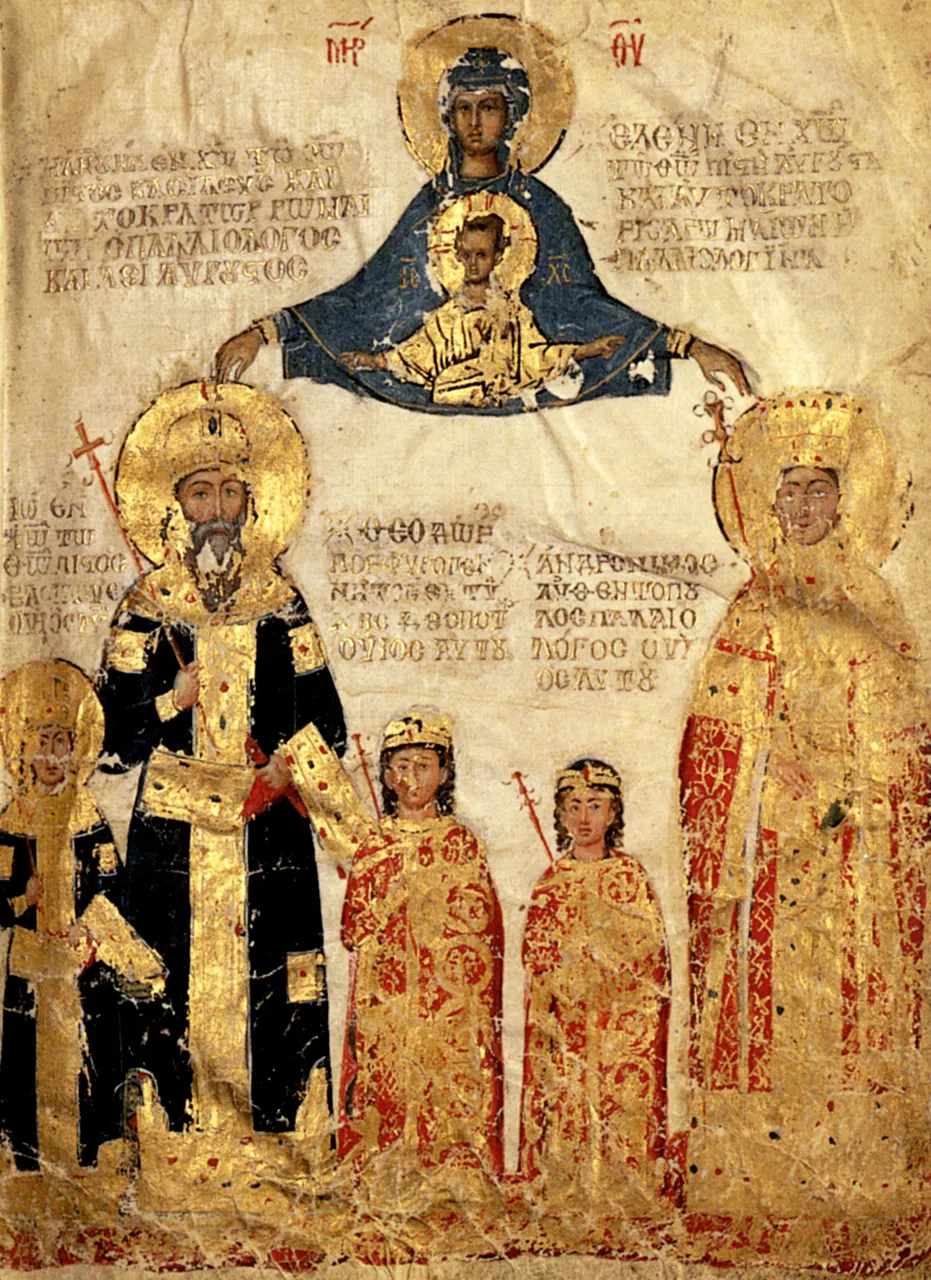 Manuel II Palaiologos with his wife Helena and three of their sons, in a manuscript of about 1404, LouvreWikimedia Commons, unknown illuminator, Public domain (Manuel II Helena sons.JPG)
Murad does not accept the handover, and probably in February 1424 he has a Venetian envoy thrown into prison. Doukas has him say that the city is his inheritance, won from the Byzantines by his grandfather Bayezid. In the same month Byzantium makes peace with Murad: it gives back the towns on the Black Sea and the Sea of Marmara that it had gained in 1403, except Mesembria and Selymbria, and pays a yearly tribute of 300,000 akçe. The empire, again an Ottoman vassal, holds little more than Constantinople, these two towns and the Morea.
Sources
- Doukas, Historia Turco-Byzantina (about 1462).
- George Sphrantzes, Chronicon minus (about 1477).
- Franz Babinger, “Turakhān Beg”, in Encyclopaedia of Islam, 1st ed., vol. 8 (1936), 876–878.
- Nevra Necipoğlu, Byzantium between the Ottomans and the Latins (2009).
- Donald M. Nicol, The Last Centuries of Byzantium, 1261–1453 (2nd ed., 1993).
- Kenneth M. Setton, The Papacy and the Levant (1204–1571), vol. 2 (1978).
Prev: Küçük Mustafa, 1422–1423Next: Cüneyd and the beyliks, 1423–1426