March – August 1444
Edirne and Szeged, 1444
Murad’s sister asks him to win the release of her husband Mahmud Bey, and his wife Mara, Đurađ Branković’s daughter, presses him for peace. On 6 March 1444 Mara sends an envoy to her father, and their talks begin the negotiations. Mahmud is released and reaches Edirne in early June, and the envoys of Władysław, Hunyadi and Đurađ follow him. The treaty is completed in haste on 12 June after three days of talks, because Ibrahim II of Karaman has invaded Murad’s lands in Anatolia.
Murad gives back to Đurađ 24 Serbian towns, among them the fortresses of Smederevo and Golubac, and releases his two blinded sons, Grgur and Stefan. Serbia becomes a vassal again that pays tribute and sends troops, Hungary and the Ottomans make a truce of ten years, and Vlad II of Wallachia keeps paying tribute but no longer has to attend Murad’s court. Murad’s envoys Baltaoğlu Süleyman and Vranas bring the treaty to Szeged in early August, and on 15 August 1444 Hunyadi and Đurađ swear to it at Oradea (Várad), Hunyadi for himself and on behalf of the king. Hungary undertakes not to attack Bulgaria or cross the Danube, and on 22 August Đurađ takes Serbia back.
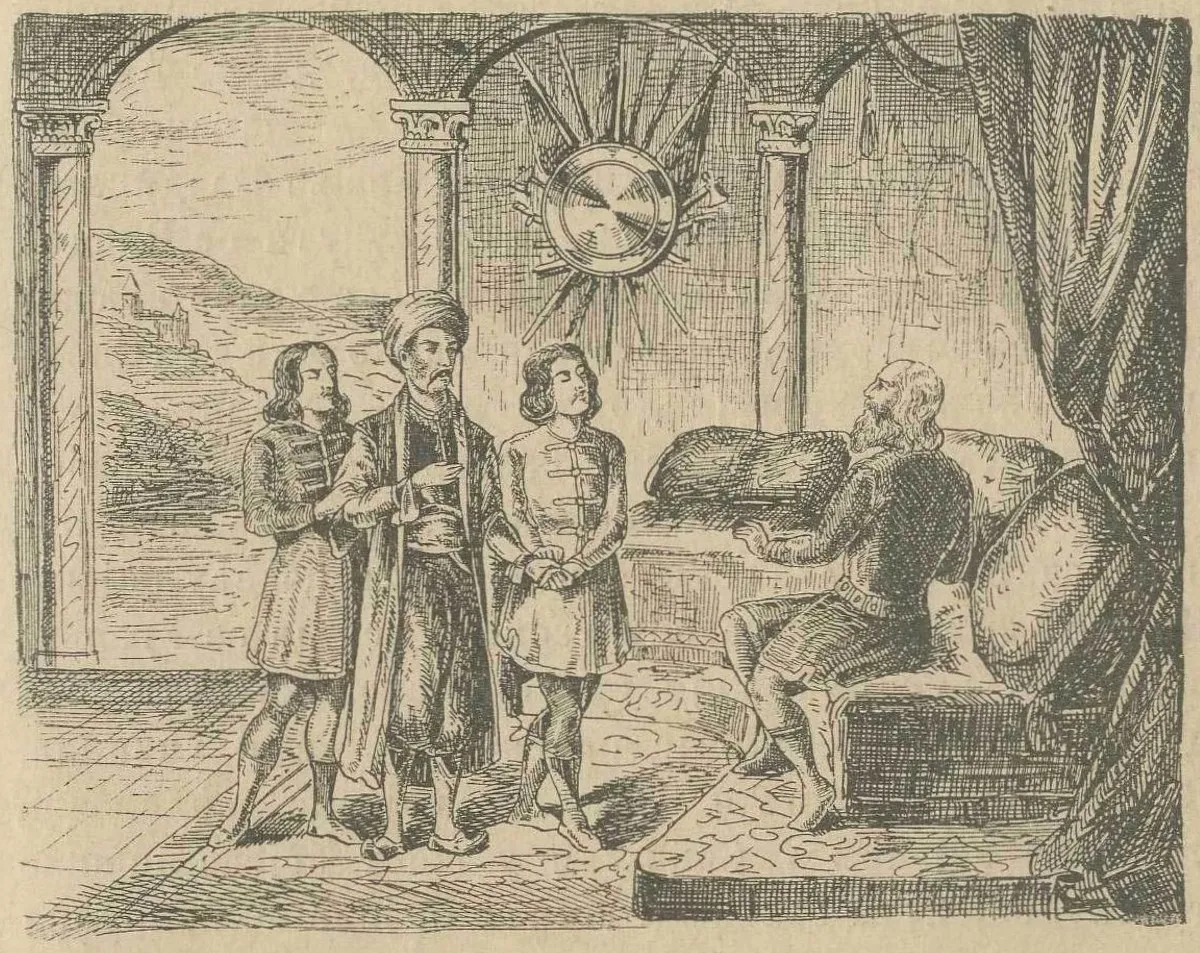 Grgur and Stefan Branković brought back to their father in 1444, an engraving of about 1885Wikimedia Commons, unknown engraver, Public domain (The return of the sons of Burđen from slavery, 1444.jpg)
Murad leaves Mehmed at Edirne as his deputy and crosses to Anatolia against Ibrahim, who makes peace with him in July or August 1444 and gets back Beyşehir, Seydişehir and Akşehir. In August 1444, at Mihaliç, Murad gives the throne to Mehmed, who is twelve, and withdraws to Manisa. The grand vizier Çandarlı Halil Pasha stays at Edirne beside the young sultan.
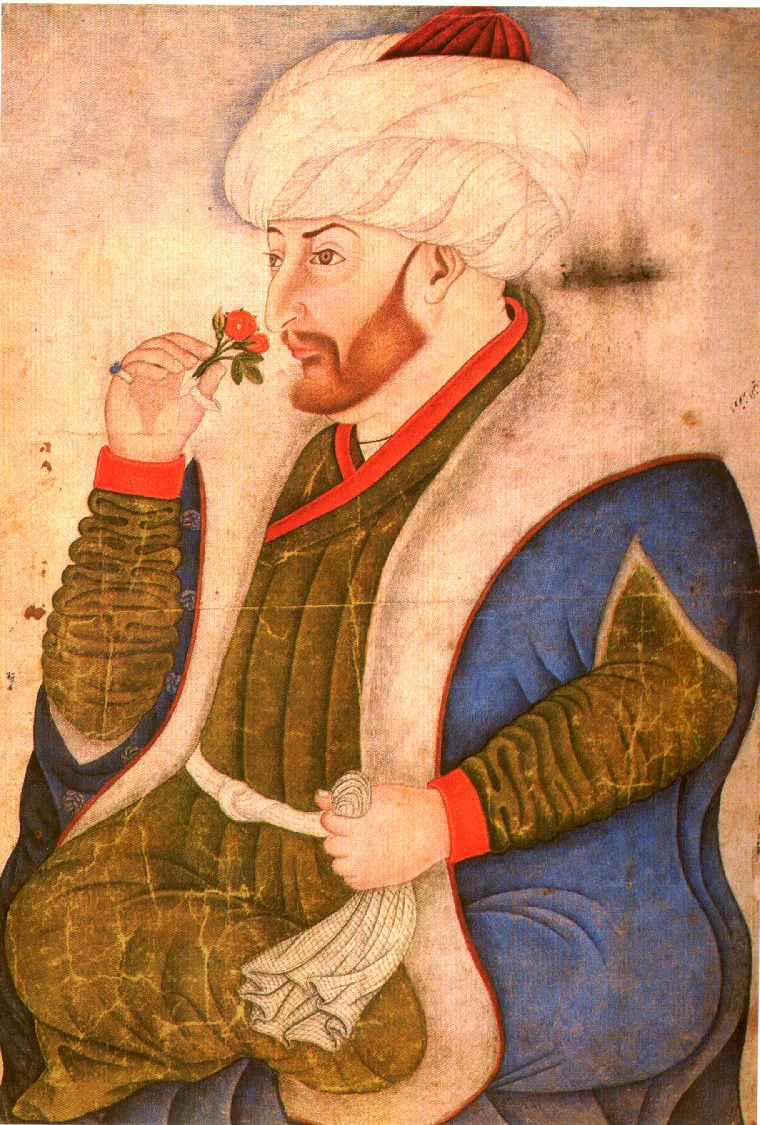 Mehmed II smelling a rose, attributed to Nakkaş Sinan Bey, late 15th century, Topkapı Palace MuseumWikimedia Commons, Nakkaş Sinan Bey, Public domain (Sarayi Album 10a.jpg)
Sources
- Gazavât-ı Sultân Murâd b. Mehemmed Hân (15th century).
- Doukas, Historia Turco-Byzantina (about 1462).
- Laonikos Chalkokondyles, Histories (c. 1464).
- Colin Imber, The Crusade of Varna, 1443–45 (2006).
- John Jefferson, The Holy Wars of King Wladislas and Sultan Murad: The Ottoman-Christian Conflict from 1438–1444 (2012).
- Halil İnalcık, “Murād II”, in Encyclopaedia of Islam, 2nd ed., vol. 7 (1993), 594–595.
- Franz Babinger, Mehmed the Conqueror and His Time (1978).
Prev: Skanderbeg and the League of Lezhë, 1444Next: The crusade breaks the truce, 1444