May – October 1439
Smederevo, 1439
Ottoman attacks in 1437 and 1438 force Đurađ to give up Braničevo and then Ždrelo and Višesav. In the spring of 1439 Murad himself marches against Serbia, and in May Đurađ flees to Hungary to ask for help, leaving his son Grgur and his wife’s brother Thomas Kantakouzenos to defend Smederevo. Murad’s army surrounds the city in early June and bombards it with cannon, the first fired in Serbia.
King Albert calls the nobility of Hungary to arms against the Ottomans, but few armed noblemen gather at Titel. One of them is John Hunyadi, who raids the besiegers and wins several small fights. In Kosovo the men of Novo Brdo march out against the Ottomans and are beaten at Gračanica on 6 August 1439.
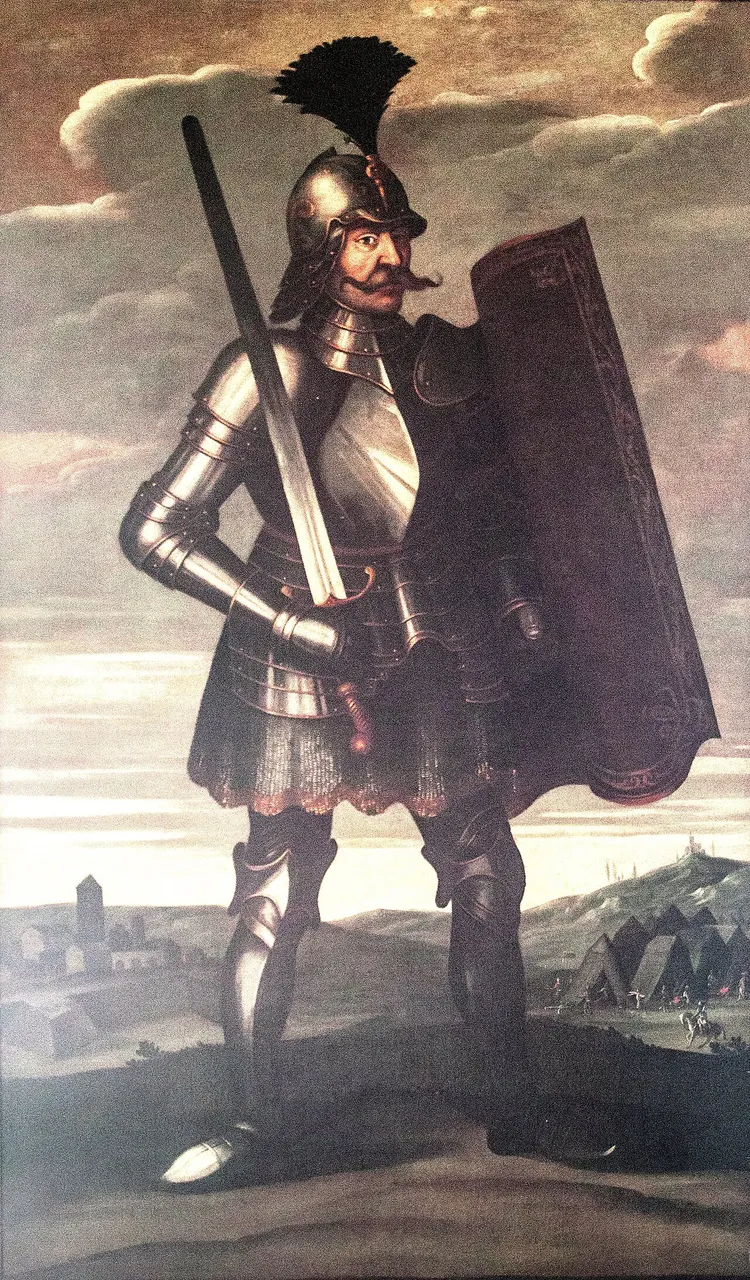 John Hunyadi in a portrait of the second half of the 17th century, Hungarian National MuseumWikimedia Commons, unknown painter, Public domain (Hunyadi János - Nemzeti Múzeum.jpg)
After nearly three months, hunger forces the garrison of Smederevo to surrender on 18 August 1439. The Serbian Despotate comes to an end, and the Ottomans hold all of Serbia except Novo Brdo, which holds out, and Zeta on the coast. Murad keeps Đurađ’s sons Grgur and Stefan as prisoners, and Albert makes Hunyadi and his brother bans of Severin. Albert dies of dysentery on 27 October 1439.
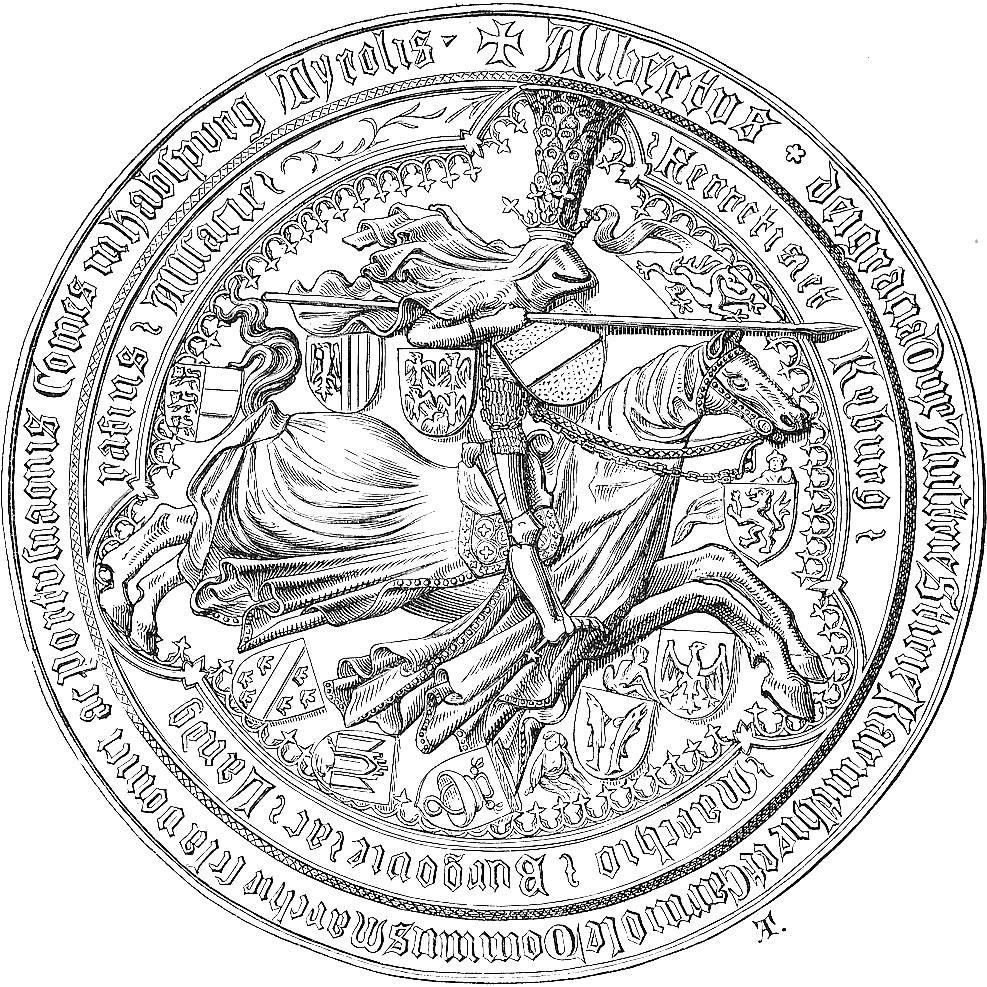 The seal of Albert of Habsburg as Duke of Austria, drawn by Karl von Sava, 1868Wikimedia Commons, Karl von Sava, Public domain (Seal of Albert II of Habsburg.png)
Sources
- Laonikos Chalkokondyles, Histories (c. 1464).
- Konstantin Mihailović, Memoirs of a Janissary (about 1500).
- John V. A. Fine, The Late Medieval Balkans (1987).
- Momčilo Spremić, Despot Đurađ Branković i njegovo doba (1994).
- Pál Engel, The Realm of St Stephen: A History of Medieval Hungary, 895–1526 (2001).
- Franz Babinger, Mehmed the Conqueror and His Time (1978).
Prev: The raid into Transylvania, 1438Next: Belgrade, 1440