1441 – March 1442
Novo Brdo, 1441
At the start of 1441 John Hunyadi and Nicholas of Ilok destroy the army of Elizabeth’s supporters at Bátaszék, which in effect ends the civil war. In February King Władysław makes the two men joint voivodes of Transylvania and counts of the Székelys and gives them command of Belgrade and the other castles on the Danube. Hunyadi has the walls of Belgrade repaired. In the summer or autumn of 1441 he raids Ottoman territory in answer to Ottoman raids along the Sava and beats Ishak Bey, the commander of Smederevo, in a pitched battle between Smederevo and Belgrade.
Novo Brdo, whose silver and gold mines are among the richest in Europe, holds out after the fall of Smederevo. Its men lose a second fight at Makreš in 1440, and in the first half of 1441 the Ottomans take the suburbs. The town surrenders on 27 June 1441, and the Ottomans plunder and burn it. In 1441 Murad has Đurađ’s sons Grgur and Stefan blinded on a charge of plotting against him.
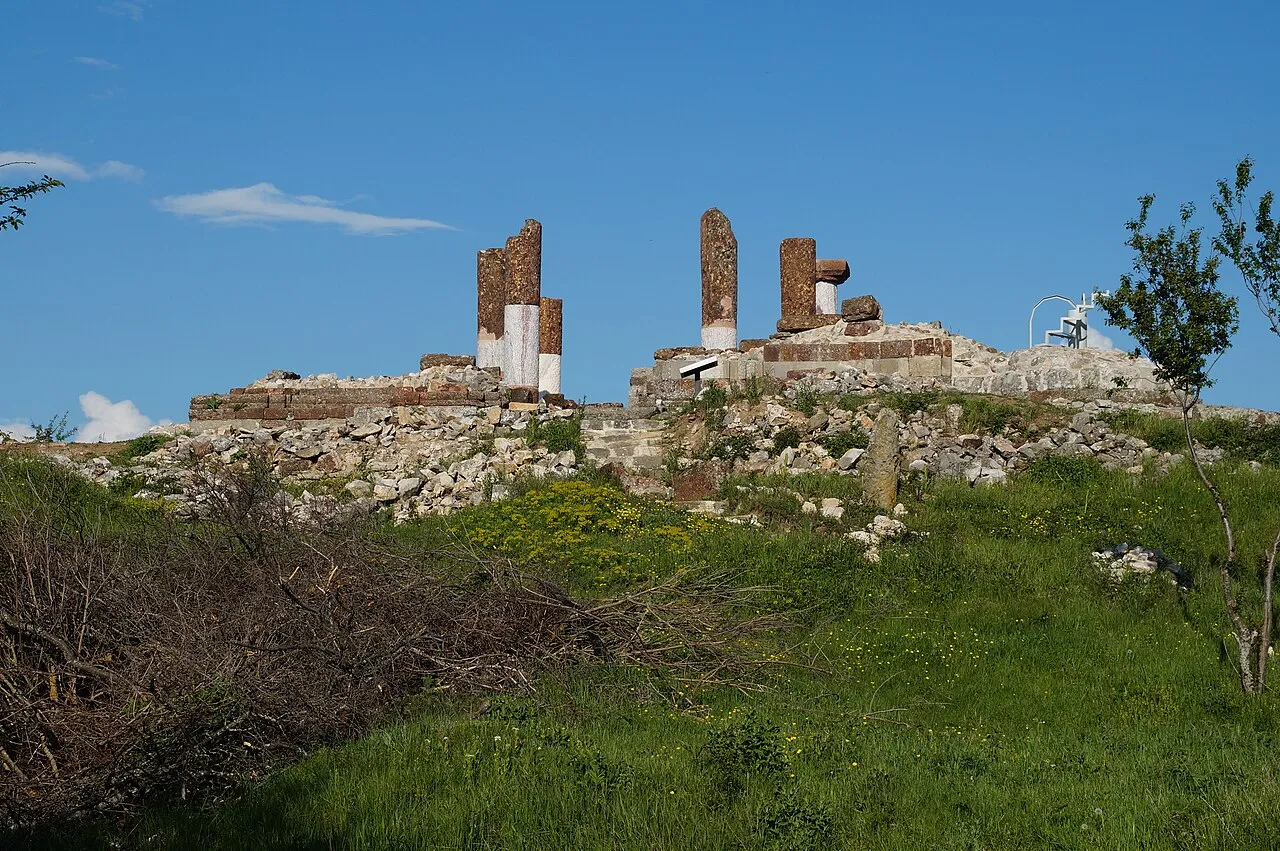 The ruins of the cathedral of Novo BrdoWikimedia Commons, albinfo, CC0 (Novo Brdo cathedral 2 (OSCAL19 trip).jpg)
Đurađ leaves Zeta in April 1441 for Dubrovnik, and its government refuses an Ottoman demand to hand him over. Venice and the Bosnian lord Stefan Vukčić Kosača attack Zeta, and by March 1442 they have taken the last of Đurađ’s towns there.
Sources
- Konstantin Mihailović, Memoirs of a Janissary (about 1500).
- János Thuróczy, Chronica Hungarorum (1488).
- John V. A. Fine, The Late Medieval Balkans (1987).
- Momčilo Spremić, Despot Đurađ Branković i njegovo doba (1994).
- Franz Babinger, Mehmed the Conqueror and His Time (1978).
- Pál Engel, The Realm of St Stephen: A History of Medieval Hungary, 895–1526 (2001).
Prev: Belgrade, 1440Next: Hermannstadt, 1442