Summer – autumn 1421
Mustafa takes Rumelia, 1421
At Constantinople Manuel II has left the conduct of affairs to his son and co-emperor John VIII, and the Byzantine court recognizes Bayezid’s son Mustafa as the lawful heir to the throne. Mustafa promises to hand Gallipoli over to Byzantium, and Byzantine galleys bring him and Cüneyd, the former bey of Aydın, from Lemnos to Gallipoli, where the town goes over to him. Ottoman chroniclers call him Düzmece Mustafa, the false Mustafa.
Many of the beys and akıncı leaders of Rumelia join Mustafa. Murad’s grand vizier Bayezid Pasha leads the army at Edirne against him, and at Sazlıdere near the Gulf of Saros his troops and their commanders go over to Mustafa. Bayezid Pasha surrenders and is beheaded at Cüneyd’s urging, while his brother Hamza Bey is spared. Bayezid Pasha’s grave is at Sazlıdere.
Mustafa enters Edirne to the cheers of its people. He has the Friday sermon read in his name, strikes coins and rules the Ottoman lands in Europe, and silver akçes struck in his name at Edirne in 1421 survive, as do copper coins from Serres. When the Byzantines ask for Gallipoli, Mustafa refuses, saying that Islamic law forbids handing land won by conquest back to unbelievers.
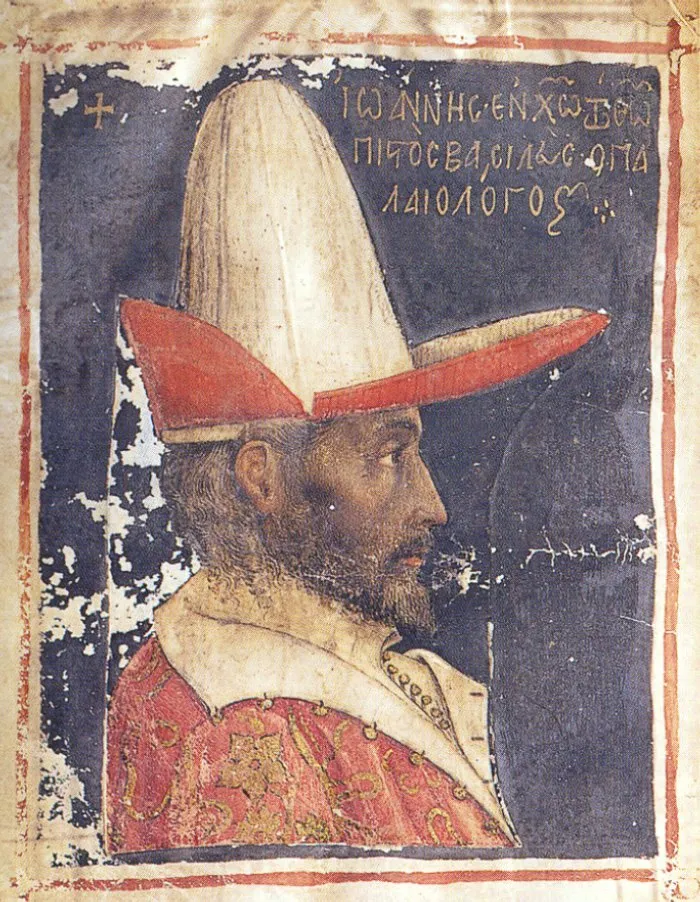 John VIII Palaiologos in a portrait of about 1440 kept at St Catherine’s Monastery, SinaiWikimedia Commons, unknown painter, Public domain (John VIII Palaiologos, Sinai.jpg)
Sources
- Doukas, Historia Turco-Byzantina (about 1462).
- Aşıkpaşazade, Tevârîh-i Âl-i Osmân (late 15th century).
- Mehmed Neşri, Kitâb-ı Cihan-nümâ (late 15th century).
- Colin Imber, The Ottoman Empire, 1300–1481 (1990).
- Halil İnalcık, “Murād II”, in Encyclopaedia of Islam, 2nd ed., vol. 7 (1993), 594–595.
- Fahameddin Başar, “Mustafa Çelebi, Düzme”, in TDV İslâm Ansiklopedisi.
Prev: Murad becomes sultan, 1421Next: Mustafa at Ulubad, 1422