November 1444 – August 1446
Mehmed’s first reign, 1444–1446
In August 1444 Murad II gave the throne to his son Mehmed and withdrew to Manisa, and in the autumn the grand vizier Çandarlı Halil Pasha called him back to lead the army against the crusade. After the victory at Varna on 10 November 1444 Murad goes back to Manisa, and Mehmed II, who is twelve, rules at Edirne. Halil, who wants peace, still treats Murad as the real sultan, while the viziers Şehabeddin Pasha and Zaganos Pasha urge the young sultan to attack Constantinople. The Hurufis, a sect that reads hidden meanings in the letters of the alphabet, win a place at the palace, and the mufti Fahreddin-i Acemi rules that they are unbelievers and has them burned alive at Edirne.
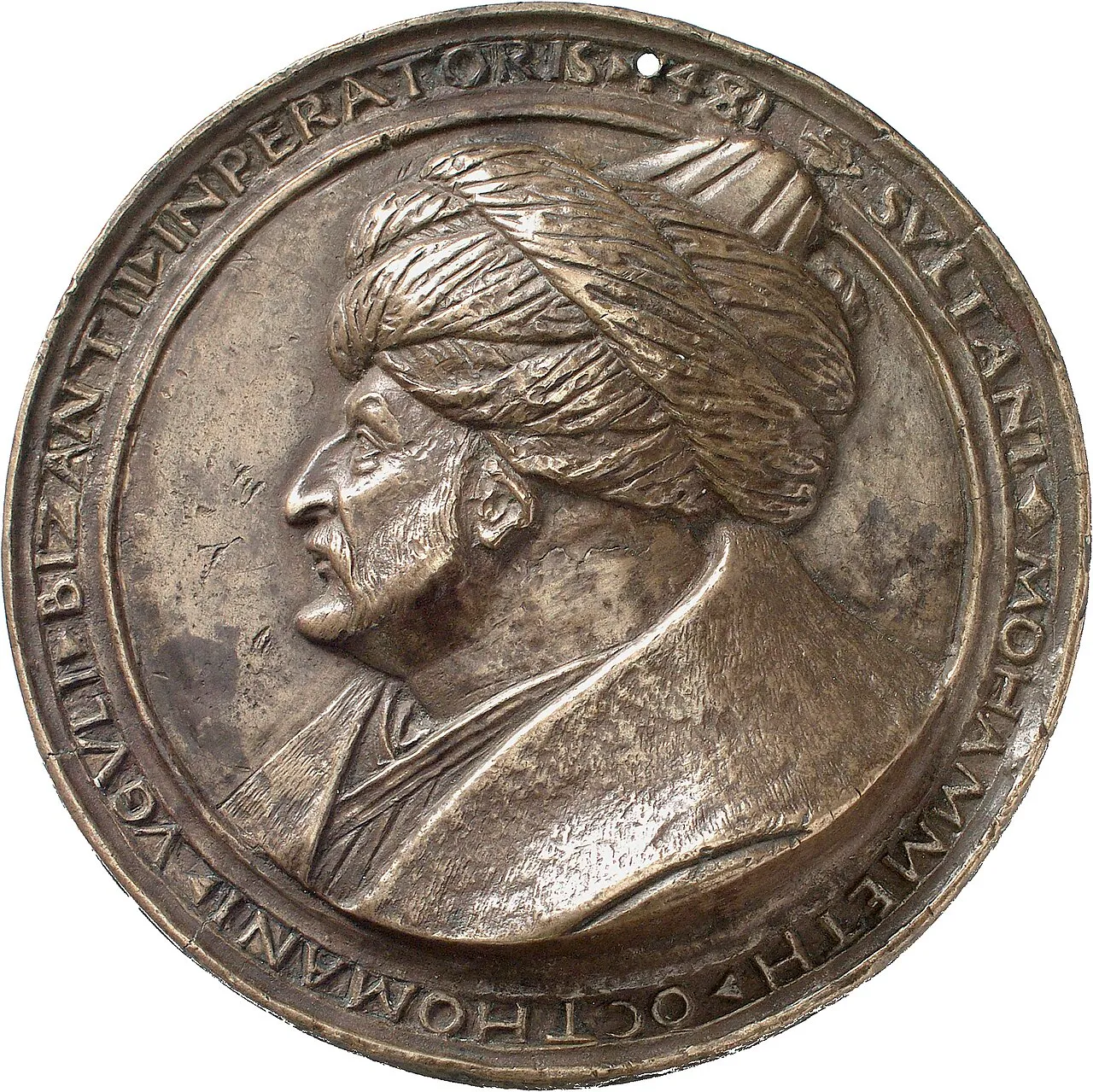 Mehmed II on a medal by Costanzo da Ferrara, 1481Wikimedia Commons, Lutz-Jürgen Lübke, CC0 (Mehmed II. Fatih DE-MUS-814819-18210904-av.jpg)
After Varna Constantine Palaiologos, despot of the Morea, carries on his war in central Greece. He had rebuilt the Hexamilion wall across the Isthmus of Corinth by March 1444, and in 1444 he took Thebes and made Nerio II Acciaioli, duke of Athens, pay tribute to him in place of the Ottomans. With 300 soldiers sent by Duke Philip the Good of Burgundy and his own men he raids north as far as the Pindus mountains, where the people accept him as their lord. His governor Constantine Kantakouzenos takes Lidoriki from the Ottomans, and its people rename the town Kantakouzinopolis.
In late April or early May 1446 the janissaries at Edirne rise in the first janissary revolt in Ottoman history, because their pay is six months late and the akçe in which it is paid has been debased. They attack the house of Şehabeddin Pasha and gather on a hill near the city that has been called Buçuktepe since, and some historians hold that Halil stirred them up to bring Murad back. Murad leaves Manisa on 5 May, travels slowly and takes the throne for the second time at Edirne in late August 1446, and the janissaries receive a raise of half an akçe. Mehmed goes to Manisa as governor of Saruhan, with Zaganos and Şehabeddin as his tutors.
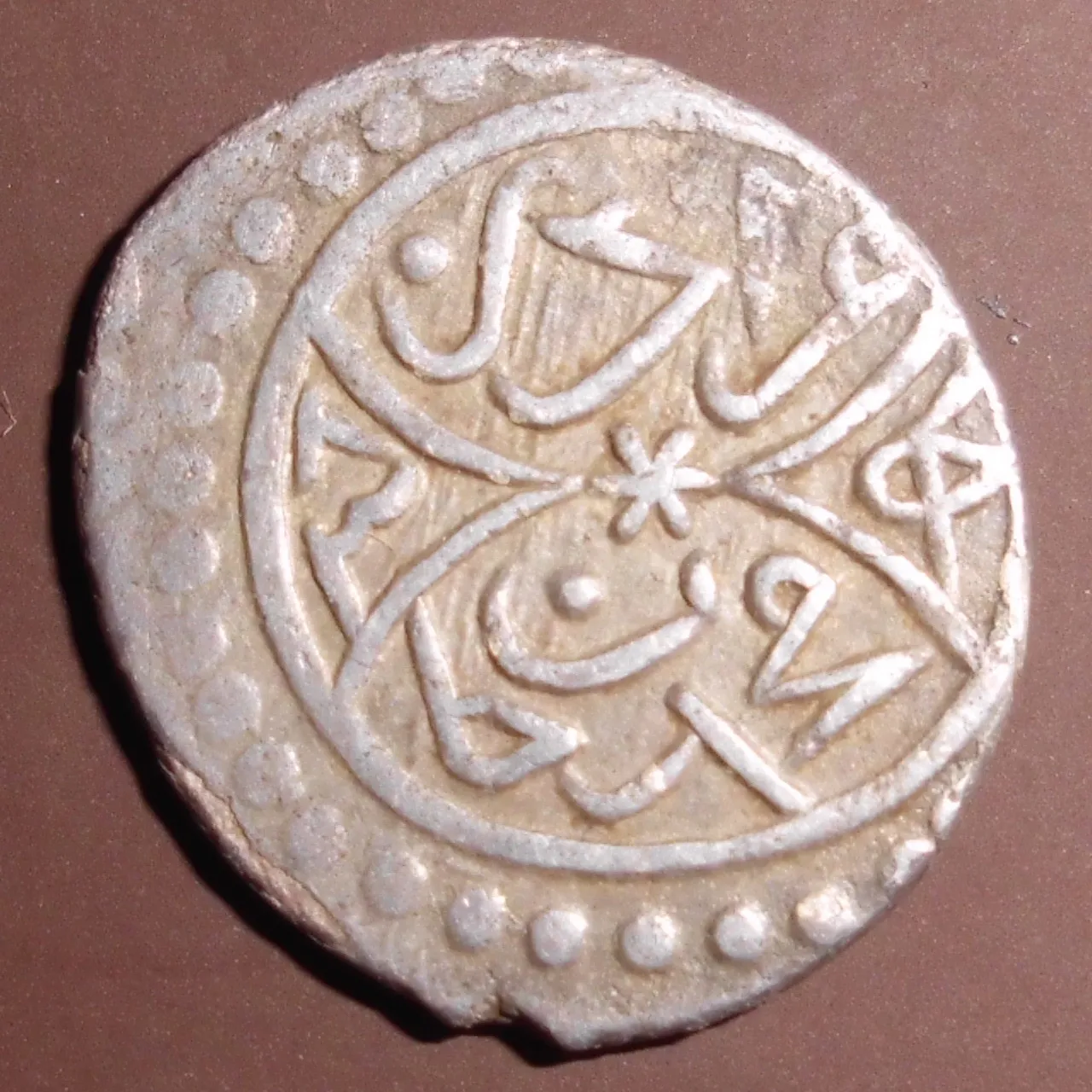 A silver akçe of Murad II struck in 834 (1430–1431)Wikimedia Commons, Kalashnov, CC BY-SA 3.0 (Akçe of Murad II Obverse.JPG)
Sources
- Doukas, Historia Turco-Byzantina (about 1462).
- Laonikos Chalkokondyles, Histories (c. 1464).
- Aşıkpaşazade, Tevârîh-i Âl-i Osmân (late 15th century).
- Taşköprüzade, eş-Şekâiku’n-nu‘mâniyye (1558).
- Franz Babinger, Mehmed the Conqueror and His Time (1978).
- Halil İnalcık, “Murād II”, in Encyclopaedia of Islam, 2nd ed., vol. 7 (1993), 594–595.
- Donald M. Nicol, The Immortal Emperor: The Life and Legend of Constantine Palaiologos (1992).
- Colin Imber, The Crusade of Varna, 1443–45 (2006).
Prev: After Varna, 1444–1445Next: Mokra and Otonetë, 1445–1446