1433 – 1437
Karaman, 1433–1437
While Murad is at war in Europe, Ibrahim II of Karaman, who rules from Konya, retakes Beyşehir and the old Hamid lands from the Ottomans and makes a secret alliance with Hungary. Murad returns to Anatolia in 1433, and Ibrahim asks for peace, which is made in 1435.
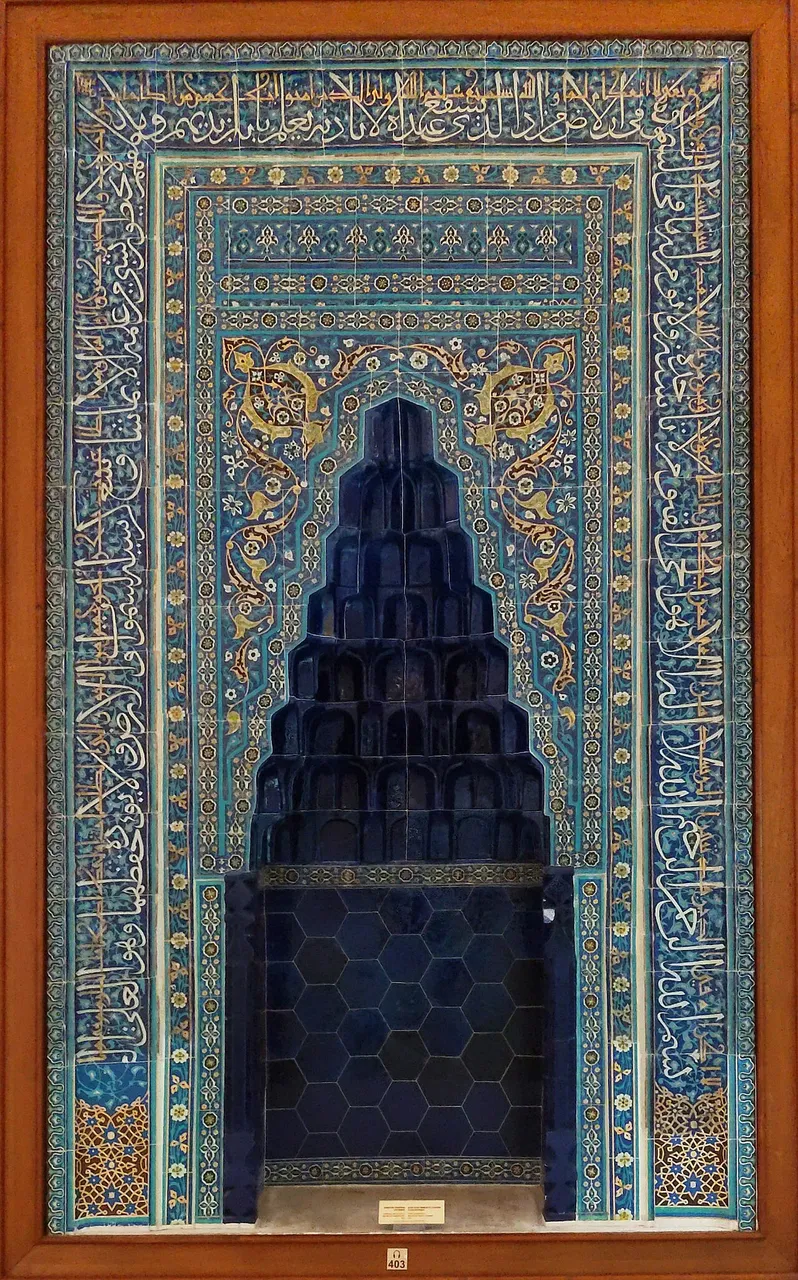 The tiled mihrab of the İbrahim Bey İmaret at Karaman, 1432, now in the Tiled Kiosk, IstanbulWikimedia Commons, Mustafa-trit20, CC BY-SA 4.0 (Tiled mihrab niche in coloured glaze-technique, from Karamanoglu, in Tiled Kiosk collection istanbul.jpg)
In the east, Shah Rukh, the son of Timur, campaigns against the Kara Koyunlu in 1434, and in 1435–1436 he deposes their ruler İskender, who takes refuge with the Ottomans and spends the winter of 1435–1436 at Tokat. Shah Rukh returns to Khorasan in 1436. Shortly after the peace, Ibrahim lays siege to Amasya, and Murad answers by backing the Dulkadirids, who take Kayseri from Karaman, and Ibrahim’s brother İsa, who takes Akşehir.
In 1437 Murad marches into Karaman and takes back Beyşehir and the Hamid lands. Ibrahim lifts the siege of Amasya and makes a new peace. Murad’s eldest son Ahmed, the governor of Amasya, dies in 1437, or 1438 by other accounts. By some accounts Murad sends his son Mehmed, born in 1432, to Amasya in his place.
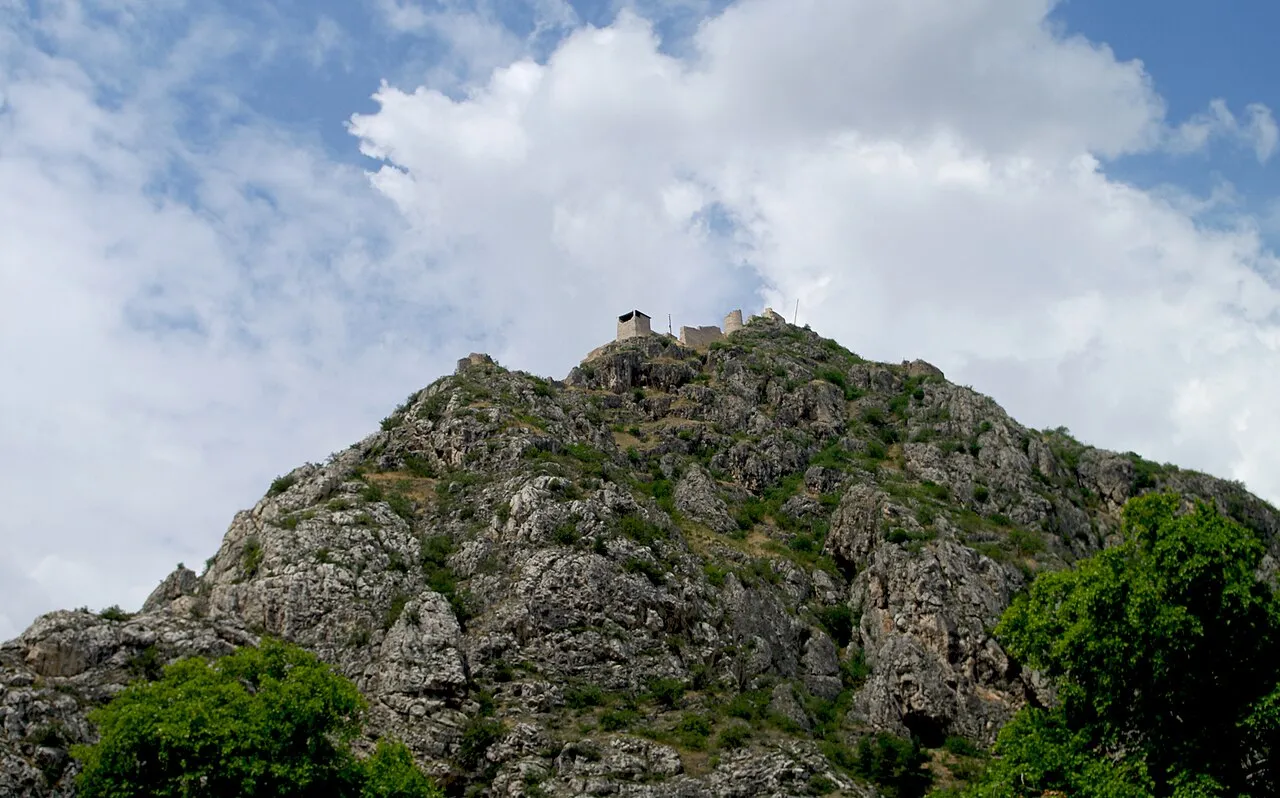 The castle of Amasya above the townWikimedia Commons, Zeynel Cebeci, CC BY-SA 4.0 (Amasya Castle.jpg)
Sources
- Aşıkpaşazade, Tevârîh-i Âl-i Osmân (late 15th century).
- Mehmed Neşri, Kitâb-ı Cihan-nümâ (late 15th century).
- Halil İnalcık, “Murād II”, in Encyclopaedia of Islam, 2nd ed., vol. 7 (1993), 594–595.
- Colin Imber, The Ottoman Empire, 1300–1481 (1990).
- Franz Babinger, Mehmed the Conqueror and His Time (1978).
- İsmail Hakkı Uzunçarşılı, Anadolu Beylikleri ve Akkoyunlu, Karakoyunlu Devletleri (1937).
Prev: Smederevo and Wallachia, 1431–1436Next: The raid into Transylvania, 1438