August – December 1442
The Ialomița, 1442
Murad decides to avenge Mezid Bey and to punish Wallachia and Transylvania, and he gives the task to Şehabeddin Pasha, the beylerbey of Rumelia, with orders not to return before he has conquered both lands. Şehabeddin’s army is made up of provincial cavalry under their sanjak beys and of janissaries, and Şehabeddin says that the sight of his turban will make his enemies run. In August 1442 the army crosses the Danube into Wallachia.
On 2 September 1442 Hunyadi destroys Şehabeddin’s army in the upper valley of the Ialomița. Hunyadi then places Basarab II, a son of Dan II, on the throne of Wallachia at Târgoviște, and Wallachia accepts Hungarian suzerainty again.
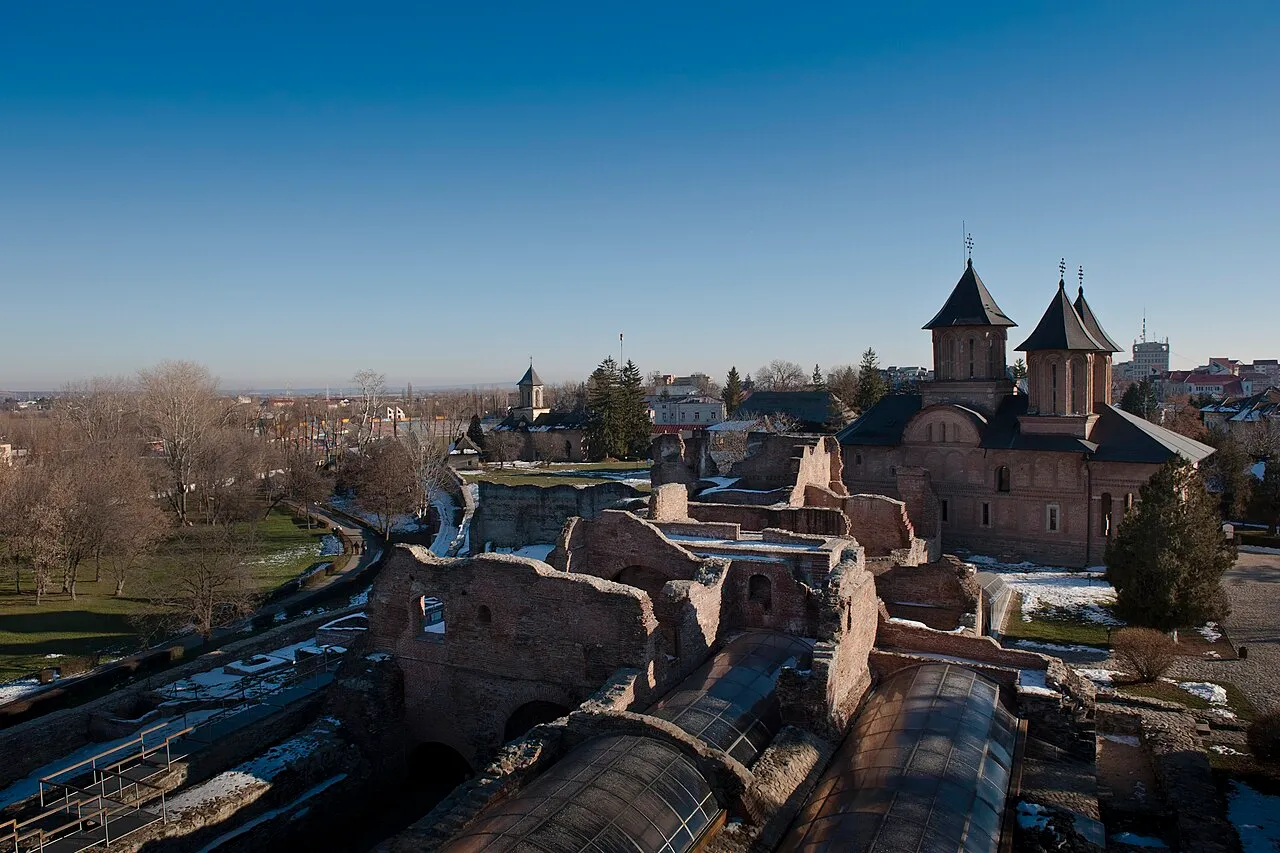 The ruins of the princely court of TârgovișteWikimedia Commons, Diana Popescu, CC BY-SA 3.0 ro (Târgoviște - Curtea Domnească 1.jpg)
Murad releases Vlad II before the end of 1442. Vlad pledges not to support the sultan’s enemies, to pay a yearly tribute and to send 500 Wallachian boys to serve as janissaries, and he leaves his sons Vlad and Radu with the Ottomans as hostages.
Sources
- János Thuróczy, Chronica Hungarorum (1488).
- Jan Długosz, Annales seu Cronicae incliti Regni Poloniae (late 15th century).
- Franz Babinger, Mehmed the Conqueror and His Time (1978).
- Kurt W. Treptow, Vlad III Dracula: The Life and Times of the Historical Dracula (2000).
- John Jefferson, The Holy Wars of King Wladislas and Sultan Murad: The Ottoman-Christian Conflict from 1438–1444 (2012).
- Pál Engel, The Realm of St Stephen: A History of Medieval Hungary, 895–1526 (2001).
Prev: Hermannstadt, 1442Next: The crusade is called, 1443