Autumn – December 1446
The Hexamilion, 1446
In autumn 1446 Murad marches against the Morea, at the call of Nerio II Acciaioli of Athens, who has come back to Ottoman allegiance, and at the urging of Turahan Bey. He leaves Edirne late in the campaigning season, gathers the troops of Rumelia at Serres and marches through Thessaly into Boeotia, where Nerio and his men join him at Thebes. The army is said to number 50,000 to 60,000 men and brings long guns and siege engines. On 27 November 1446 it reaches the Hexamilion, where Constantine and his brother Thomas hold the wall with perhaps 20,000 men.
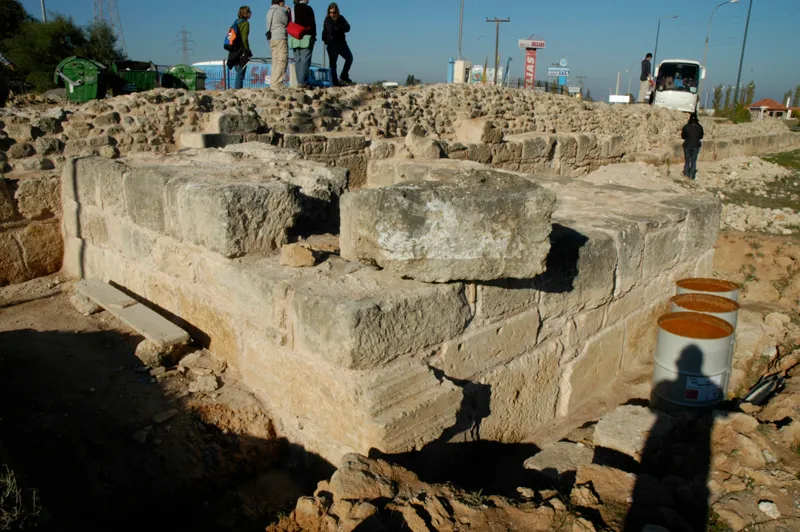 Remains of the Hexamilion wallWikimedia Commons, Nefasdicere, CC BY 2.5 (Hexamilion-3.jpg)
Constantine sends an envoy to ask that the lands of the duchy of Athens be left to him, and Murad refuses. Murad is reported to be discouraged by the strength of the wall, but Turahan urges an assault, and on 4 December the guns begin to batter the wall. On 10 December 1446 Murad orders the general assault. The janissaries take the broken wall and open the gates, many defenders are killed or captured, and Constantine and Thomas escape towards Mistra.
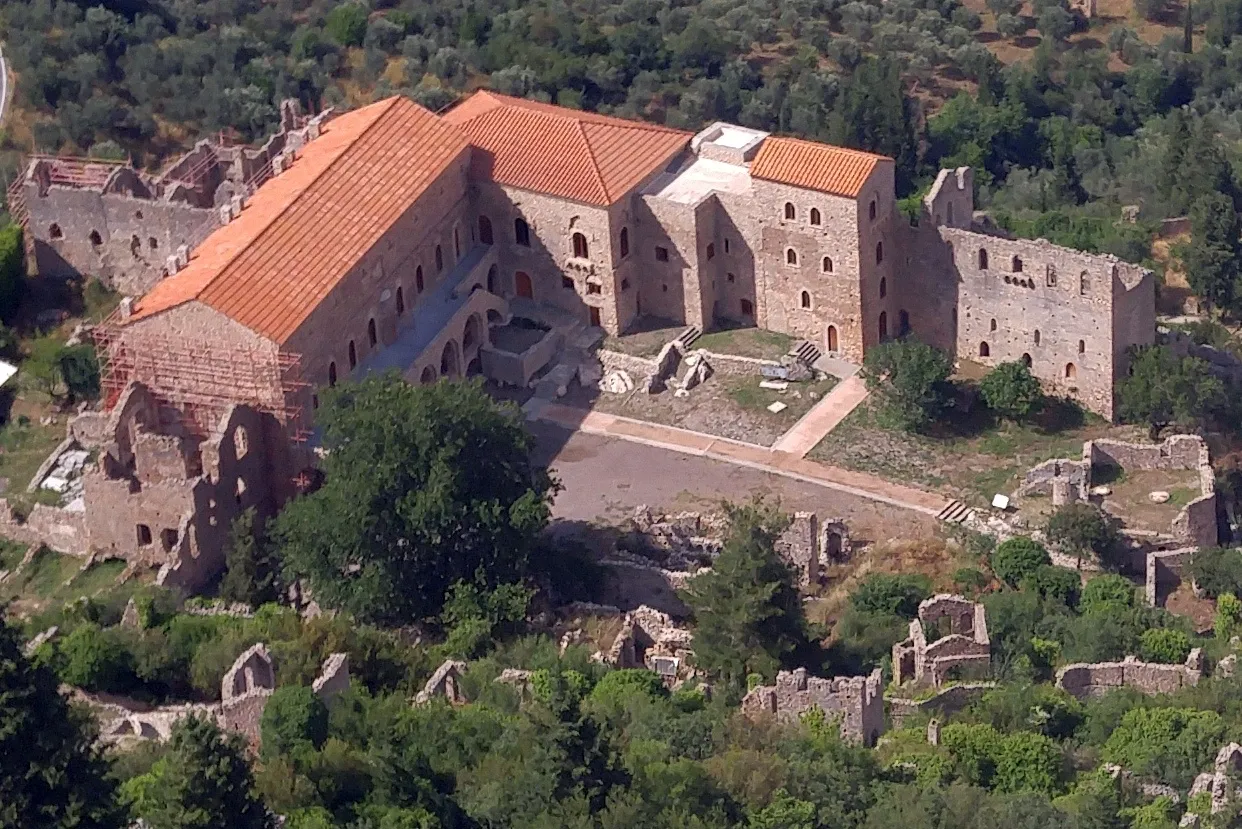 The palace of the despots at MistraWikimedia Commons, Gregor Hagedorn, CC BY-SA 4.0 (Despot's Palace (Mystras, Greece, 2017).jpg)
The Ottomans burn Corinth, and Murad marches along the northern coast to Patras, where the town is sacked and burned and the citadel holds out. Turahan raids the interior with 7,000 men as far as Mistra but does not take it. Before winter the Ottomans leave the Morea with, by the chroniclers’ accounts, 60,000 captives. The despots accept Murad as their lord, pay him tribute and promise never to rebuild the wall, and the duchy of Athens returns to Ottoman allegiance.
Sources
- George Sphrantzes, Chronicon minus (about 1477).
- Laonikos Chalkokondyles, Histories (c. 1464).
- Doukas, Historia Turco-Byzantina (about 1462).
- Kenneth M. Setton, The Papacy and the Levant (1204–1571), vol. 2 (1978).
- Donald M. Nicol, The Immortal Emperor: The Life and Legend of Constantine Palaiologos (1992).
- Steven Runciman, Lost Capital of Byzantium: The History of Mistra and the Peloponnese (2009).
- Halil İnalcık, “Murad II”, in TDV İslâm Ansiklopedisi, vol. 31 (2006).
Prev: Mokra and Otonetë, 1445–1446Next: Skanderbeg and Venice, 1447–1448