October 1441 – spring 1442
Hermannstadt, 1442
Hunyadi has the burghers of Brașov mint coins for Vlad II in October 1441, and two or three weeks later he meets Vlad at Târgoviște and asks him to join a war against the Ottomans. Murad announces a raid into Transylvania for March 1442. In early March Mezid Bey, the marcher lord of Nikopol, crosses the Danube there with about 16,000 akıncı raiders and marches north through Wallachia into Transylvania.
On 18 March 1442 the troops of György Lépes, Bishop of Transylvania, meet Mezid near Sântimbru, and the Ottomans win by force of numbers and kill the bishop. Hunyadi, who has only just reached Transylvania, falls back, and Mezid lays siege to Sibiu (Hermannstadt) until Hunyadi and Nicholas of Ilok force him to lift it. On 22 March Hunyadi destroys Mezid’s army, and Mezid and his son are killed. Modern historians, Tamás Pálosfalvi among them, place this battle at the Iron Gate pass in Hunyad county, and the older histories near Sibiu.
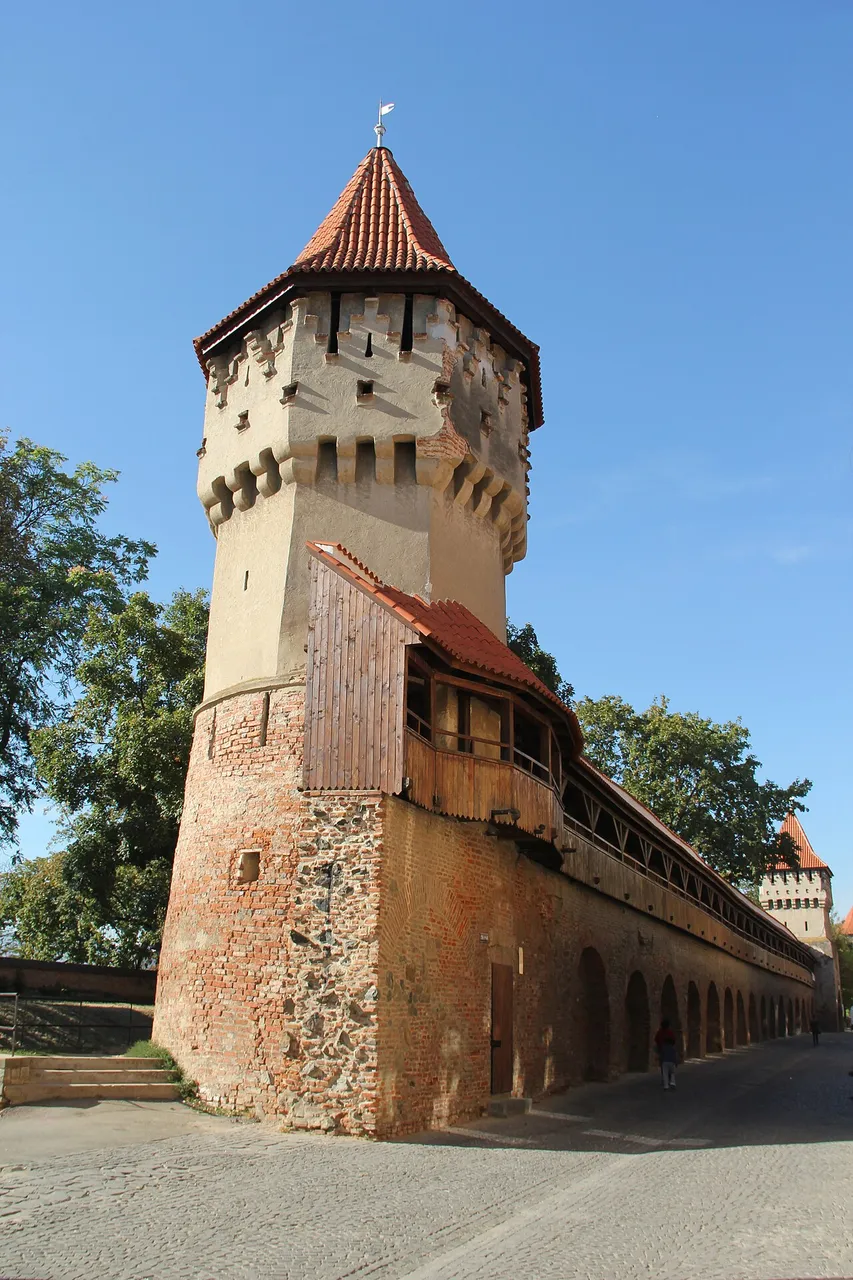 The town walls of Sibiu, the Hermannstadt of the SaxonsWikimedia Commons, Antony Stanley, CC BY-SA 2.0 (City Fortifications, Sibiu (8136304409).jpg)
Hunyadi follows the Ottomans into Wallachia through the Red Tower pass and makes Vlad a vassal of Hungary again. By Neşri’s account the Ottoman governor of Bulgaria then accuses Vlad of treachery, and Murad summons him to Edirne. Vlad leaves his eldest son Mircea to rule Wallachia, and soon after he reaches Edirne he is arrested on the sultan’s order and held at Gallipoli.
Sources
- János Thuróczy, Chronica Hungarorum (1488).
- Mehmed Neşri, Kitâb-ı Cihan-nümâ (late 15th century).
- Kurt W. Treptow, Vlad III Dracula: The Life and Times of the Historical Dracula (2000).
- John Jefferson, The Holy Wars of King Wladislas and Sultan Murad: The Ottoman-Christian Conflict from 1438–1444 (2012).
- Tamás Pálosfalvi, From Nicopolis to Mohács: A History of Ottoman-Hungarian Warfare, 1389–1526 (2018).
Prev: Novo Brdo, 1441Next: The Ialomița, 1442