19 July 1427 – 1428
Golubac, 1427–1428
Despot Stefan Lazarević of Serbia dies on 19 July 1427. By the agreement that he made with King Sigismund at Tata in May 1426, his nephew Đurađ Branković succeeds him, and Belgrade, Mačva and Golubac go back to Hungary. Sigismund stays at Belgrade from 17 September to 19 November 1427. The commander of Golubac, Jeremija, asks 12,000 ducats for the fortress, and when Sigismund refuses, Jeremija hands it to the Ottomans.
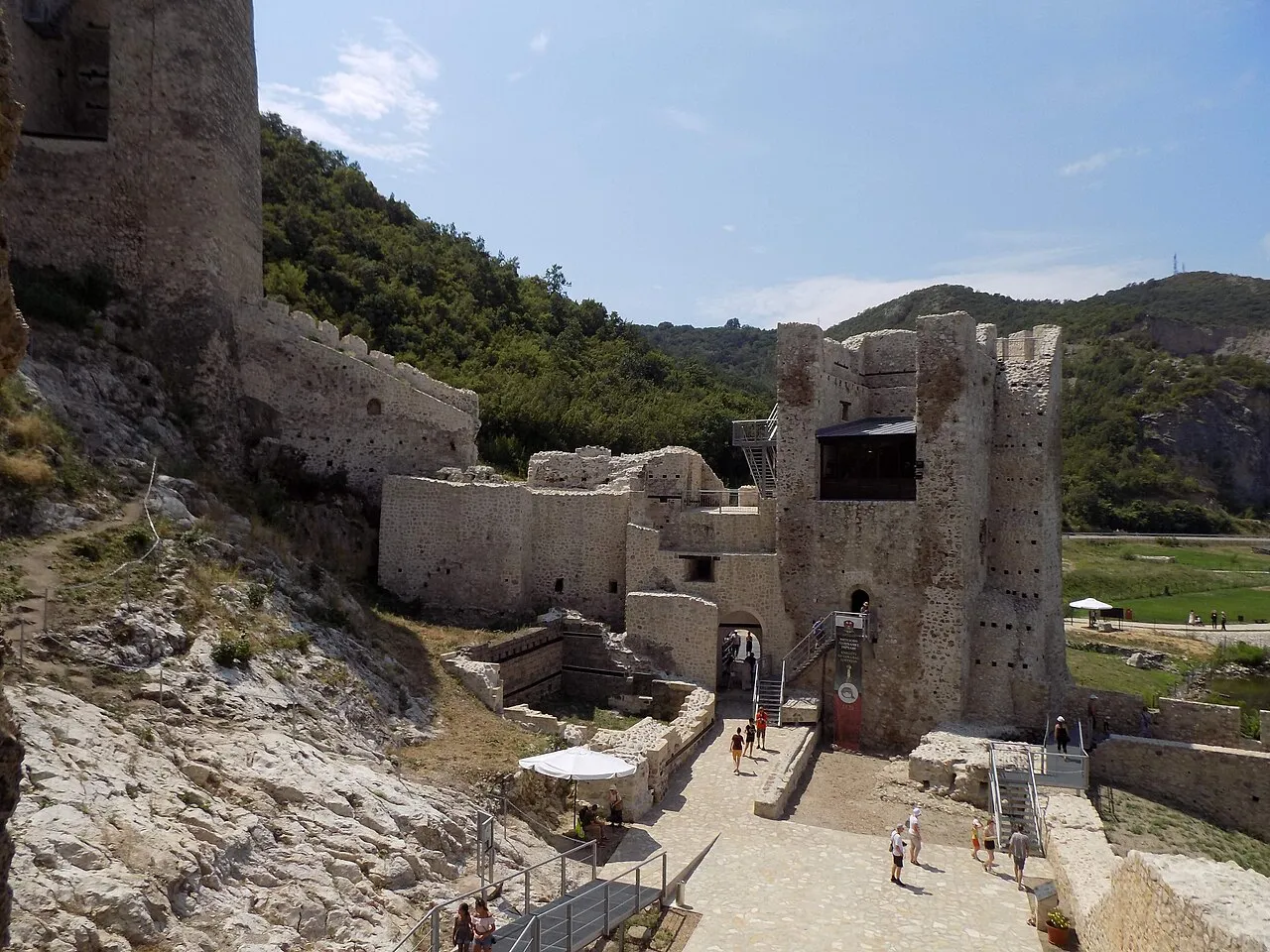 The fortress of Golubac on the Danube after its restoration in 2019Wikimedia Commons, BuhaM, CC BY-SA 4.0 (Golubac grad 2019 09.jpg)
Murad answers the Hungarian advance with an army that takes Niš and Kruševac and besieges Novo Brdo, and in the autumn a Hungarian and Serbian force destroys an Ottoman detachment near Ravanica. In the spring of 1428 Sigismund besieges Golubac from the land and from the Danube with Dan II’s Wallachians and Polish horsemen under the knight Zawisza the Black. Sigismund’s guns, firing from ships and from the new fort of Lászlóvár on the north bank, break the walls.
Murad arrives with his main army in late May, and Sigismund, who does not want to fight it, agrees a truce. When the Hungarians begin to cross the Danube in early June, the Ottoman commander Sinan Bey falls on their rear. Zawisza is killed with the men who cover the crossing, and Sigismund escapes with the help of Cecília Rozgonyi, who commands one of his ships. Under the peace, Đurađ rules Serbia as a vassal of both the sultan and the king, and in the autumn of 1428 he begins a new capital at Smederevo on the Danube, whose inner city is finished in 1430.
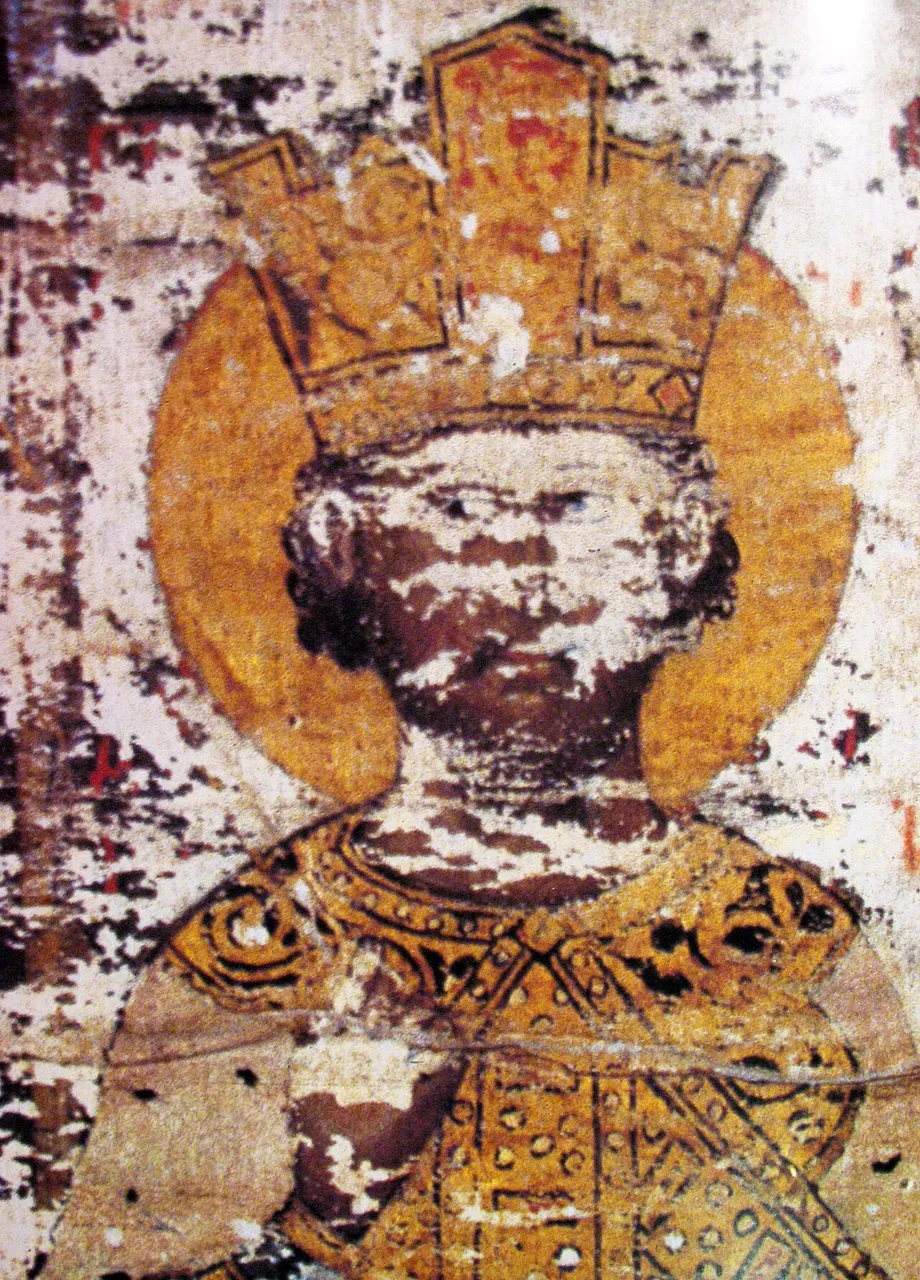 Đurađ Branković in his charter for the monastery of Esphigmenou, 1429Wikimedia Commons, unknown painter, Public domain (Đurađ Branković, Esphigmenou charter (1429).jpg)
Sources
- Konstantin the Philosopher, Life of Despot Stefan Lazarević (1431).
- Doukas, Historia Turco-Byzantina (about 1462).
- Laonikos Chalkokondyles, Histories (c. 1464).
- John V. A. Fine, The Late Medieval Balkans (1987).
- Pál Engel, The Realm of St Stephen: A History of Medieval Hungary, 895–1526 (2001).
- Momčilo Spremić, Despot Đurađ Branković i njegovo doba (1994).
Prev: Germiyan and Karaman, 1424–1429Next: Thessalonica, 1430