1431 – 1436
The Albanian revolt, 1432–1436
The Ottoman land register of the sanjak of Albania, drawn up in 1431–1432, gives about 75 to 80 percent of the timars to Muslim sipahis, many of them from Anatolia, and the rest, mostly in remote areas, to Albanian sipahis, both Christian and Muslim. Many families flee to the mountains to avoid being registered, and the lords who have lost their lands prepare for war. In 1432 Andrea Thopia defeats a small Ottoman force in the mountains of central Albania, and the revolt spreads. Later that year the Ottomans lose the port of Vlorë, and Gjergj Arianiti, a hostage at the Ottoman court, flees from Edirne to lead the rising in his family’s lands.
In the winter of 1432–1433 Murad sends about 10,000 men under Ali Bey Evrenosoğlu along the Via Egnatia, and Arianiti ambushes and defeats them in the central valley of the Shkumbin. The Albanians around Gjirokastër then call on Depë Zenebishi, who lives on his estates on Corfu, and he besieges the town, which is the capital of the sanjak. In early 1433 Turahan Bey defeats the besiegers, and Zenebishi is captured and executed. In the summer of 1433 Sinan Pasha, the beylerbey of Rumelia, plunders the lands around Kanina and Ioannina and forces Gjon Kastrioti back into vassalage, while Gjon’s son Skanderbeg stays in Ottoman service in Anatolia.
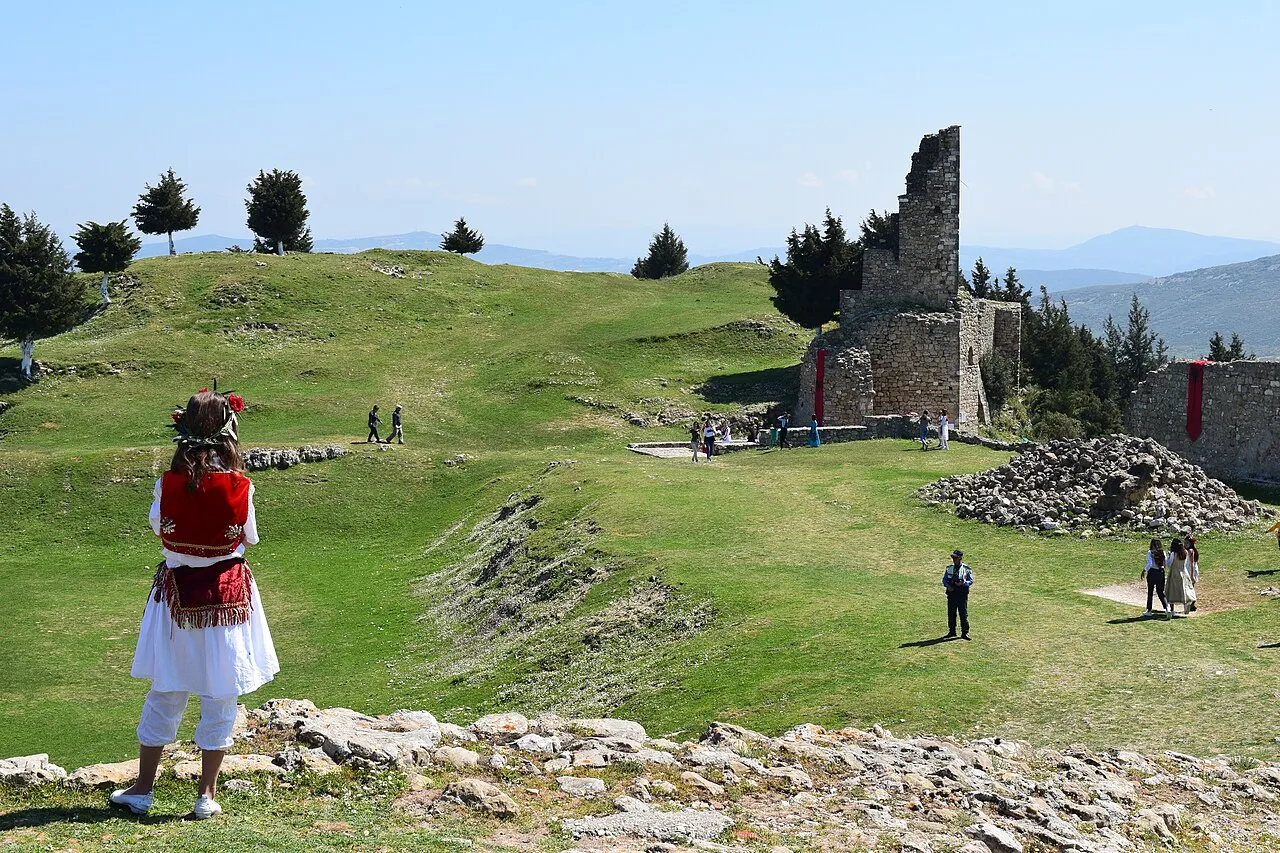 The castle of Kaninë above VlorëWikimedia Commons, Nikol Likja, CC BY-SA 4.0 (Kalaja e Kaninës.jpg)
In the north Nicholas Dukagjini takes Dagnum and offers it to Venice, but Venice orders its captain at Shkodër to help the Ottoman governor retake the fort, which is Ottoman again by 1435. Andrea Thopia besieges Krujë without success. Arianiti defeats Sinan Pasha in August 1434, Ishak Bey, the sanjak bey of Skopje, in December 1434 and another Ottoman army in April 1435, and the fighting almost stops while Murad is at war with Karaman. In 1436 Turahan Bey leads a large army through Albania, puts down the revolt and massacres civilians, and Arianiti withdraws to the mountains of Skrapar and Tomorrica.
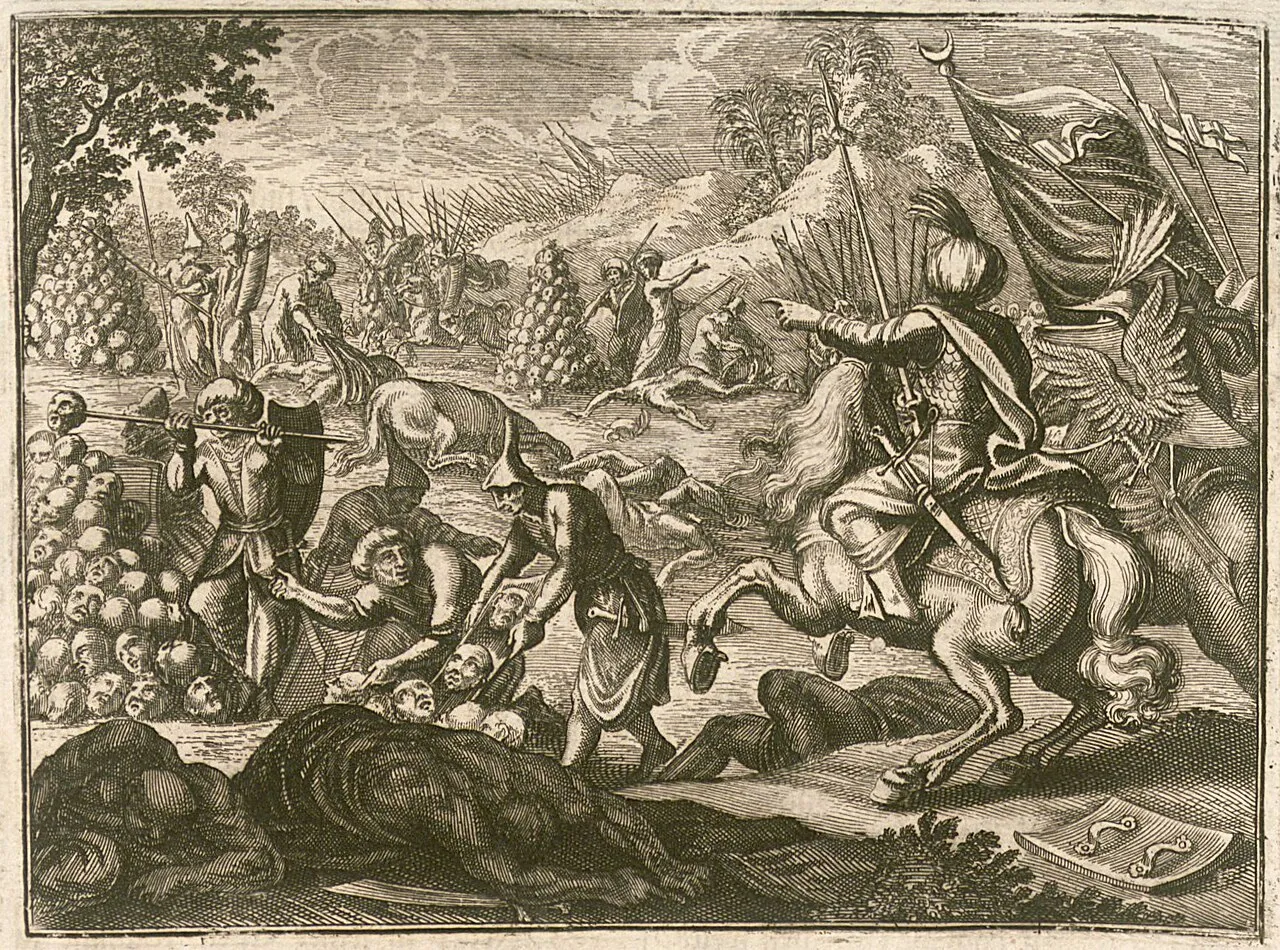 Turahan Bey and Albanian captives, an engraving by Johann Andreas Thelot, 1694Wikimedia Commons, Johann Andreas Thelot, Public domain (Turahan Bey executing conquered Albanian tribes, 1423.jpg)
Sources
- Laonikos Chalkokondyles, Histories (c. 1464).
- Halil İnalcık, Hicrî 835 Tarihli Sûret-i Defter-i Sancak-i Arvanid (1954).
- Kristo Frashëri, The History of Albania: A Brief Survey (1964).
- Colin Imber, The Ottoman Empire, 1300–1481 (1990).
- John V. A. Fine, The Late Medieval Balkans (1987).
- Kristaq Prifti and Muzafer Korkuti (eds.), Historia e popullit shqiptar, vol. 1 (2002).
Prev: Ioannina and the Morea, 1429–1432Next: Smederevo and Wallachia, 1431–1436