November 1462 – 1465
War with Venice, 1462–1465
Kritovoulos writes that the war begins when a slave of the Ottoman commander of Athens flees with 100,000 silver aspers to Venetian Coron, becomes a Christian there, and Venice refuses to hand him back. In November 1462 Ömer Bey attacks Venetian Lepanto and nearly takes it, and on 3 April 1463 Isa Bey, the governor of the Morea, takes Argos from Venice by treason. On 28 July 1463 the Venetian Senate votes by a narrow margin for war with the sultan, and Venice makes alliances with Matthias Corvinus on 12 September and with Pope Pius II and Duke Philip of Burgundy on 19 October.
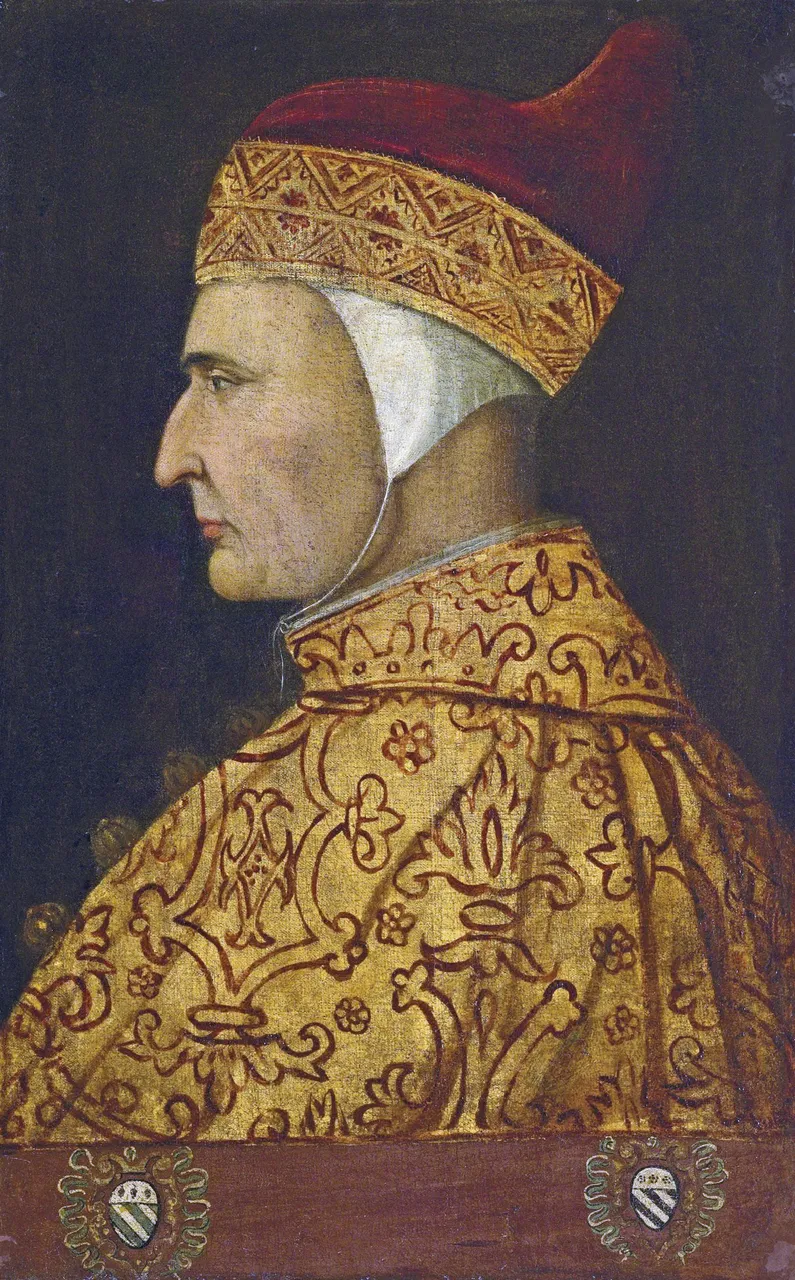 Doge Cristoforo Moro, painted in the circle of Gentile Bellini, 15th centuryWikimedia Commons, circle of Gentile Bellini, Public domain (Portrait of Doge Cristoforo Moro (1390-1471).jpg)
A Venetian army under Alvise Loredan lands in the Morea, retakes Argos in early August, rebuilds the Hexamilion wall across the Isthmus of Corinth with many guns and lays siege to the Acrocorinth. On 20 October 1463 the Venetians suffer a heavy defeat there, and their commander Bertoldo d’Este is mortally wounded. When Mahmud Pasha reaches the isthmus with an army, the Venetians, weakened by dysentery, leave the wall and sail to Nauplia, and Mahmud has the Hexamilion razed. Argos surrenders and is razed too, and Mehmed, who follows with a second army, hears of the success at Lamia (Zeitounion) and turns north towards Bosnia.
To keep the Venetian fleet out of the straits, Mehmed builds two forts facing each other at the narrowest point of the Dardanelles in 1463, Kilitbahir and Sultaniye (Çanakkale). In spring 1464 the Venetian admiral Orsato Giustinian besieges Mytilene for six weeks, until Mahmud Pasha’s fleet drives him off on 18 May. Sigismondo Malatesta, lord of Rimini, besieges Mistra from August to October 1464 and withdraws when Ömer Bey comes to its relief, and Monemvasia, under the pope since 1460, passes to Venice at the end of 1463 by one account and in 1464 by another. In 1465 the Kladas brothers of the Mani, who lead light horsemen for Venice, put Vardounia and their own lands under Venetian rule.
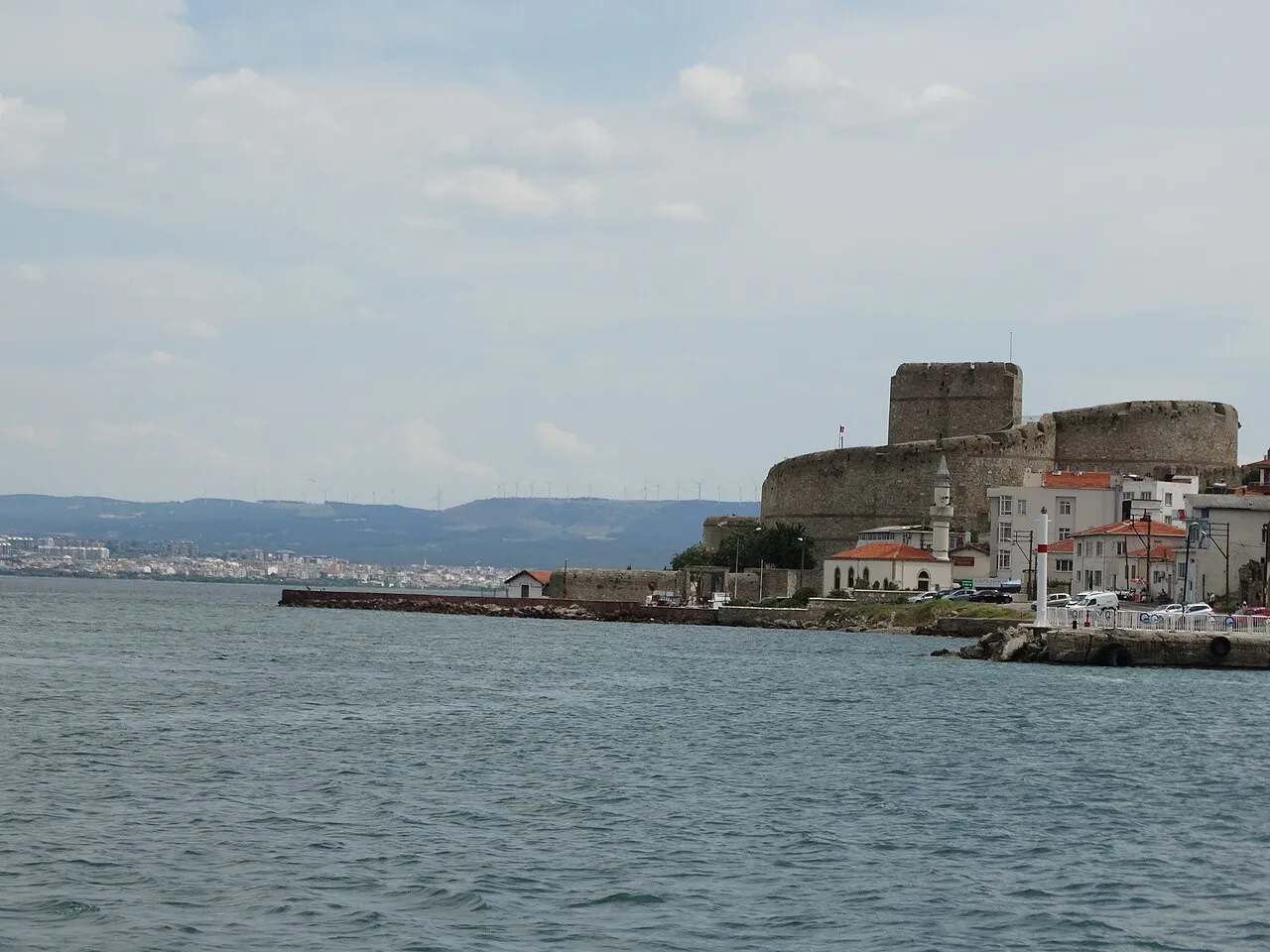 The castle of Kilitbahir on the DardanellesWikimedia Commons, Leon petrosyan, CC BY-SA 4.0 (Kilitbahir Castle 3.jpg)
Sources
- Michael Kritovoulos, History of Mehmed the Conqueror (about 1467).
- Laonikos Chalkokondyles, Histories (c. 1464).
- Dionysios Zakythinos, Le Despotat grec de Morée, vol. 1 (1932).
- Franz Babinger, Mehmed the Conqueror and His Time (1978).
- Kenneth M. Setton, The Papacy and the Levant (1204–1571), vol. 2 (1978).
- Steven Runciman, Lost Capital of Byzantium: The History of Mistra and the Peloponnese (1980).
Prev: Bosnia, 1463Next: Jajce, 1463–1464