20 February 1458 – 1460
Smederevo, 1458–1460
Despot Lazar Branković dies on 20 February 1458 without a son, and his blind brother Stefan and his widow Helena, a daughter of Thomas Palaiologos, share power in Serbia. A faction that looks to Hungary removes Mahmud Pasha’s brother Mihailo from the regency, and Mehmed, on his way to the Morea, sends the grand vizier into Serbia with an army that includes 1,000 janissaries. Mahmud takes Resava and other towns, beats the Serbs outside Smederevo and breaks through the outer walls, but the citadel holds. He gives up the siege and takes Rudnik and then the fortress of Golubac on the Danube.
After the Morea campaign Mehmed meets Mahmud at Skopje. A Hungarian army crosses the Danube near Belgrade and marches south, and while it plunders the country around Užice the Ottoman troops of the region ambush it and drive it back. In January 1459 the Hungarian diet recognises Stephen Tomašević, the son of King Thomas of Bosnia, as ruler of Serbia. He takes the throne at Smederevo on 21 March 1459, marries Lazar’s daughter Helena on 1 April and a week later sends Stefan Branković into exile.
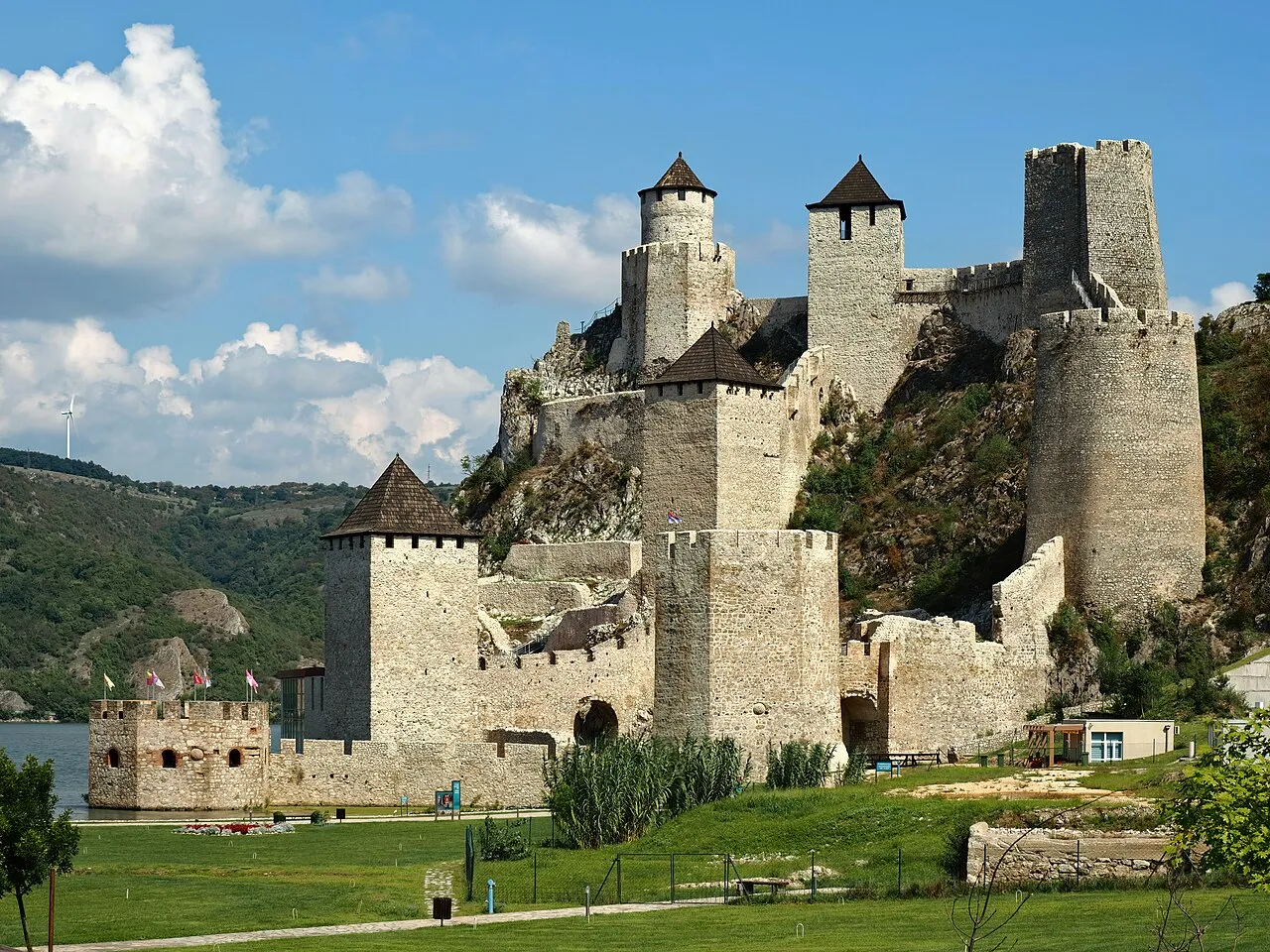 The fortress of Golubac on the DanubeWikimedia Commons, Petar Milošević, CC BY-SA 4.0 (Golubac Fortress (град Голубац).jpg)
Mehmed regards Serbia as his vassal and the new despot as a breach of his rights. He marches from Sofia in June 1459, and when he appears before Smederevo the Serbs of the town bring him its keys. Stephen surrenders the fortress on 20 June by Fine’s account, or in early July by another, and flees to Bosnia, and by the end of 1459 the other Serbian castles have surrendered and the Serbian Despotate has come to an end. In 1460 Ali Bey Mihaloğlu takes Michael Szilágyi, the uncle of King Matthias, prisoner at Baziaș on the Danube, and the Ottomans put him to death.
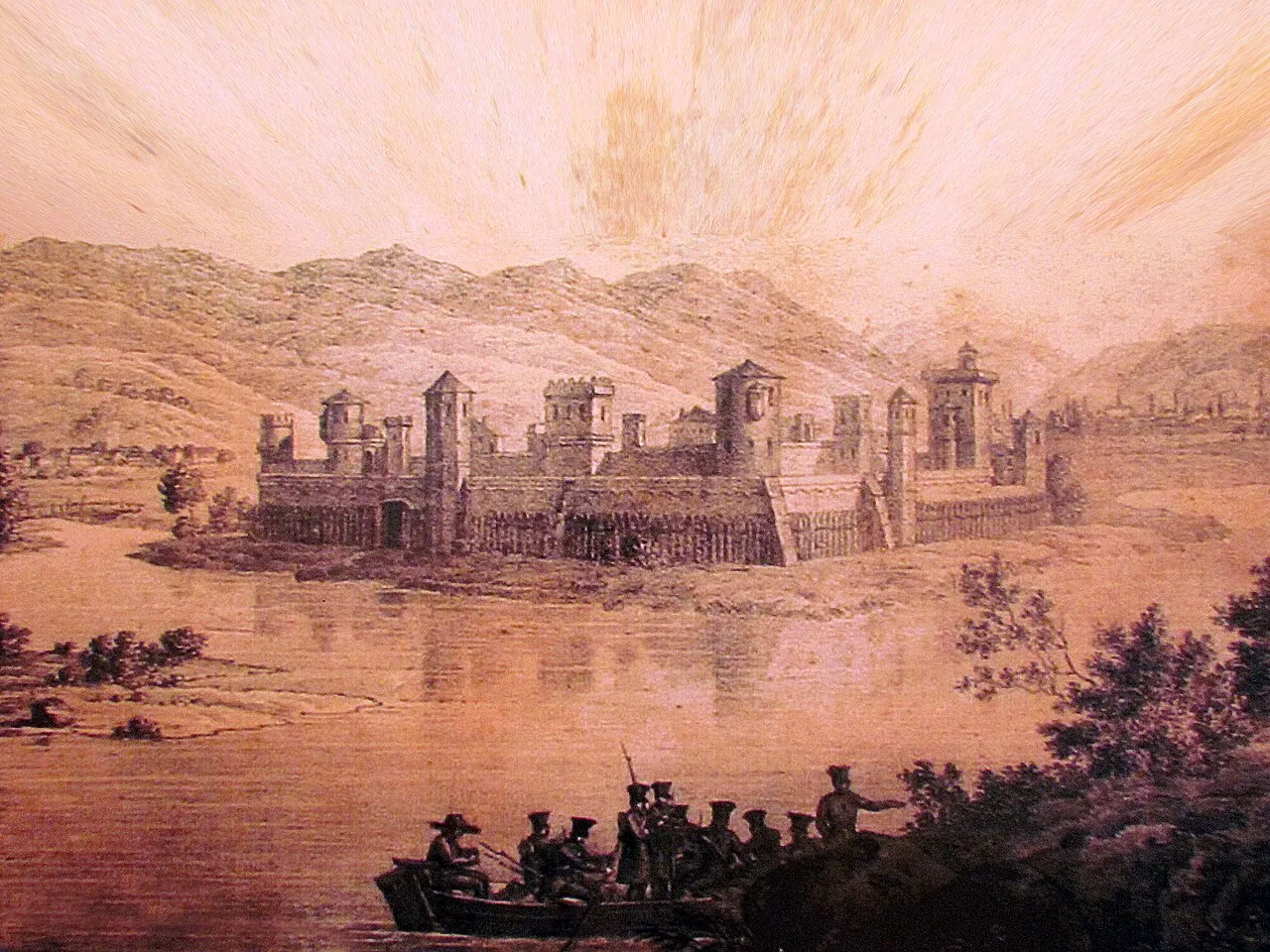 Smederevo fortress, a lithograph by Adolph Friedrich Kunike, 1820sWikimedia Commons, Gmihail, CC BY-SA 3.0 rs (Adolph Friedrich Kunike Smederevo Fortress.jpg)
Sources
- Laonikos Chalkokondyles, Histories (c. 1464).
- Michael Kritovoulos, History of Mehmed the Conqueror (about 1467).
- Konstantin Mihailović, Memoirs of a Janissary (about 1500).
- Selâhattin Tansel, Osmanlı kaynaklarına göre Fatih Sultan Mehmed’in siyasî ve askerî faaliyeti (1953).
- Franz Babinger, Mehmed the Conqueror and His Time (1978).
- John V. A. Fine, The Late Medieval Balkans (1987).
- Momčilo Spremić, Despot Đurađ Branković i njegovo doba (1994).
- Pál Engel, The Realm of St Stephen: A History of Medieval Hungary, 895–1526 (2001).
Prev: Corinth and Athens, 1458Next: The end of the Morea, 1459–1461