Spring 1452 – January 1453
The castle on the Bosporus, 1452
In spring 1452 Mehmed builds the castle of Rumelihisarı (Boğazkesen, the cutter of the strait) on the European shore of the Bosporus, where the strait is less than 700 m wide, across from Anadoluhisarı, which Bayezid I had built in the 1390s. Work begins on 15 April 1452, or in late March by Turkish histories, and ends in August. Doukas counts 1,000 masons at work, and each of the three great towers is named after the vizier who oversees its building: Halil Pasha, Zaganos Pasha and Saruca Pasha. Constantine XI sends envoys to protest, and Mehmed has them put to death.
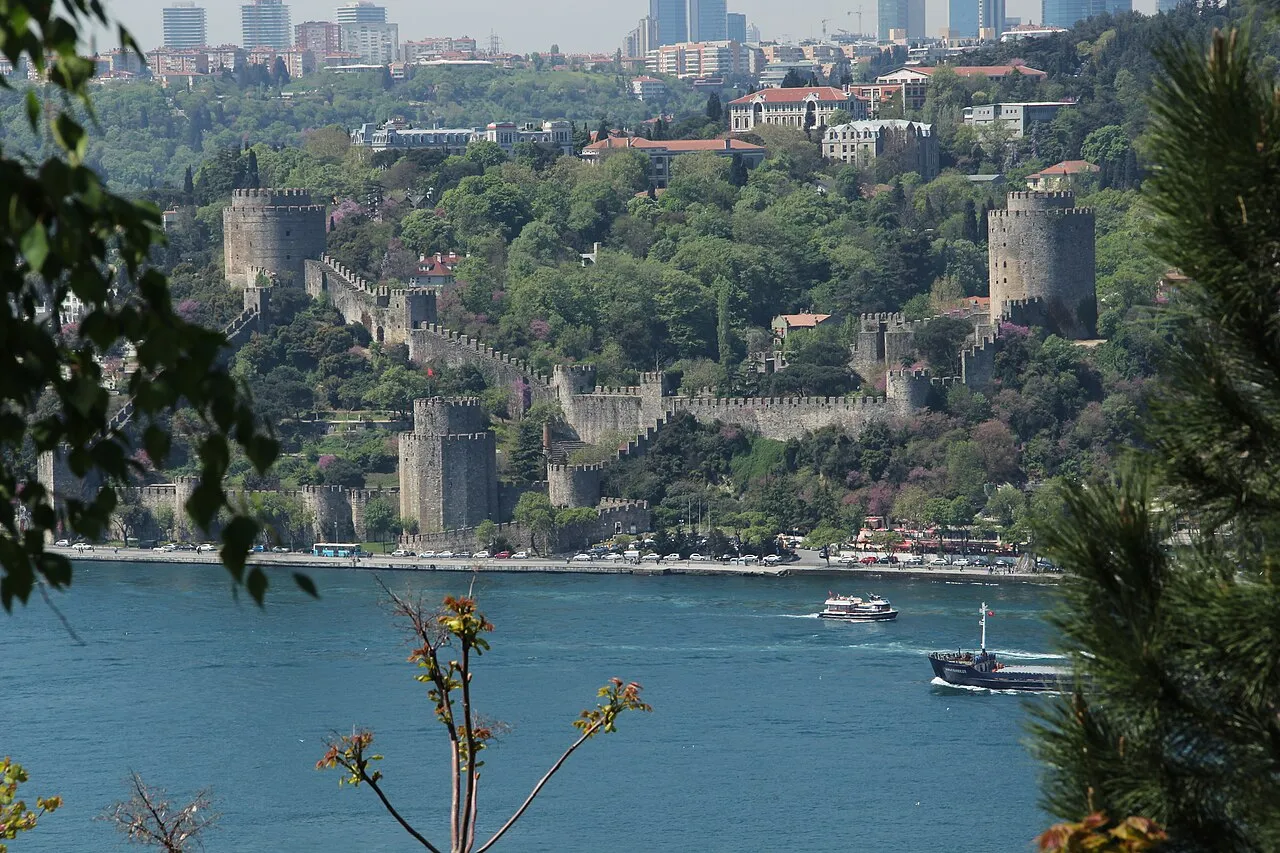 Rumelihisarı on the European shore of the Bosporus, seen from OtağtepeWikimedia Commons, Hamdigumus, CC0 (Rumeli Hisarı - Otağtepeden Görünüşü.jpg)
A garrison of 400 janissaries holds the castle, and every ship that passes must stop and pay a toll. In November 1452 a Venetian ship that refuses to stop is sunk by the castle’s guns with one shot, and its captain, Antonio Rizzo, is impaled. The guns were cast by Orban, a gunfounder from Hungary who had offered his services to Constantine, but Constantine could not pay him. At Edirne Orban casts a great gun about 8 m long for Mehmed in three months.
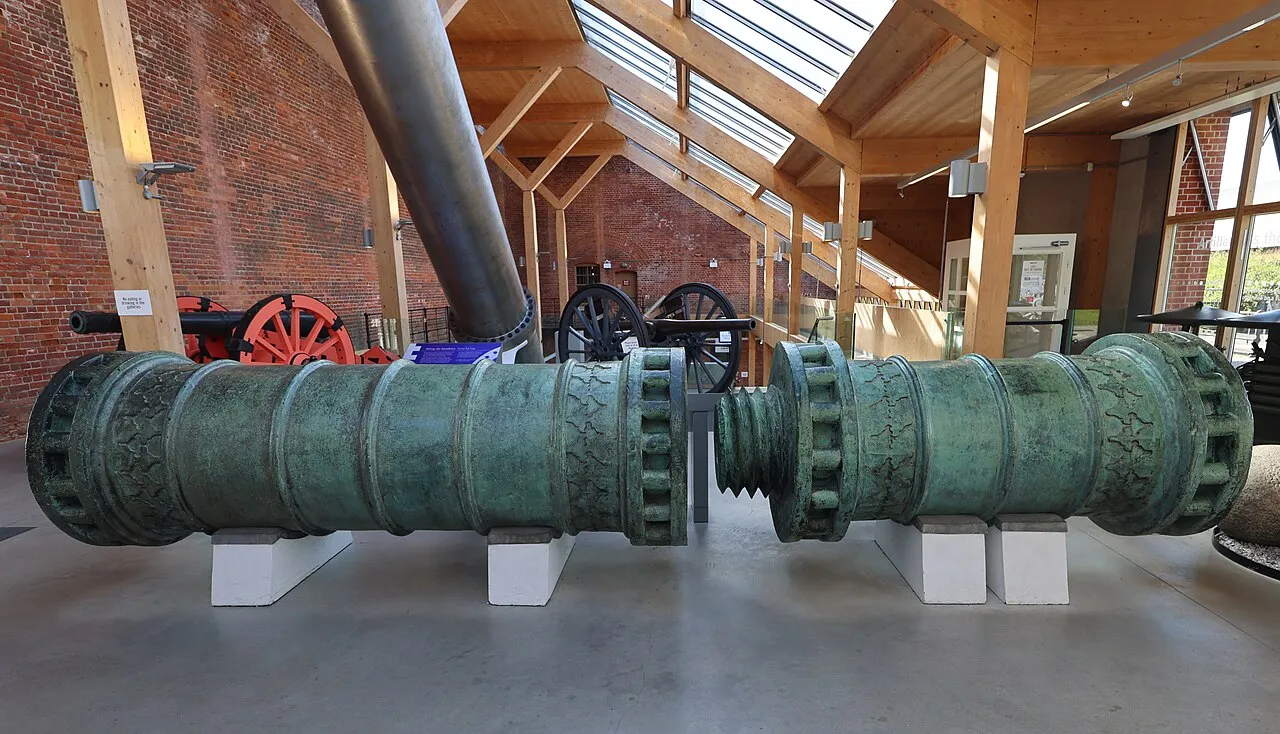 The Dardanelles Gun, a bronze bombard cast for Mehmed by Munir Ali in 1464, Fort NelsonWikimedia Commons, Geni, CC BY-SA 4.0 (Dardanelles Gun 2023.JPG)
In October 1452 Turahan Bey and his sons Ahmed and Ömer invade the Morea on Mehmed’s orders, so that the despots Thomas and Demetrios cannot help their brother Constantine. Turahan breaks through the rebuilt Hexamilion, plunders the land from Corinthia to Messenia and winters in the peninsula. The despots’ only success is an ambush at Dervenakia, where Matthew Palaiologos Asen takes Ahmed prisoner and carries him to Mistra.
Sources
- Doukas, Historia Turco-Byzantina (about 1462).
- Michael Kritovoulos, History of Mehmed the Conqueror (about 1467).
- George Sphrantzes, Chronicon minus (about 1477).
- Laonikos Chalkokondyles, Histories (c. 1464).
- Aşıkpaşazade, Tevârîh-i Âl-i Osmân (late 15th century).
- Steven Runciman, The Fall of Constantinople 1453 (1965).
- Franz Babinger, Mehmed the Conqueror and His Time (1978).
- Donald M. Nicol, The Immortal Emperor: The Life and Legend of Constantine Palaiologos (1992).
Prev: Karaman, 1451Next: Before the siege, 1452–1453