April 1463 – September 1464
Ohrid, 1463–1464
In April 1463 Skanderbeg and Mehmed agree a ten year armistice at Skopje. Skanderbeg does not want peace, but the lords around him, Tanush Thopia among them, favour it, and Tanush goes to Pope Pius II to explain it. On 28 July 1463 Venice goes to war with the sultan, and in late summer it renews its treaty with Skanderbeg: he gains the right of asylum in Venice and a promise that any Venetian peace with the Ottomans will guarantee Albania.
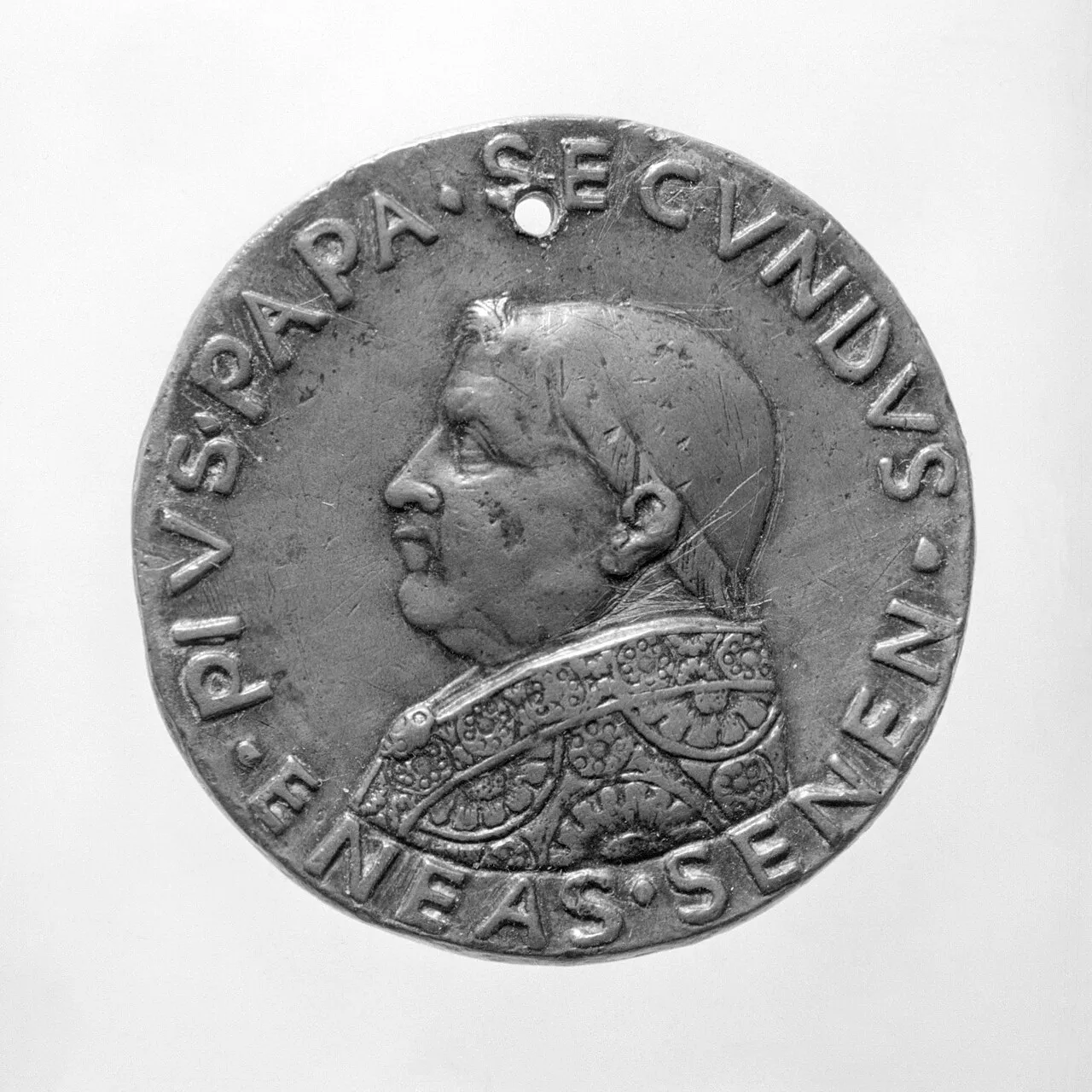 Pope Pius II on a medal by Andrea Guazzalotti, 1460, Metropolitan Museum of ArtWikimedia Commons, Andrea Guazzalotti, CC0 (Pope Pius II MET 147315.jpg)
Pius II proclaims a crusade, and in his plan Skanderbeg is to gather 20,000 men at Durrës (Durazzo) as its central army. On 27 November 1463, when Şeremet Bey is sent with 14,000 men to strengthen the fortresses around Ohrid, Skanderbeg declares war on the sultan. Venice sends him 500 horsemen and 500 foot soldiers under the condottiero Antonio da Cosenza, called Cimarosto.
Pius II dies at Ancona on 15 August 1464 while he waits for his crusade fleet, and the crusade ends with him. Skanderbeg goes on with Venice, and on 6 September 1464 he and Cimarosto march from Krujë into the lands around Ohrid. On 14 or 15 September they draw the garrison out of the gates of Ohrid with a feigned retreat and rout it. Şeremet loses 10,000 men, and his son is taken prisoner.
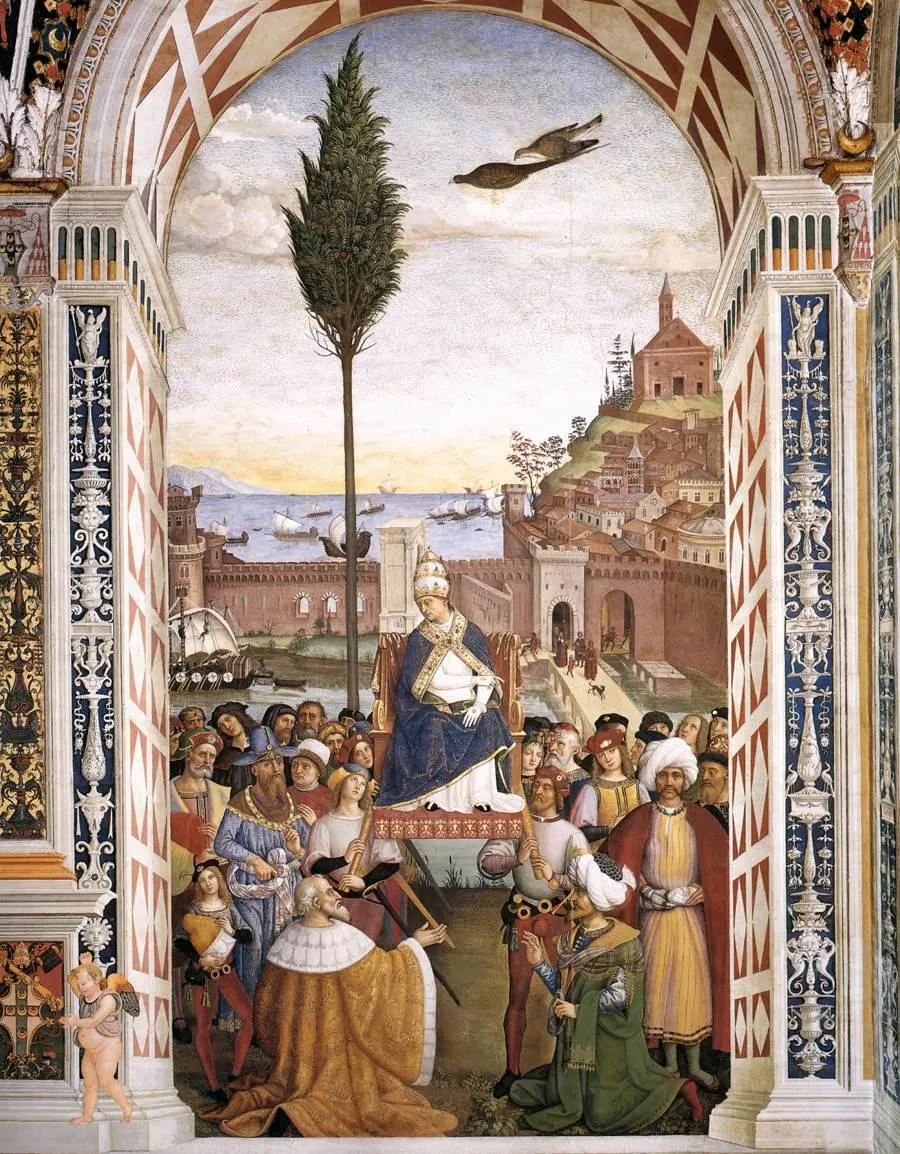 Pius II arrives at Ancona, a fresco by Pinturicchio in the Piccolomini Library, Siena, 1502–1508Wikimedia Commons, Pinturicchio, Public domain (Pinturicchio - No. 10 - Pope Pius II Arrives in Ancona - WGA17807.jpg)
Sources
- Demetrio Franco, Comentario de le cose de’ Turchi, et del S. Georgio Scanderbeg (1480).
- Marin Barleti, Historia de vita et gestis Scanderbegi Epirotarum principis (about 1508).
- Pope Pius II, Commentaries (1464).
- Fan S. Noli, George Castrioti Scanderbeg (1405–1468) (1947).
- Kenneth M. Setton, The Papacy and the Levant (1204–1571), vol. 2 (1978).
- Franz Babinger, Mehmed the Conqueror and His Time (1978).
- Kristo Frashëri, Gjergj Kastrioti Skënderbeu: jeta dhe vepra, 1405–1468 (2002).
- Oliver Jens Schmitt, Skanderbeg: Der neue Alexander auf dem Balkan (2009).
Prev: Apulia and Mokra, 1461–1462Next: Vaikal and Kashar, 1465