April – June 1455
Novo Brdo, 1455
In spring 1455 Mehmed marches against southern Serbia and its silver mines. His army comes from Edirne by Sofia and lays siege to Novo Brdo, the richest mining town of the despot. The Serbs cannot face the Ottoman army in the open, so they hold their towns and the peasants flee into the castles and the forests. After 40 days of fire from heavy guns Novo Brdo surrenders on 1 June 1455.
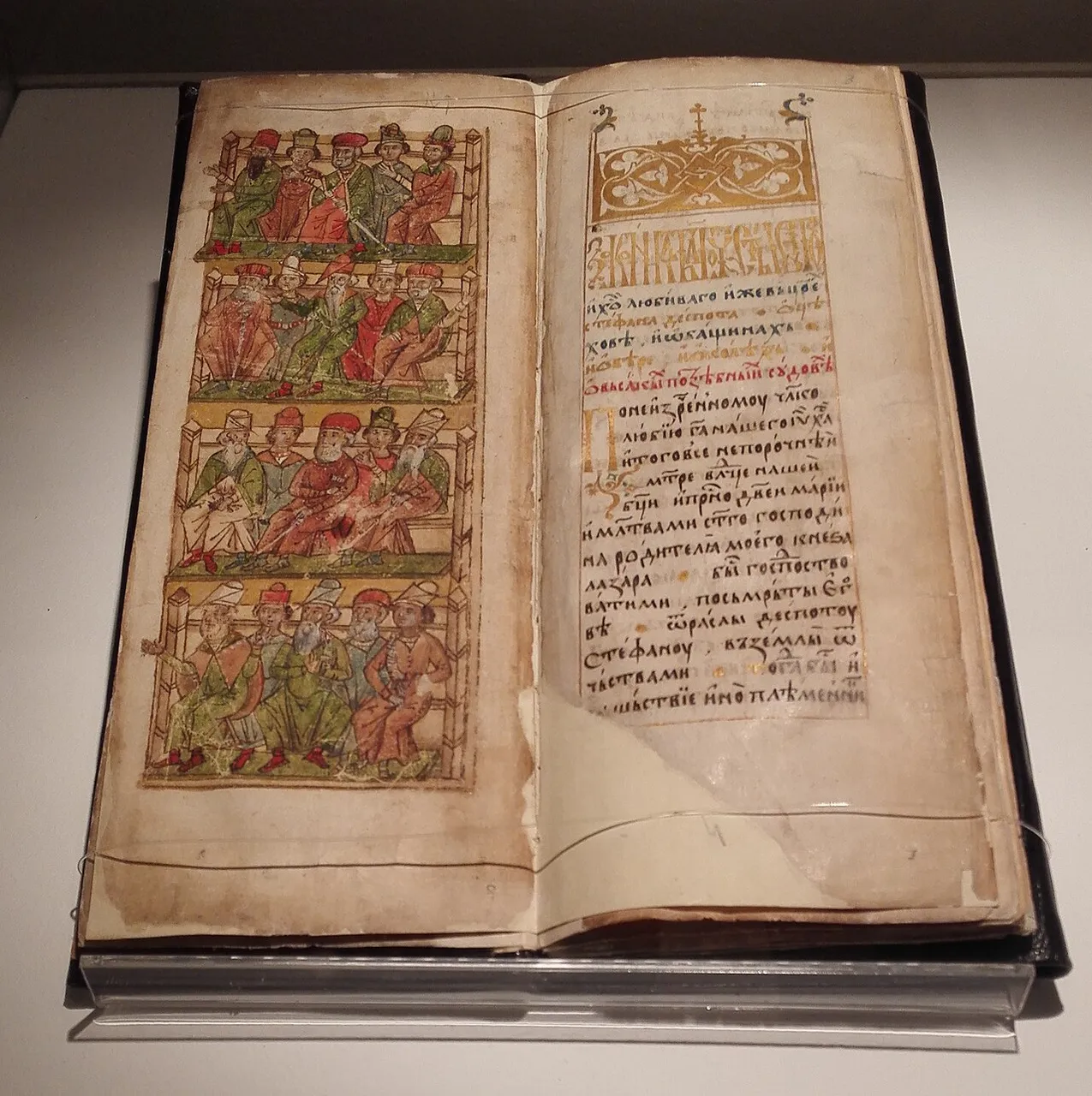 The mining code that Despot Stefan Lazarević issued at Novo Brdo in 1412, in a copy made at Kratovo about 1580Wikimedia Commons, Mickey Mystique, CC BY-SA 4.0 (Rudarski zakonik Despota Stefana Lazarevića.jpg)
Konstantin Mihailović, a young man of the town, describes what follows. The sultan stands at the small gate of the castle and has the men of rank beheaded. About 700 young women are given to his soldiers and commanders, and 320 boys, Mihailović and his two brothers among them, are taken to be trained as janissaries.
The army takes the mines of Trepča and the other towns around Novo Brdo, and Prizren surrenders on 21 June. Southern Serbia becomes Ottoman. On his way home Mehmed visits the tomb of Murad I on Kosovo field. Đurađ asks Hungary for a new crusade and comes back to Smederevo with nothing, and early in 1456 he accepts a peace that leaves the south to the sultan.
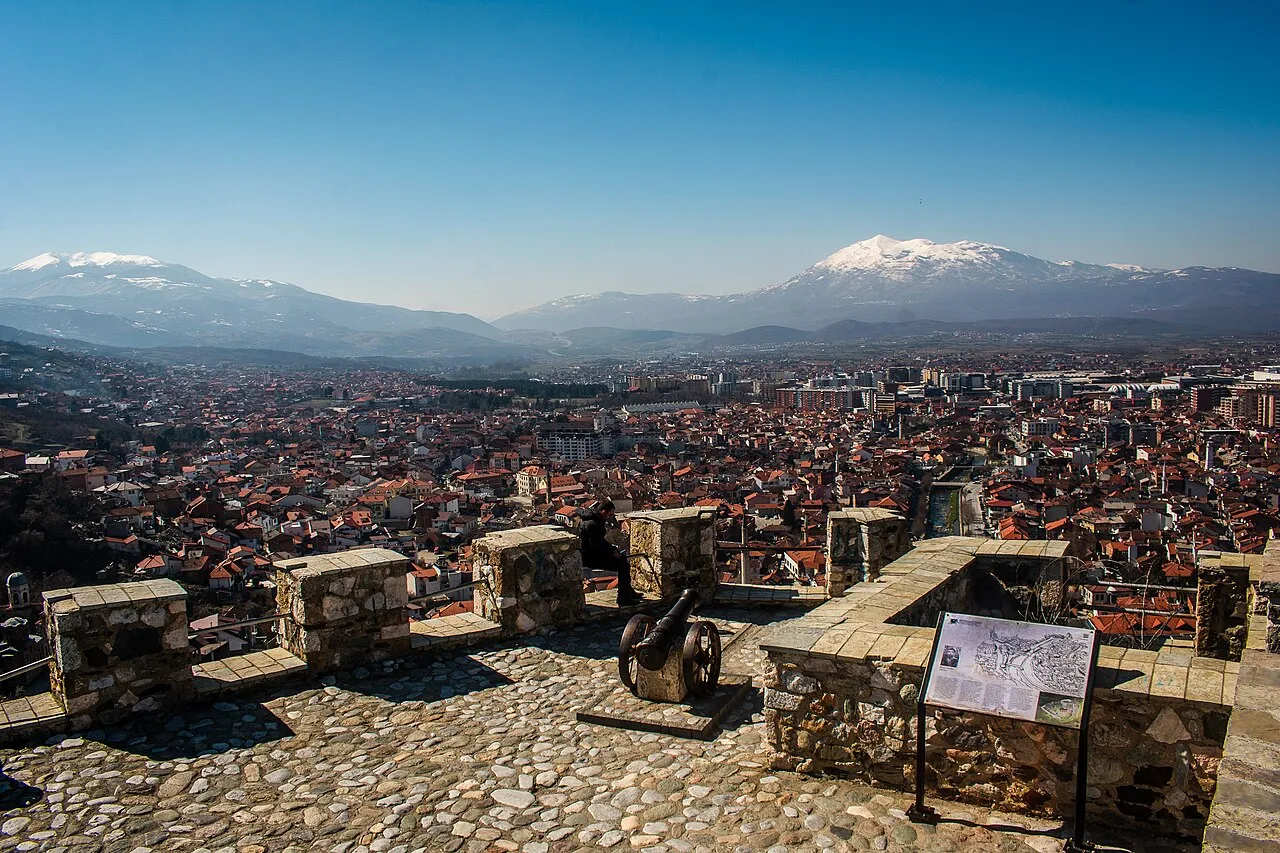 Prizren seen from its fortressWikimedia Commons, Tom.whitehead337, CC BY-SA 4.0 (Prizren Fortress (Kalaja e Prizrenit).jpg)
Sources
- Konstantin Mihailović, Memoirs of a Janissary (about 1500).
- Michael Kritovoulos, History of Mehmed the Conqueror (about 1467).
- Aşıkpaşazade, Tevârîh-i Âl-i Osmân (late 15th century).
- Tursun Beg, Tarih-i Ebü’l-Feth (about 1490).
- Franz Babinger, Mehmed the Conqueror and His Time (1978).
- Halil İnalcık, Fatih Devri Üzerinde Tetkikler ve Vesikalar I (1954).
- John V. A. Fine, The Late Medieval Balkans (1987).
- Noel Malcolm, Kosovo: A Short History (1998).
Prev: Serbia, 1454Next: Foça and the islands, 1455–1456