1453 – October 1454
The Morea revolt, 1453–1454
After the fall of Constantinople the Albanians of the Morea rise against the despots Thomas and Demetrios, Constantine’s brothers, who rule the peninsula as tributaries of the sultan. About 30,000 Albanians follow their chieftain Peter Bua and offer to place themselves under Venice. The Venetian Senate agrees to send them an envoy, but none goes. Many Greeks join them, and in the lands of Demetrios they choose Manuel Kantakouzenos, a former governor of the Mani, as their despot. In the lands of Thomas the revolt is led by John Asen Zaccaria, the son of the last prince of Achaea, who escapes from Thomas’s prison and lays siege to Patras.
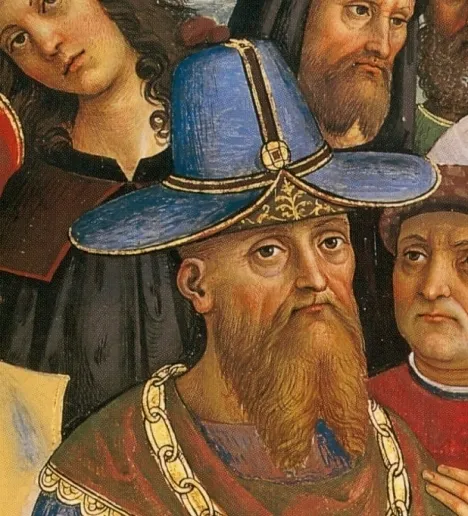 Thomas Palaiologos in Pinturicchio’s fresco of Pius II at Ancona, Piccolomini Library, Siena, 1502–1508Wikimedia Commons, Pinturicchio, Public domain (Thomas Palaiologos2.jpg)
The despots ask the sultan for help. In December 1453 Ömer Bey, a son of Turahan, comes from Thessaly and beats the rebels. He leaves when his brother Ahmed, a prisoner at Mistra since 1452, is set free. The revolt goes on, and in summer 1454 Venice sends Vettore Cappello to talk to all sides and to buy ports in the Morea.
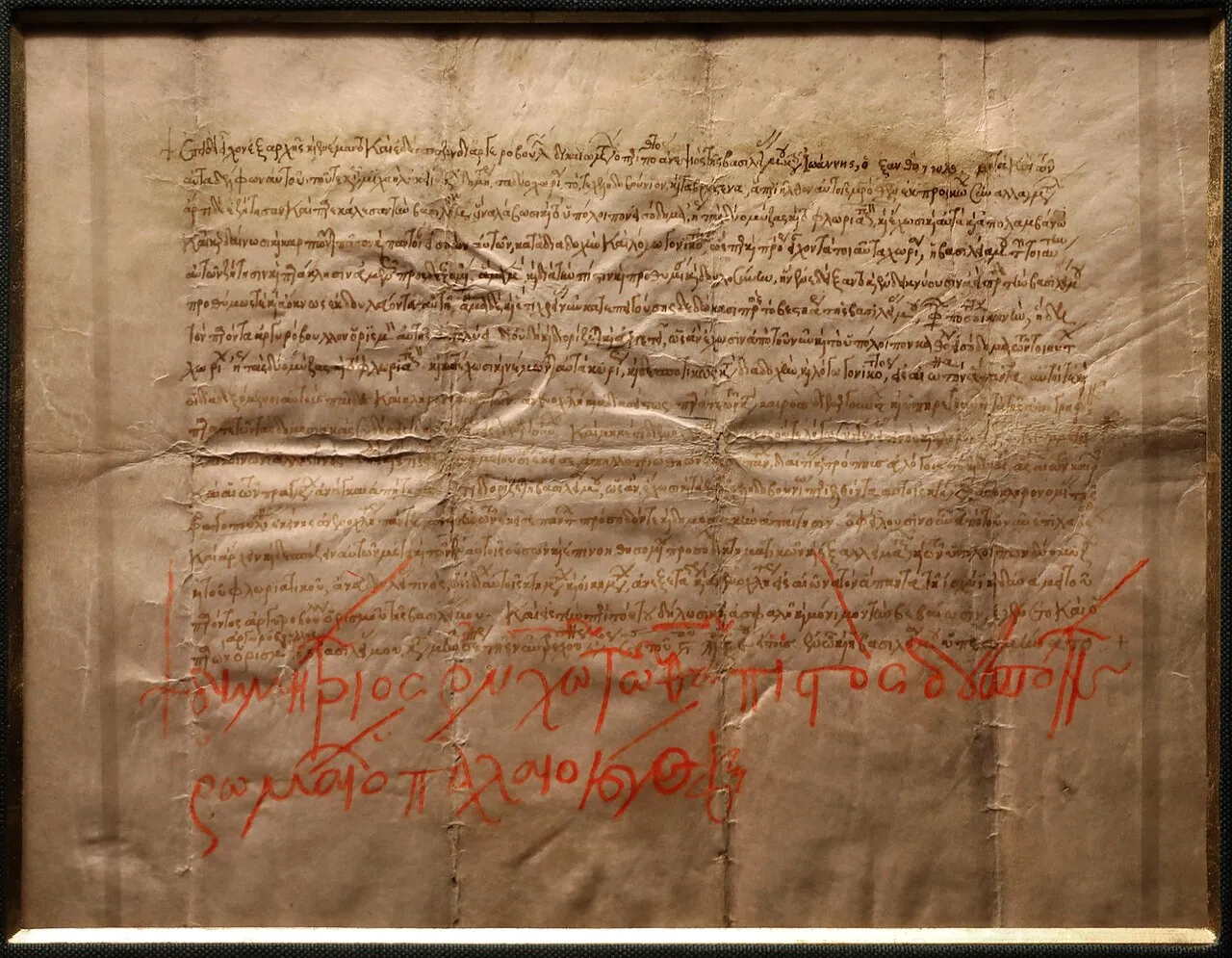 A decree of Demetrios Palaiologos, despot at Mistra, on parchment with his silver seal, Benaki MuseumWikimedia Commons, Francesco Bini, CC BY-SA 4.0 (Demetrio paleologo, despota di mystras, editto su pergamena con sigillo d'argento, 1456.jpg)
In October 1454 Turahan himself comes into the peninsula. Zaccaria abandons the siege of Patras and falls back to Aetos, and after Turahan has taken a few fortresses the rebels give up. Turahan tells the brothers to settle their quarrels and rule well, and they pay the same tribute as before. Mehmed pardons Bua, Zaccaria flees and later lives on a pension in Venice and at the papal court, and Kantakouzenos escapes and is not heard of again.
Sources
- Laonikos Chalkokondyles, Histories (c. 1464).
- George Sphrantzes, Chronicon minus (about 1477).
- Doukas, Historia Turco-Byzantina (about 1462).
- Dionysios Zakythinos, Le Despotat grec de Morée, vol. 1 (1932).
- Franz Babinger, Mehmed the Conqueror and His Time (1978).
- Kenneth M. Setton, The Papacy and the Levant (1204–1571), vol. 2 (1978).
- John V. A. Fine, The Late Medieval Balkans (1987).
- Donald M. Nicol, The Last Centuries of Byzantium, 1261–1453 (2nd ed., 1993).
Prev: After the fall, 1453–1454Next: Serbia, 1454