17 April 1461 – August 1462
Apulia and Mokra, 1461–1462
Alfonso V of Aragon dies in June 1458, and many barons of the Kingdom of Naples rise against his son Ferrante for the Angevin claimant, John of Anjou. Skanderbeg, still a vassal of the Aragonese crown, sends a nephew with 500 horsemen to Apulia in September 1460. On 17 April 1461 he makes a three year armistice with Mehmed and prepares to follow them.
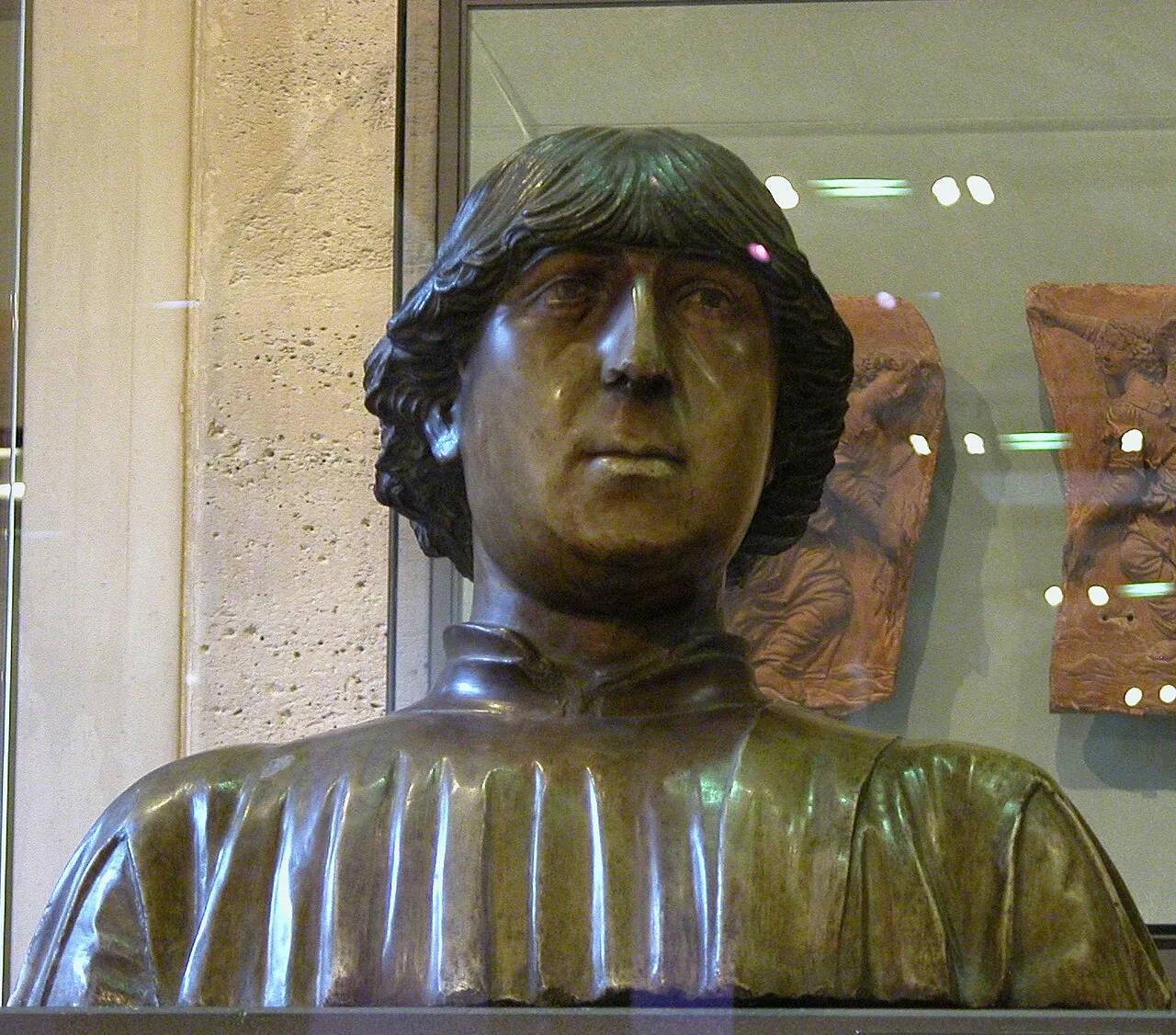 Ferrante, king of Naples, in a 15th-century bronze bustWikimedia Commons, anonymous, CC BY-SA 3.0 (Ferdinando I Napoli.JPG)
In August 1461 Skanderbeg sails with about 1,000 horsemen and 2,000 foot soldiers. Part of the force lands at Barletta on 24 August, and the Angevins who are besieging Ferrante there lift the siege. Skanderbeg goes first to Dubrovnik (Ragusa) for money and supplies, and he reaches Barletta on 3 September. Through the autumn his horsemen raid the lands of the Prince of Taranto and beat John of Anjou’s men on the hill of Seggiano near Troia, and on 28 December 1461 Trani surrenders to him.
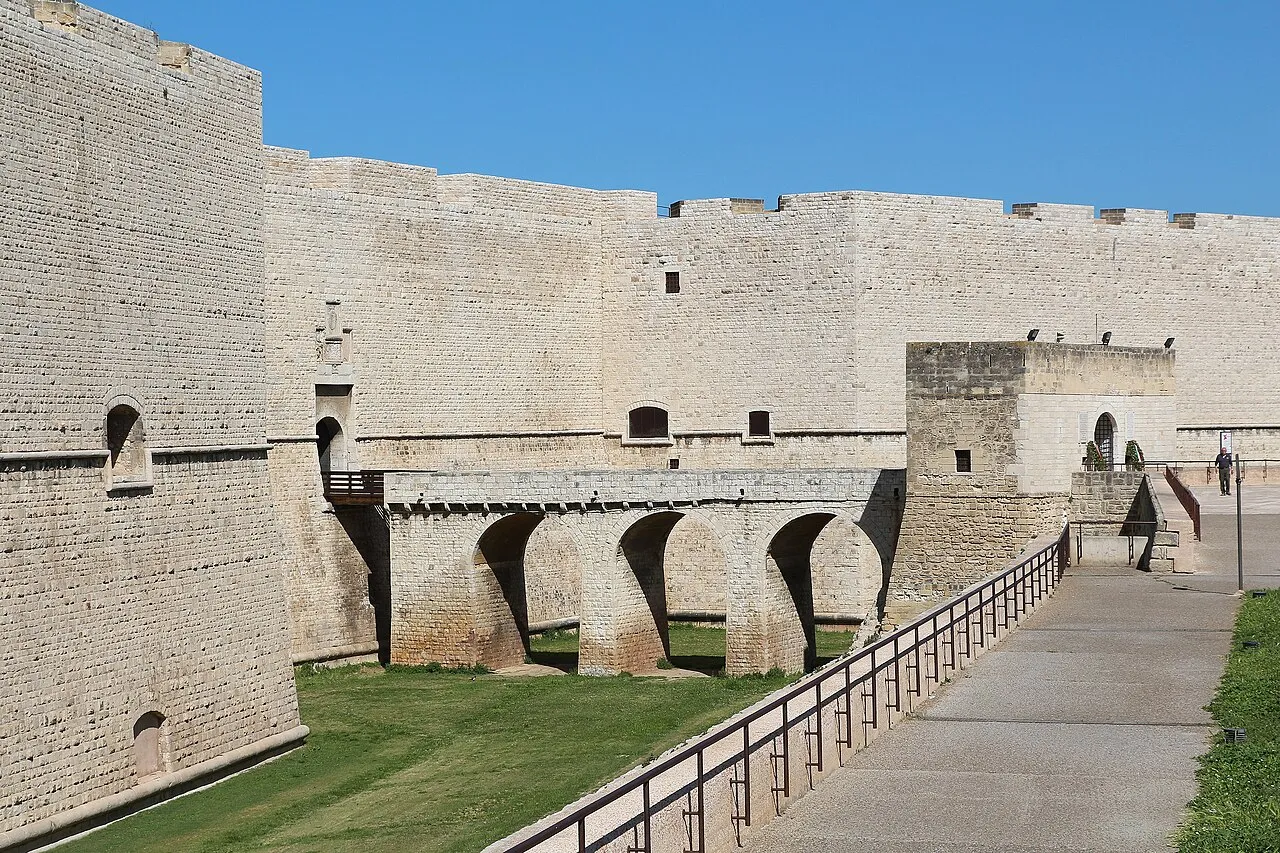 The castle of Barletta, rebuilt in the 16th centuryWikimedia Commons, Bernard Gagnon, CC0 (Castle of Barletta 05.jpg)
Skanderbeg leaves his soldiers in Apulia and comes home in January 1462. When Mehmed sends Sinan Bey with thousands of horsemen into Albania, Skanderbeg marches east from Krujë through Debar and waits on a mountain above the Mokra valley, on the road that the Ottomans are expected to take. On 7 July 1462 his men advance beating drums and clashing their swords, and the Ottomans fall back in disorder and are pursued into Macedonia. That summer Skanderbeg also beats a second army under Hasan Bey, who is wounded and taken prisoner, and a third army of 30,000 men under Karaza Bey in the district of Skopje.
Sources
- Demetrio Franco, Comentario de le cose de’ Turchi, et del S. Georgio Scanderbeg (1480).
- Marin Barleti, Historia de vita et gestis Scanderbegi Epirotarum principis (about 1508).
- Fan S. Noli, George Castrioti Scanderbeg (1405–1468) (1947).
- Kenneth M. Setton, The Papacy and the Levant (1204–1571), vol. 2 (1978).
- Franz Babinger, Mehmed the Conqueror and His Time (1978).
- Harry Hodgkinson, Scanderbeg: From Ottoman Captive to Albanian Hero (1999).
- Kristo Frashëri, Gjergj Kastrioti Skënderbeu: jeta dhe vepra, 1405–1468 (2002).
- Gennaro Francione, Skënderbeu, një hero modern (2003).
- Oliver Jens Schmitt, Skanderbeg: Der neue Alexander auf dem Balkan (2009).
Prev: Herzegovina, 1463–1466Next: Ohrid, 1463–1464