April 1466 – February 1467
Krujë and Elbasan, 1466
On 18 April 1466 Venice learns that Mehmed’s army is heading for Albania. Neşri presents the campaign as revenge for Skanderbeg’s raids into Macedonia in 1464, which drew the sultan away from Jajce. Two columns advance along the valleys of the Shkumbin and the Black Drin, burn the villages that resist and enslave many of their people. Skanderbeg sends his wife Donika, his son Gjon and many people of Krujë by ship to Italy, and he withdraws into the mountains around Shkodër (Scutari) to gather men.
From mid June Mehmed besieges Krujë, which Tanush Thopia holds with 4,400 men by Barleti’s count, among them 1,000 Venetian foot soldiers and 200 Neapolitan marksmen. The guns make no breach, and the garrison refuses the sultan’s offers. Mehmed then builds a fortress at Elbasan on the Shkumbin, on the old Via Egnatia, in under a month from July by Babinger’s dating, and puts 400 soldiers and guns into it. He leaves Ballaban with 18,000 horsemen and 5,000 foot soldiers to keep up the siege.
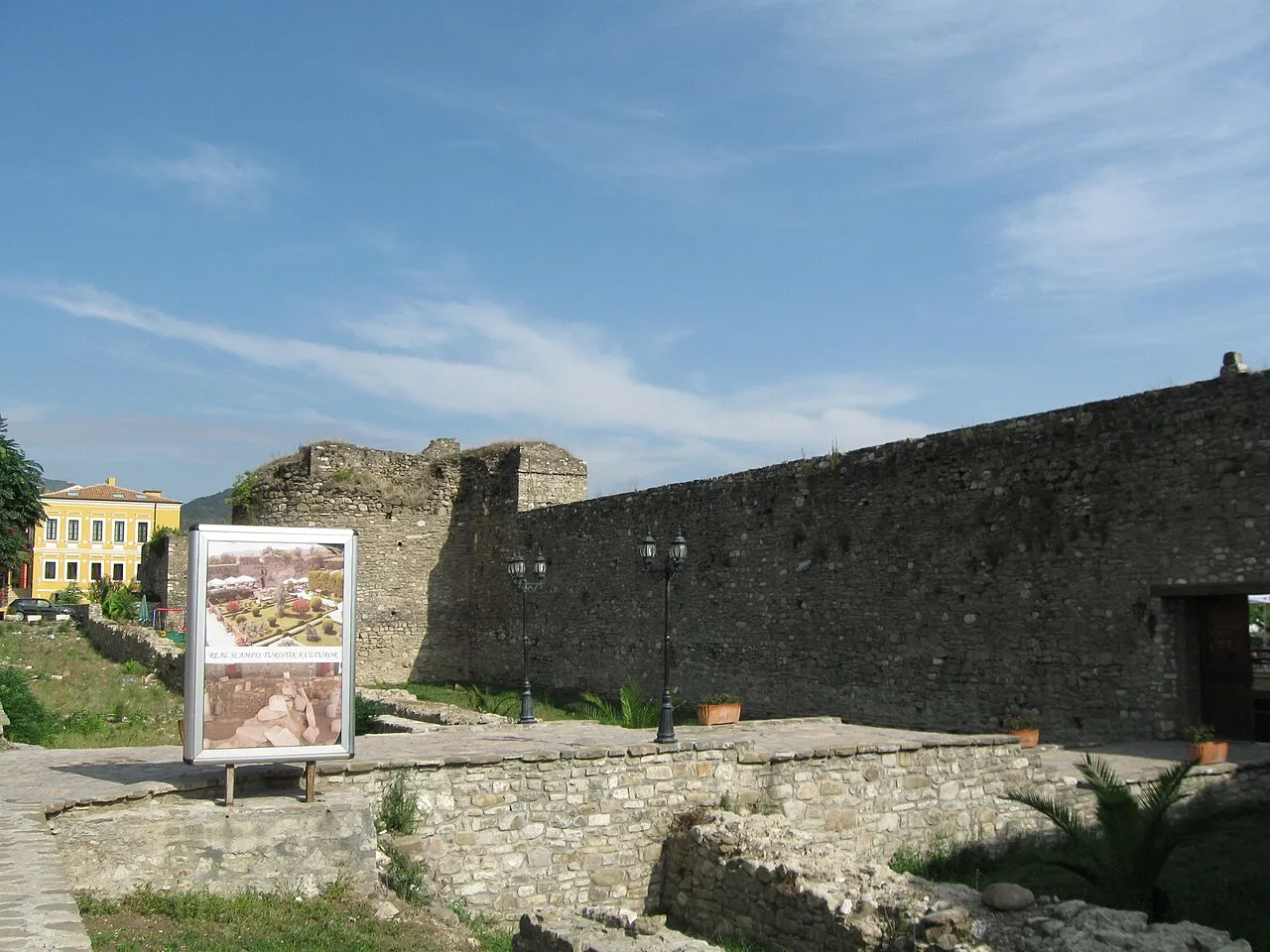 The walls of Elbasan castle, rebuilt by Mehmed in 1466Wikimedia Commons, David.r.1929, CC BY-SA 4.0 (Elbasan-Elbasan castle walls.JPG)
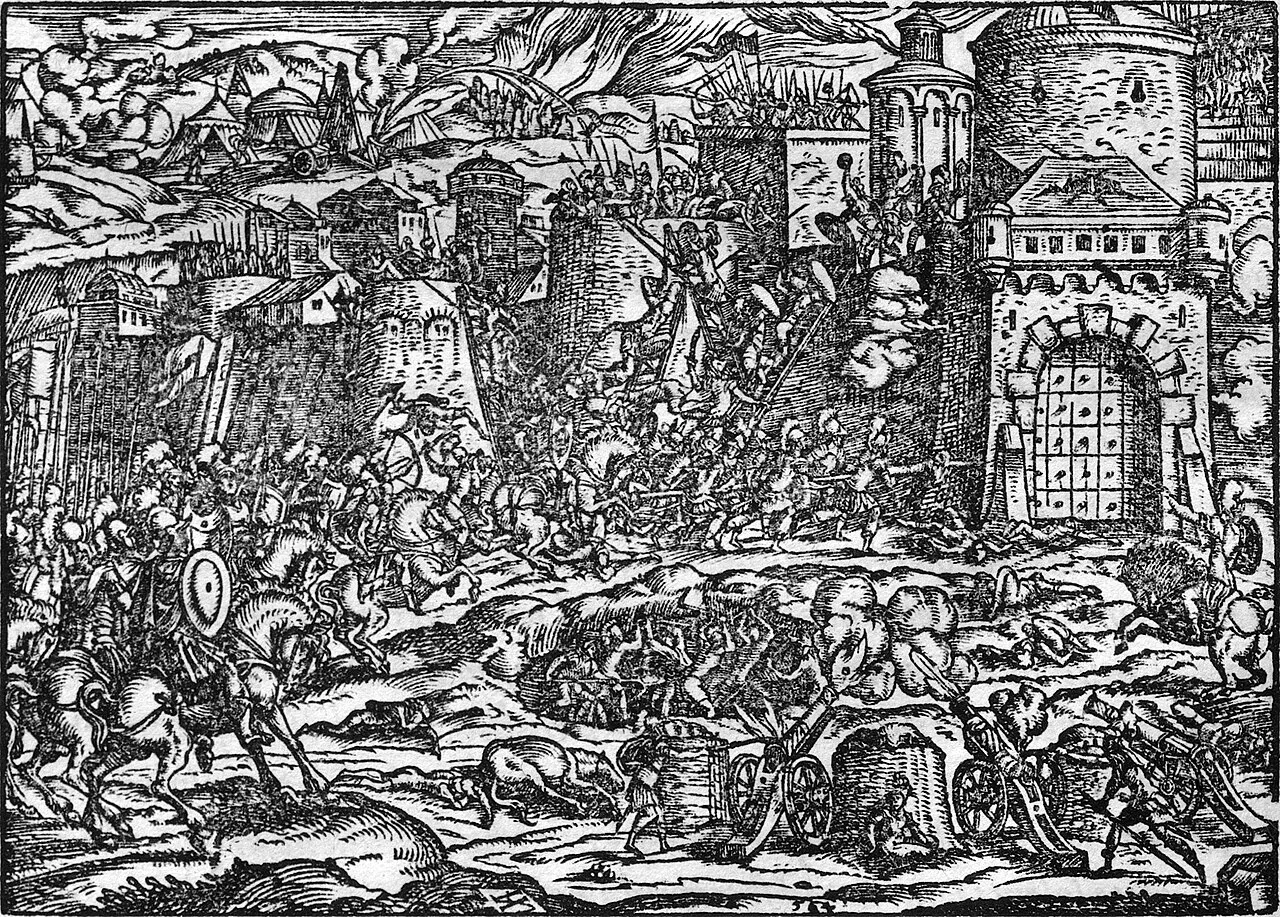 The siege of Krujë of 1466, a woodcut by Jost Amman in Philipp Lonicer’s Chronicorum Turcicorum, 1578Wikimedia Commons, Jost Amman, Public domain (Second Siege of Kruje 1466 (81771209).jpg)
On his way home Mehmed passes through Debar, where his men kill 8,000 people by Barleti’s account and 7,500 by Oruç Bey’s. At Ohrid he deposes Archbishop Dorotheos and sends him to Constantinople with his clergy and the leading men of the town. Venice fears for Durrës (Durazzo), about 50 km from Elbasan, but it sends little help, and in October Skanderbeg goes to Italy to ask for money. He reaches Rome on 12 December 1466, and when he leaves on 14 February 1467 Pope Paul II has given him 2,300 ducats.
Sources
- Michael Kritovoulos, History of Mehmed the Conqueror (about 1467).
- Demetrio Franco, Comentario de le cose de’ Turchi, et del S. Georgio Scanderbeg (1480).
- Tursun Beg, Tarih-i Ebü’l-Feth (about 1490).
- Oruç Bey, Tevârîh-i Âl-i Osmân (late 15th century).
- Marin Barleti, Historia de vita et gestis Scanderbegi Epirotarum principis (about 1508).
- Fan S. Noli, George Castrioti Scanderbeg (1405–1468) (1947).
- Kenneth M. Setton, The Papacy and the Levant (1204–1571), vol. 2 (1978).
- Franz Babinger, Mehmed the Conqueror and His Time (1978).
- Kristo Frashëri, Gjergj Kastrioti Skënderbeu: jeta dhe vepra, 1405–1468 (2002).
- Oliver Jens Schmitt, Skanderbeg: Der neue Alexander auf dem Balkan (2009).
Prev: Vaikal and Kashar, 1465Next: Krujë, 1467–1468