Summer 1463 – 1466
Herzegovina, 1463–1466
After the conquest of Bosnia in 1463 Mahmud Pasha marches south into the lands of Herceg Stjepan Vukčić Kosača, whose title of herceg, or duke, gives Herzegovina its name. He lays siege to Blagaj, the herceg’s seat on the Buna near the Neretva, and Stjepan agrees to a truce that gives the sultan all his lands north of Blagaj. Stjepan’s eldest son Vladislav has been at war with his father since spring 1462 and has asked Mehmed for help.
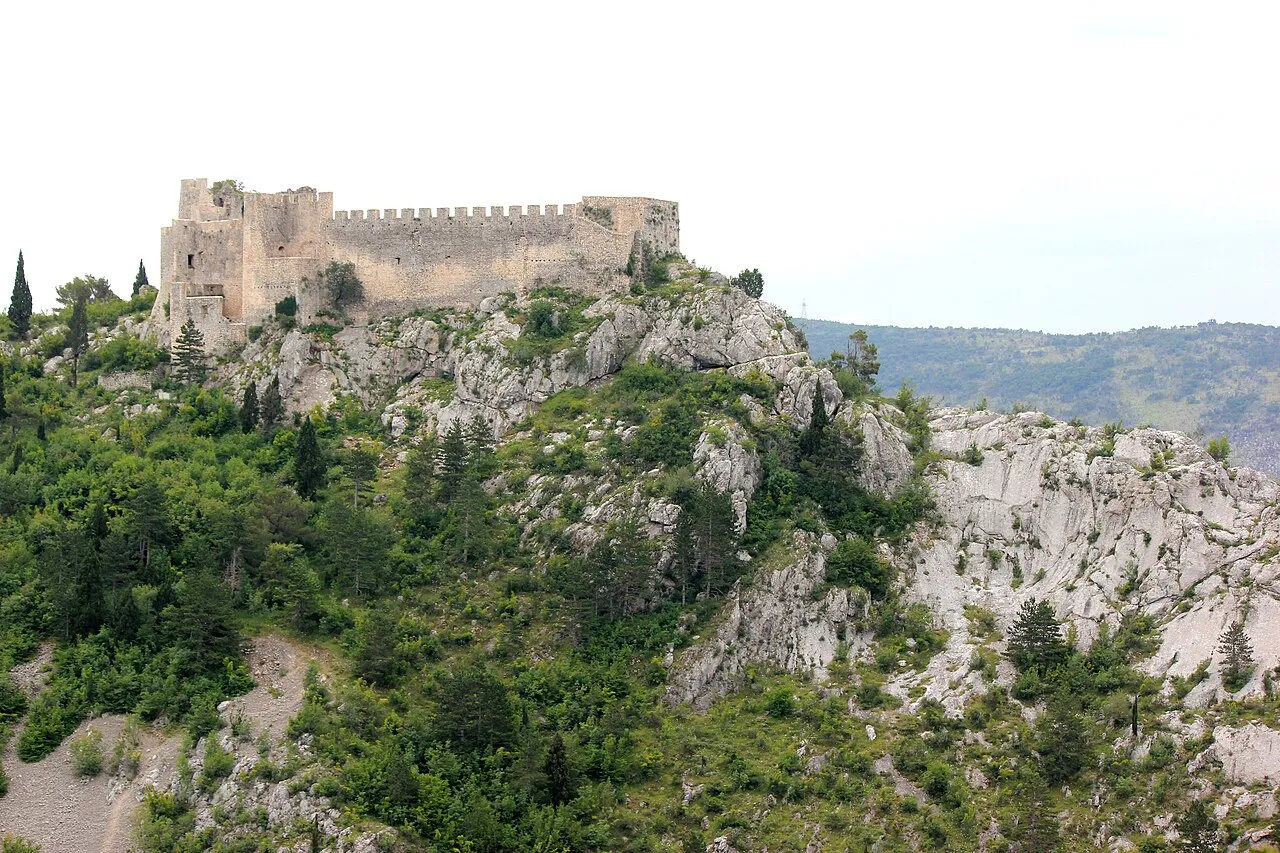 The castle of Blagaj on its hillWikimedia Commons, Julian Nyča, CC BY-SA 3.0 (Blagaj – Grad 2.jpg)
In December 1463 Stjepan accepts Matthias Corvinus as his overlord. In 1465 the Ottomans take most of the eastern part of his lands and make them the province of Hersek within the sanjak of Bosnia. Stjepan has handed the coast at Makarska to Venice, and in 1465 Matthias makes him take Hungarian garrisons into his forts on the Neretva.
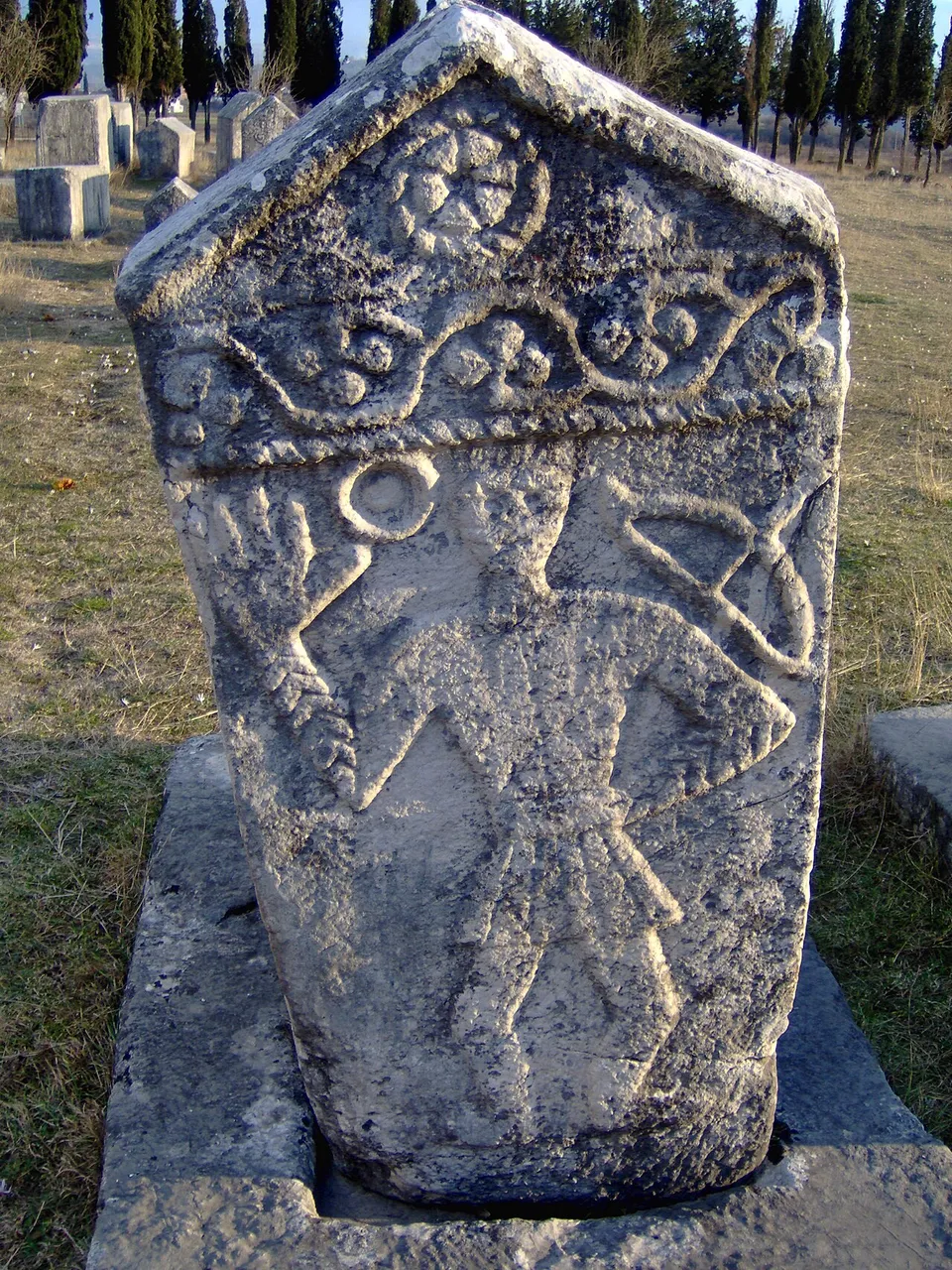 A medieval gravestone (stećak) at Radimlja in HerzegovinaWikimedia Commons, Litany, CC BY-SA 3.0 (Bosniangraves bosniska gravar februari 2007 stecak stecci3.jpg)
Blagaj falls to the Ottomans in 1466. On 21 May 1466 Stjepan, old and ill, dictates his will at Herceg Novi (then Novi), his winter seat on the coast, and blames Vladislav for bringing “the great Turk” into Bosnia, and he dies the next day. His sons divide what is left: Vladislav rules in the west, and Vlatko, the new herceg, holds the south-east around Novi.
Sources
- Laonikos Chalkokondyles, Histories (c. 1464).
- Sima Ćirković, Herceg Stefan Vukčić-Kosača i njegovo doba (1964).
- Franz Babinger, Mehmed the Conqueror and His Time (1978).
- John V. A. Fine, The Late Medieval Balkans (1987).
- Pál Engel, The Realm of St Stephen: A History of Medieval Hungary, 895–1526 (2001).
Prev: Jajce, 1463–1464Next: Apulia and Mokra, 1461–1462