1453 – 1481
The sultan’s law
Between 1477 and 1481 Mehmed issues a kanunname, a code of laws for the state, which lists for the first time the chief officials with their duties, pay, order of rank and punishments: the grand vizier and the viziers, the military judges (kazasker), the treasurers (defterdar) and the nişancı, who heads the chancery and draws the sultan’s monogram on his orders. One clause allows the son who takes the throne to put his brothers to death “for the order of the world” (nizam-ı alem), and the ulema approve it. Mehmed lives secluded behind the walls of his new palace, and his viziers lead the armies and receive the envoys. In 1477–1478 he strikes the first Ottoman gold coin, the sultani, and he reissues the silver akçe several times with less silver in it.
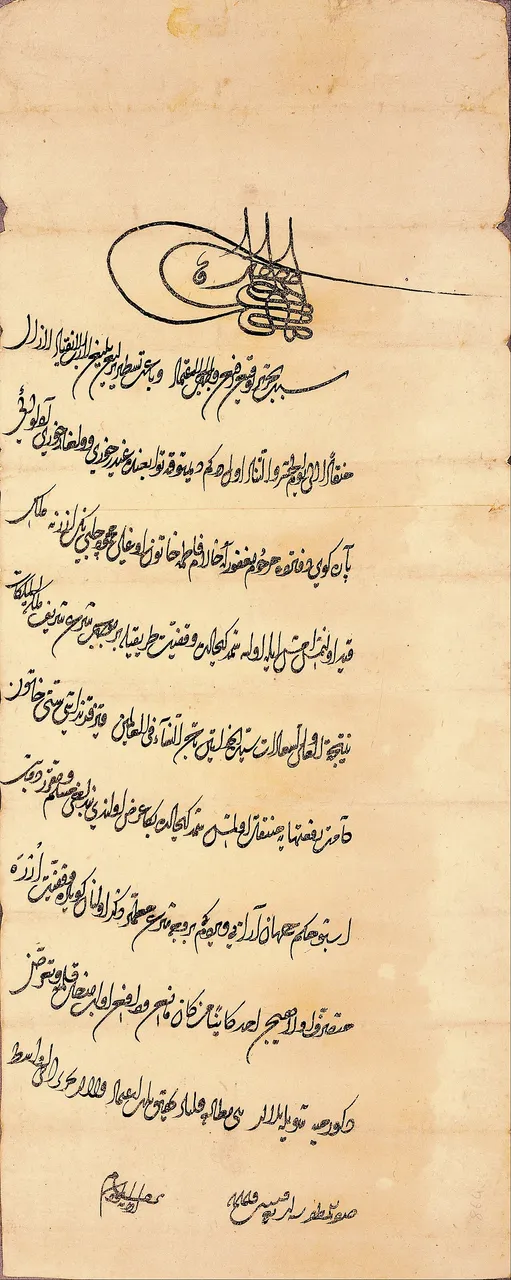 A ferman of Mehmed II under his tughra, 1459Wikimedia Commons, unknown scribe, Public domain (Unknown scribe - Ferman (imperial decree) of Sultan Mehmed II (r. 1451-1481) - Google Art Project.jpg)
After Çandarlı Halil Pasha is put to death in 1453, Mehmed takes his grand viziers from men raised through the devşirme, the levy of Christian boys for the sultan’s service. Mahmud Pasha, born at Novo Brdo into a branch of the Byzantine Angelos family, holds the office from 1456 to 1466 and from 1472 to 1474, Rum Mehmed Pasha, a Greek, from 1466 to 1469, and Gedik Ahmed Pasha from 1474, and Mahmud and Rum Mehmed are both put to death in 1474. Karamani Mehmed Pasha, grand vizier from 1476 or 1477, is a Turk and a scholar from Konya, who has worked on the kanunname as nişancı.
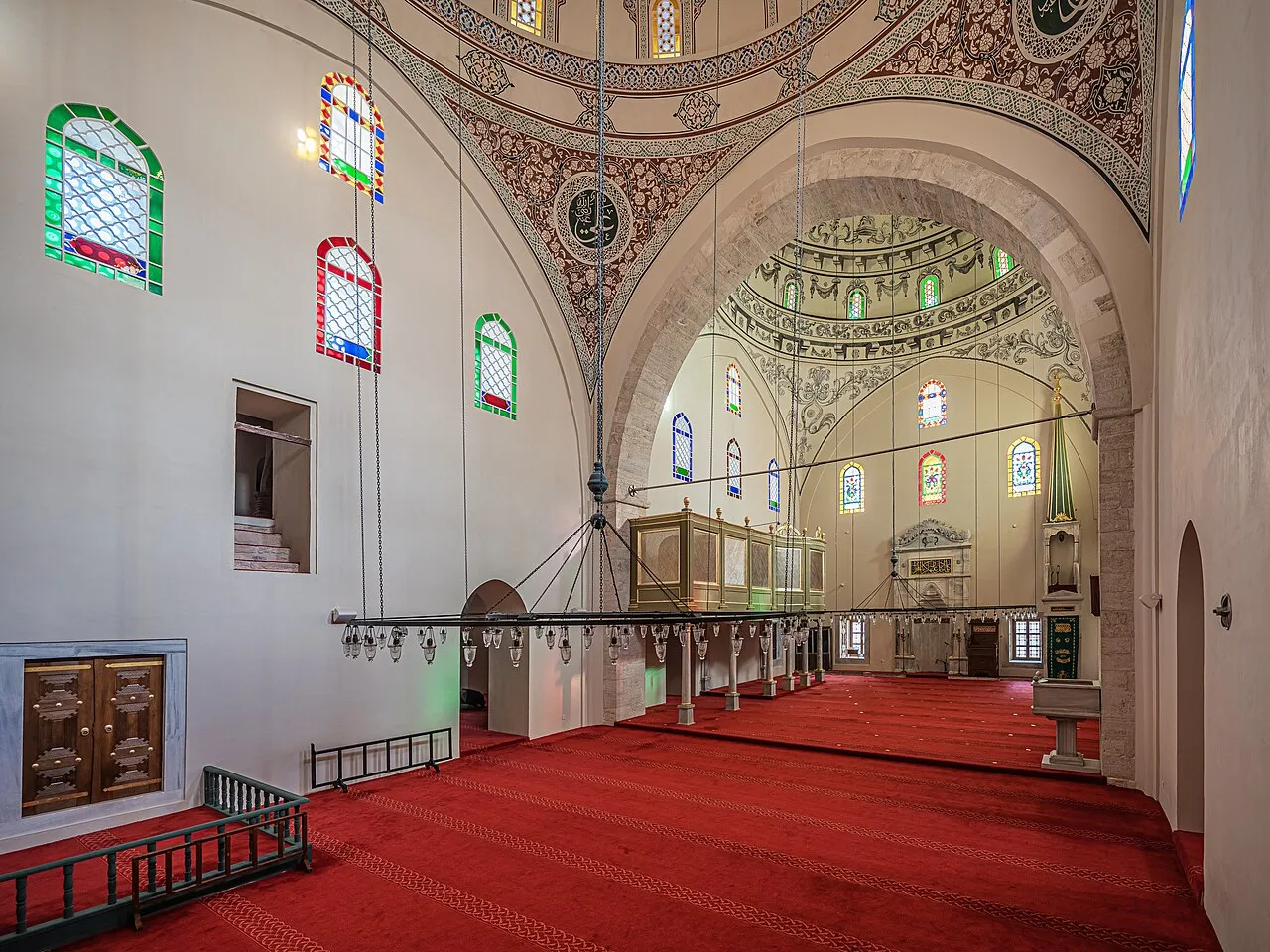 The mosque of Mahmud Pasha in Istanbul, built in the 1460sWikimedia Commons, A.Savin, FAL (Istanbul asv2021-11 img39 Mahmut Pasha Mosque.jpg)
The empire has two provinces, Rumelia in Europe and Anatolia in Asia, each under a beylerbey, and these are divided into sanjaks, whose beys lead the timar holders of their district in war. In Rumelia the bey of Gallipoli, Mesih Pasha from 1470, commands the fleet, Gedik Ahmed Pasha governs Vlorë from 1478, and Ballaban Badera governs Ohrid in the 1460s. Isa Bey governs Skopje until 1463, when he founds Sarajevo as the seat of the sanjak of Bosnia, and the beys of Smederevo and Nikopol guard the Danube. In Anatolia the sultan’s sons govern sanjaks: Bayezid at Amasya, Cem at Kastamonu from 1469, and Mustafa and after him Cem at Konya.
Sources
- Kanunname of Mehmed II (about 1477 – 1481), ed. Abdülkadir Özcan, Fatih Sultan Mehmed: Kanunnâme-i Âl-i Osman (2003).
- Tursun Beg, Tarih-i Ebü’l-Feth (about 1490).
- Halil İnalcık, The Ottoman Empire: The Classical Age 1300–1600 (1973).
- Franz Babinger, Mehmed the Conqueror and His Time (1978).
- Colin Imber, The Ottoman Empire, 1300–1481 (1990).
- Şevket Pamuk, A Monetary History of the Ottoman Empire (2000).
- Theoharis Stavrides, The Sultan of Vezirs: The Life and Times of the Ottoman Grand Vezir Mahmud Pasha Angelović (2001).
- Heath W. Lowry, The Nature of the Early Ottoman State (2003).
Prev: Istanbul rebuilt, 1453–1481Next: The sultan’s court