April – 22 May 1481
Mehmed’s death, 1481
In spring 1481 Mehmed crosses to Üsküdar and gathers an army for a new campaign. He keeps its goal secret, and Rhodes, southern Italy and the Mamluk sultanate of Egypt have all been named as possible targets. He falls ill on the march and dies in his camp near Gebze on 3 May 1481, aged 49. Gout is the usual explanation, and Babinger argues that his physician Yakub Pasha poisoned him, while İnalcık finds no support for this in the other sources.
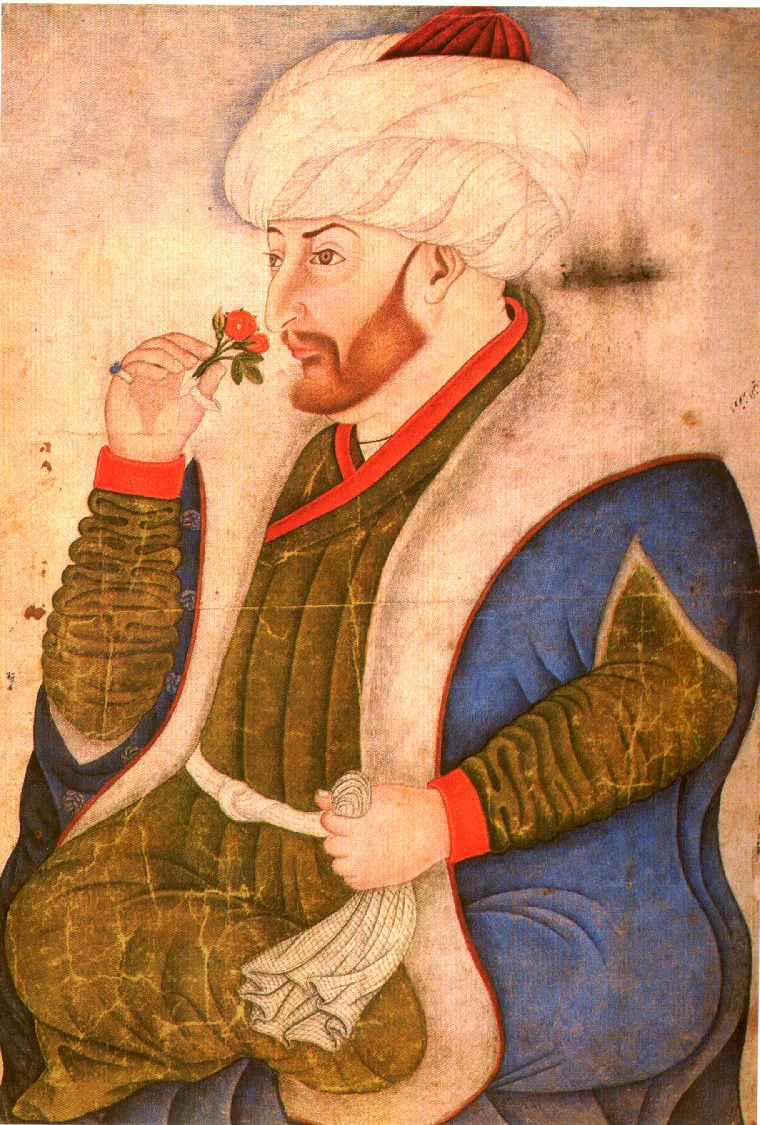 Mehmed II smelling a rose, attributed to Nakkaş Sinan Bey, late 15th century, Topkapı Palace MuseumWikimedia Commons, Nakkaş Sinan Bey, Public domain (Sarayi Album 10a.jpg)
Karamani Mehmed Pasha, the grand vizier, keeps the death secret, has the body brought to Constantinople and sends messengers to the two princes: Bayezid, governor at Amasya, and Cem, governor of Karaman at Konya, who is nearer. The janissaries, who favour Bayezid, learn of it, march into the city and kill the grand vizier, and they plunder houses and shops. The former grand vizier İshak Pasha names Bayezid’s son Korkut regent and calls Bayezid to come at once, and the messenger to Cem is stopped on the road.
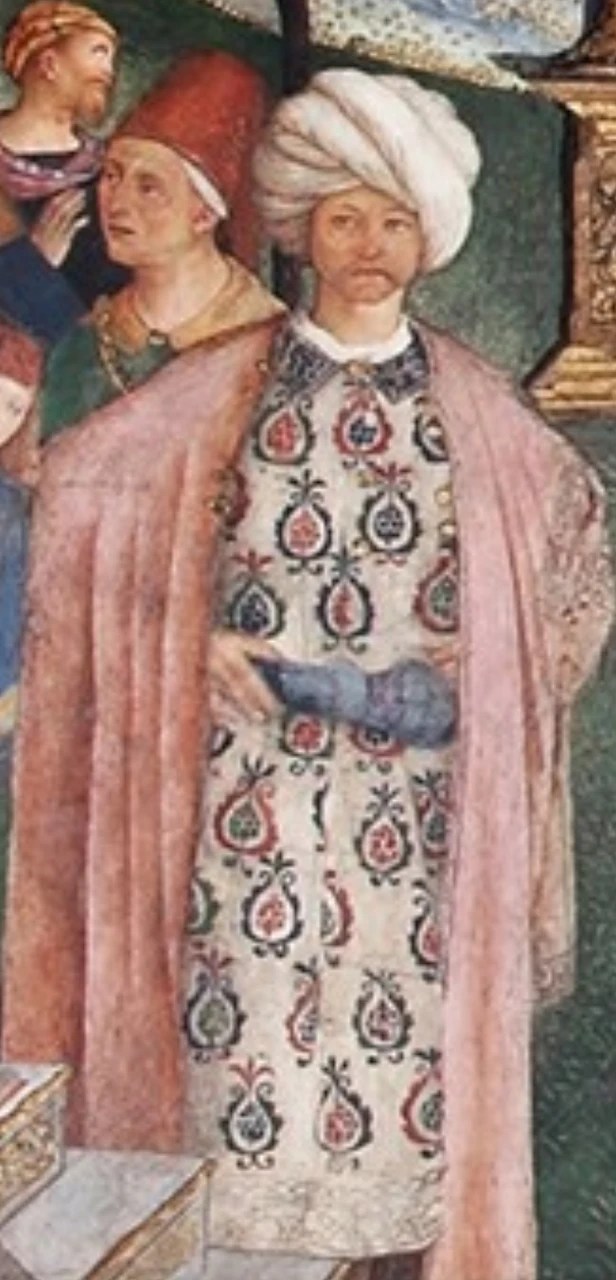 Cem in Pinturicchio’s Disputation of St Catherine, Borgia Apartments, Vatican, 1492–1494Wikimedia Commons, Pinturicchio, Public domain (Djem-Pinruricchio.png)
Bayezid learns of his father’s death on 7 May, reaches Üsküdar on 21 May and on 22 May takes the throne in Constantinople as Bayezid II, on the day Mehmed is buried beside his mosque. At Mehmed’s death the Ottoman lands reach from Bosnia, Albania and the Morea to the Euphrates and Trebizond, and from the Danube to the Mediterranean coast of Anatolia. The khan of the Crimea is the sultan’s vassal, and an Ottoman garrison holds Otranto in Italy.
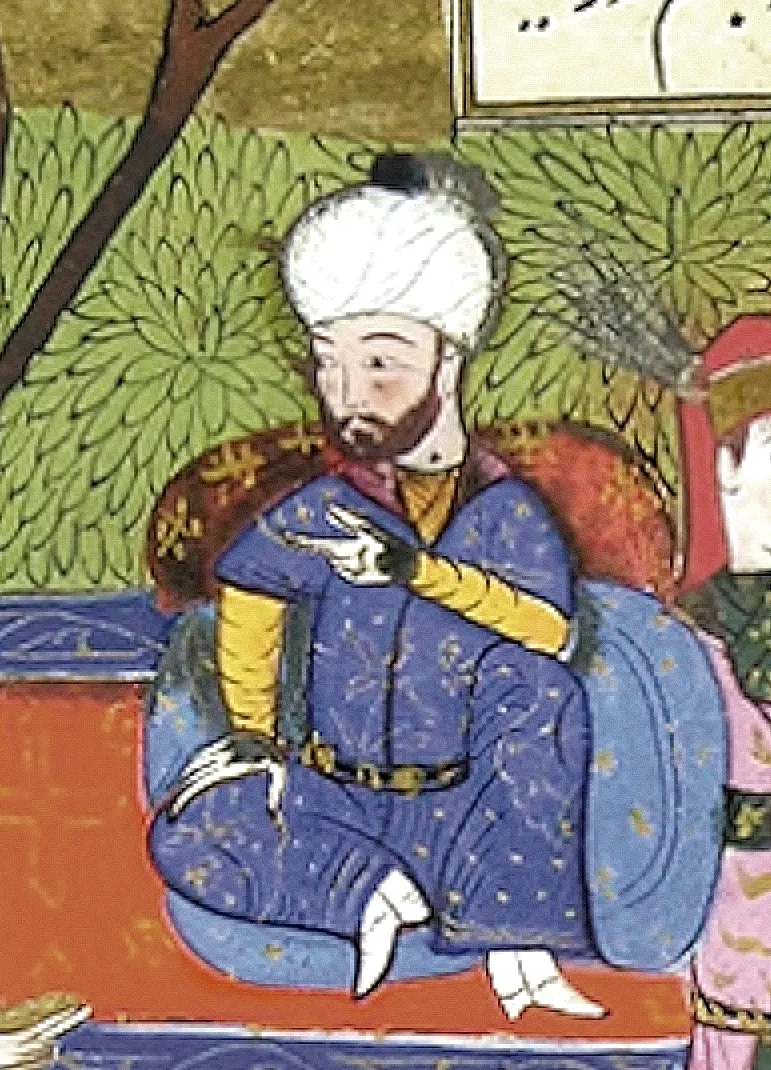 Bayezid II among his court, painted by Darwish Mahmud for a Shāhnāma of about 1495, Topkapı Palace MuseumWikimedia Commons, Darwish Mahmud, Public domain (Sultan bayezid II, Shāhnāma-i Malik-i Āhī, calligrapher and painter Darwish Mahmud b. Abdullah nakkash, Istanbul, ca. 1495, tSMK, H. 1123, fol. 14a.jpg)
Sources
- Tursun Beg, Tarih-i Ebü’l-Feth (about 1490).
- Aşıkpaşazade, Tevârîh-i Âl-i Osmân (late 15th century).
- Mehmed Neşri, Kitâb-ı Cihan-nümâ (late 15th century).
- Franz Babinger, Mehmed the Conqueror and His Time (1978).
- Colin Imber, The Ottoman Empire, 1300–1481 (1990).
- Nicolas Vatin, Sultan Djem (1997).
- Halil İnalcık, “Mehmed II”, in TDV İslâm Ansiklopedisi, vol. 28 (2003).
Prev: Otranto, 1480–1481