November 1461 – February 1462
Vlad’s war on the Danube, 1462
The accounts of Angiolello and Konstantin Mihailović suggest that Vlad III of Wallachia pays the sultan no tribute after 1459, but Tursun Beg writes that Vlad turns against Mehmed only in 1461, while the sultan is away at Trebizond. Vlad seeks an alliance with King Matthias Corvinus of Hungary. At the end of November 1461 he writes to Mehmed that his war with the Saxons of Transylvania has emptied his treasury and that he cannot leave Wallachia to come to Constantinople.
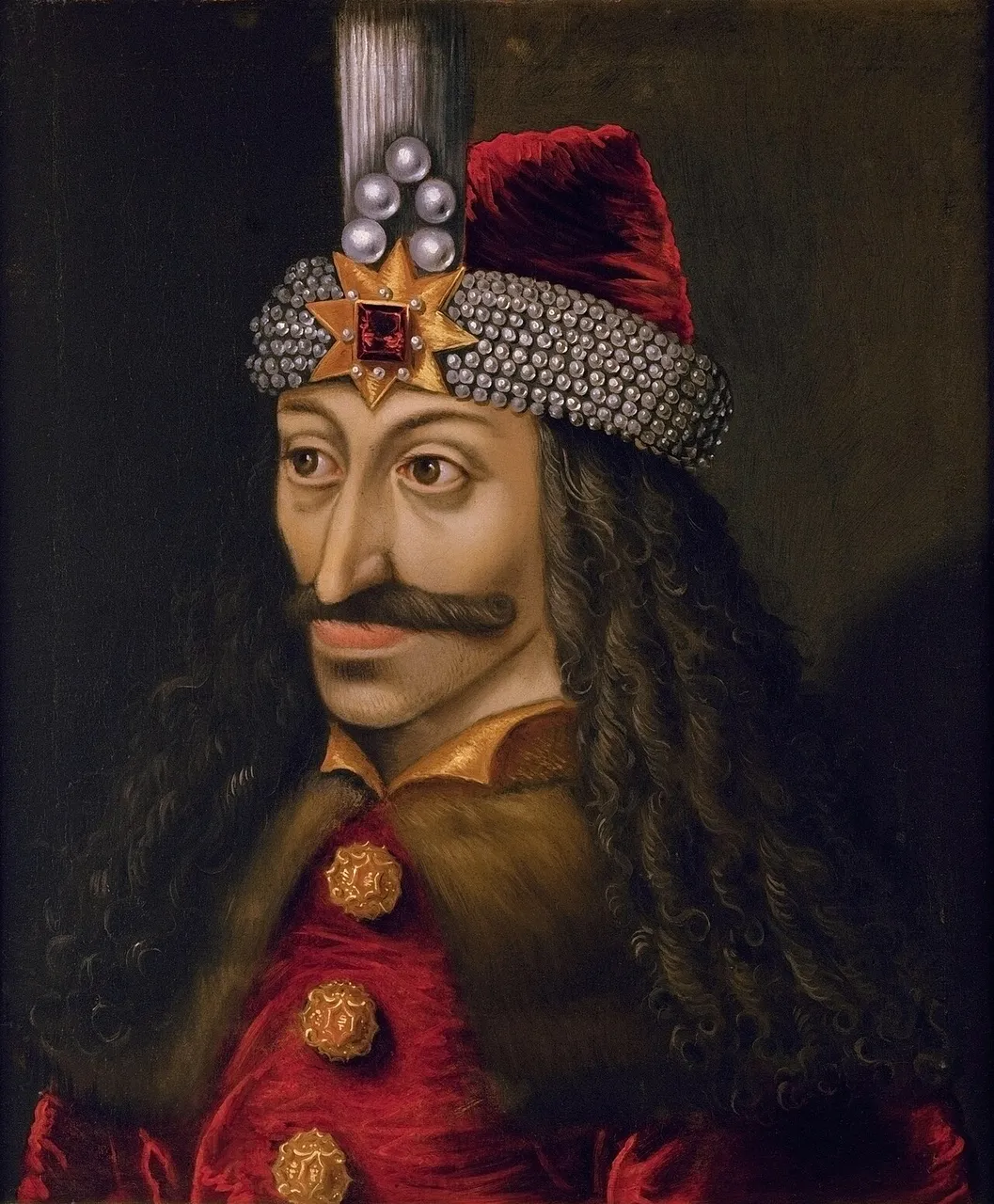 Vlad III in a 16th-century copy of a portrait painted in his lifetime, Ambras CastleWikimedia Commons, unknown painter, Public domain (Vlad Tepes 002.jpg)
Mehmed sends his envoy Thomas Katabolinos to order Vlad to Constantinople, and he orders Hamza Bey of Nikopol to seize Vlad when he has crossed the Danube. Vlad learns of the plan, rides south from Târgoviște, ambushes Hamza and his 1,000 horsemen in a narrow pass north of Giurgiu, and has Hamza and Katabolinos executed. He then rides to the Ottoman fortress of Giurgiu, calls to the guards in Turkish to open the gates, and takes and destroys the fortress.
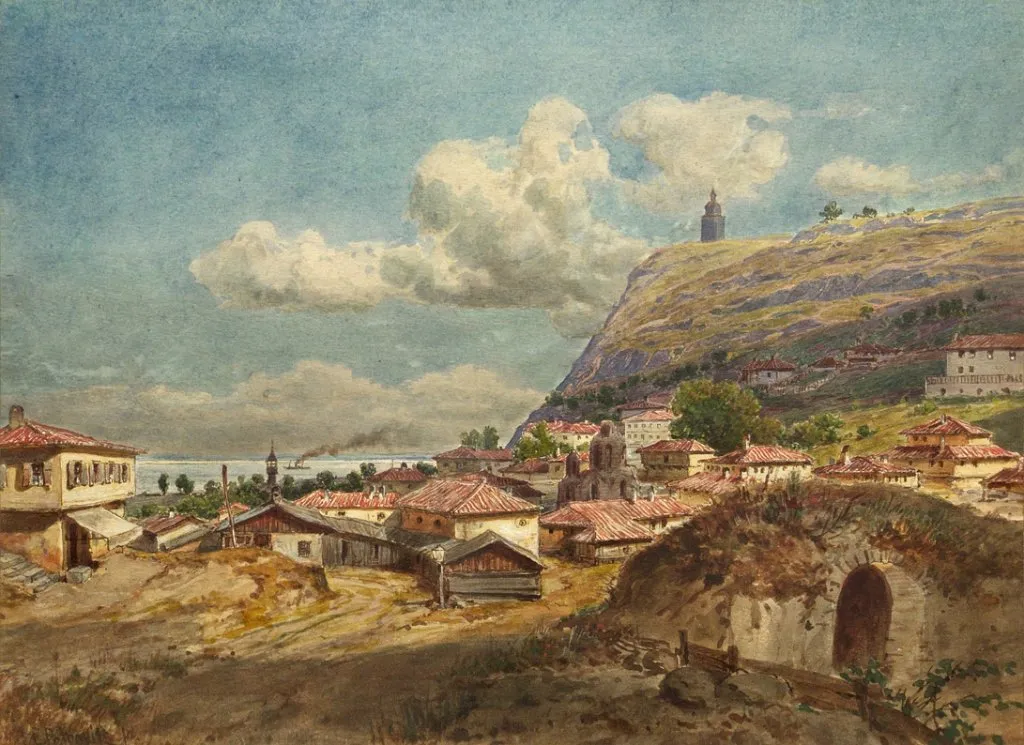 Nikopol on its heights above the Danube, painted by Felix Kanitz, 1885Wikimedia Commons, Felix Kanitz, Public domain (Nikopol by Felix Kanitz.jpg)
In January and February 1462 Vlad’s men cross the frozen Danube and raid the Ottoman towns along it, from Isaccea (Oblucița) near the mouth of the river up to Oryahovo (Rahova). On 11 February 1462 Vlad writes to Matthias that he has broken the peace with the sultan, and he lists 23,884 Turks and Bulgarians killed, without those burned in their houses: among them 6,414 at Giurgiu, 6,840 at Silistra (Durostor), 1,350 at Enisala, 840 at Hârșova, 630 at Tutrakan, 410 at Svishtov, 1,138 at Nikopol and Gigen and 1,460 at Oryahovo. The Christian Bulgarians are spared, and many of them settle in Wallachia.
Sources
- Vlad III, letter to Matthias Corvinus (11 February 1462).
- Laonikos Chalkokondyles, Histories (c. 1464).
- Tursun Beg, Tarih-i Ebü’l-Feth (about 1490).
- Konstantin Mihailović, Memoirs of a Janissary (about 1500).
- Giovanni Maria Angiolello, Historia Turchesca (about 1490).
- Franz Babinger, Mehmed the Conqueror and His Time (1978).
- Radu R. Florescu and Raymond T. McNally, Dracula: Prince of Many Faces (1989).
- Kurt W. Treptow, Vlad III Dracula: The Life and Times of the Historical Dracula (2000).
Prev: Trebizond, 1461Next: The night attack, 1462