1461 – 1480
The sultan’s court
Mehmed writes poems in Turkish under the name Avni and gathers a library of more than 8,000 manuscripts in Turkish, Arabic, Persian, Greek and Latin, and his Greek scriptorium copies Arrian’s life of Alexander and the Iliad. George Amiroutzes, a scholar of Trebizond, comes to Constantinople in 1461 on one of Mehmed’s ships with the last emperor of Trebizond and becomes one of the sultan’s advisers on Christianity and Greek philosophy. Michael Kritovoulos, governor of Gökçeada (Imbros) from 1456, moves to Constantinople when the Venetians take the island in 1466. There he writes in Greek a history of Mehmed’s reign to 1467 and dedicates it to the sultan.
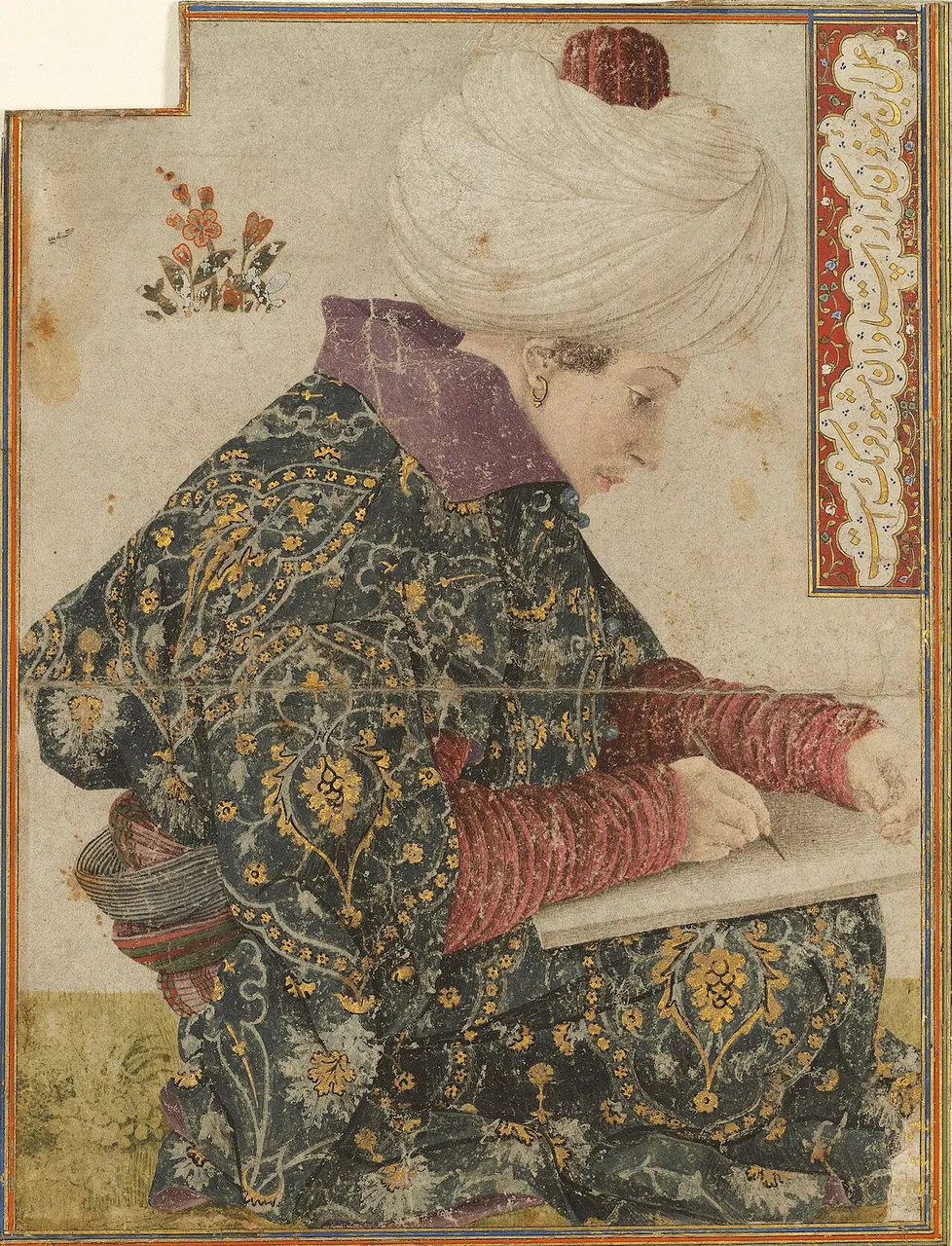 A seated scribe, painted by Gentile Bellini at Mehmed’s court in 1479–1481, Isabella Stewart Gardner Museum, BostonWikimedia Commons, Gentile Bellini, Public domain (Gentile Bellini 009.jpg)
Ali Kuşçu, an astronomer from Samarkand who worked at the observatory of Ulugh Beg, comes from Tabriz to Constantinople around 1470 as an envoy of Uzun Hasan and stays in Mehmed’s service. He helps to found the teaching of the Sahn-ı Seman, the eight medreses round the Fatih Mosque, which are finished in 1470. There eight teachers train students in theology, law, medicine, astronomy and mathematics to become judges and teachers, and Ali Kuşçu dies in Constantinople in 1474.
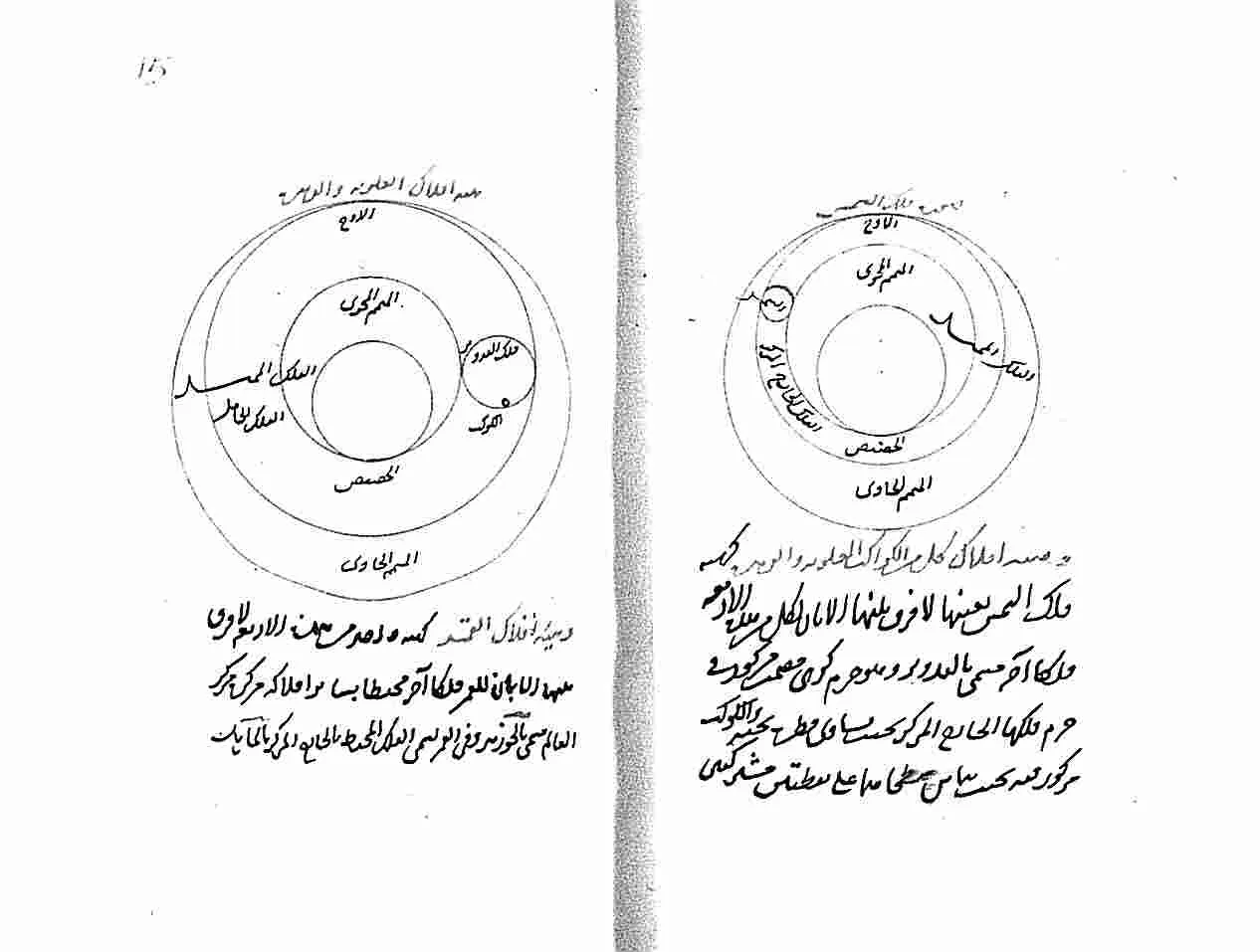 A page from Ali Kuşçu’s treatise on astronomy, al-Risala al-Fathiyya, dedicated to Mehmed in 1473Wikimedia Commons, Ali Kuşçu, Public domain (Ali al-Qushji.JPG)
Mehmed asks the Italian courts for painters and medallists, and Costanzo da Ferrara works for him. In September 1479, after the peace, the Venetian Senate sends Gentile Bellini, the official painter of the doges, from Venice to Constantinople, and he stays until 1480. The portrait of Mehmed dated 1480, now in the National Gallery in London, is believed to be Bellini’s work, and its copies make the sultan’s face known across Europe.
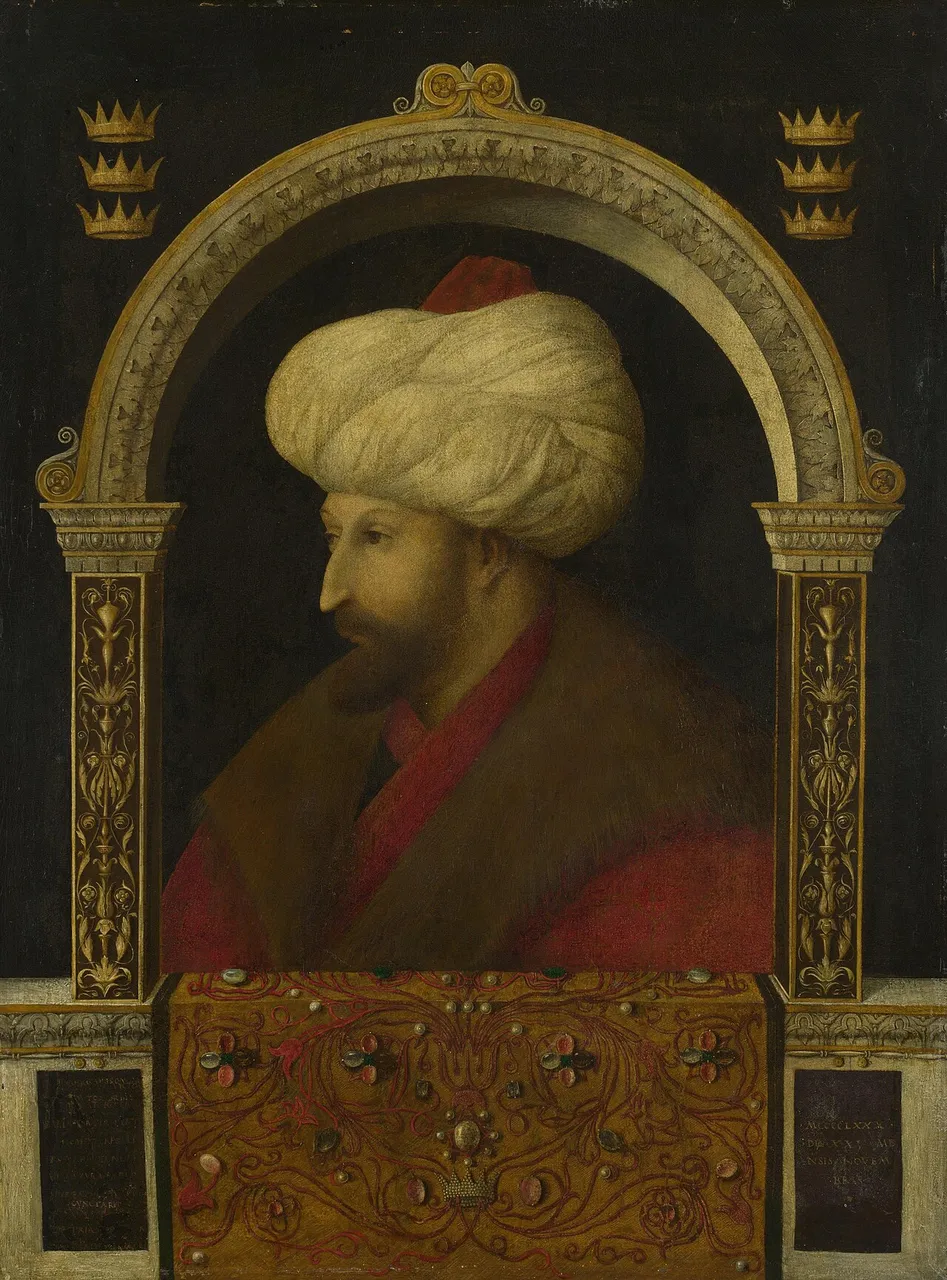 Mehmed II, painted by Gentile Bellini in 1480, National Gallery, LondonWikimedia Commons, Gentile Bellini, Public domain (Bellini, Gentile - Portrait of Mehmed II - National Gallery, London.jpg)
Sources
- Michael Kritovoulos, History of Mehmed the Conqueror (about 1467).
- Adnan Adıvar, Osmanlı Türklerinde İlim (1943).
- Franz Babinger, Mehmed the Conqueror and His Time (1978).
- Julian Raby, “A Sultan of Paradox: Mehmed the Conqueror as a Patron of the Arts”, Oxford Art Journal 5 (1982).
- Caroline Campbell and Alan Chong (eds.), Bellini and the East (2005).
Prev: The sultan’s lawNext: Breadfield, 1479