29 – 30 May 1453
The fall of the city
On 29 May 1453 the Ottoman troops spread through the city along the Mese, past the church of the Holy Apostles to the forums, and plunder it. Crowds take refuge in Hagia Sophia, and the troops break the doors and lead them off as captives. About 4,000 people are killed and about 30,000 enslaved. The sailors of the fleet leave their ships to plunder the quarters along the Horn, and by midday the Horn is in Ottoman hands.
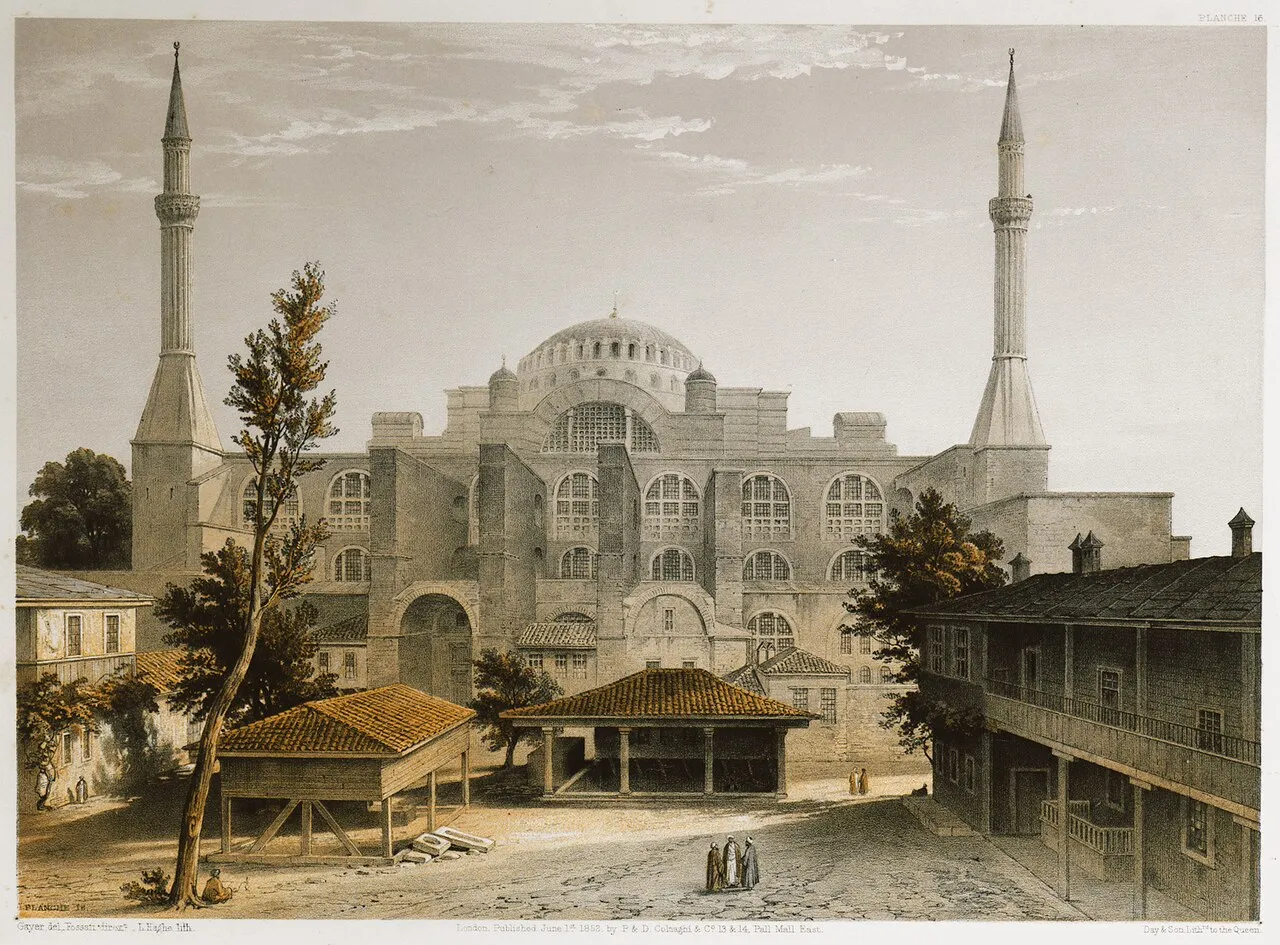 Hagia Sophia from the court of its madrasa, a lithograph after Gaspare Fossati, 1852Wikimedia Commons, Gaspare Fossati, Public domain (Façade principale de Ste Sophie, prise de la cour du médressé - Fossati Gaspard - 1852.jpg)
The Venetian captain Alviso Diedo has the chain broken open, and the Venetian ships sail out crowded with soldiers and refugees, followed by a few Genoese ships and some of the emperor’s. Cretan sailors hold three towers on the Horn walls until the afternoon, and Mehmed lets them sail home. Prince Orhan is killed, and Loukas Notaras is taken prisoner.
Mehmed enters the city in the afternoon by the gate of St Romanos and rides to Hagia Sophia, where he has a muezzin call the prayer. Other accounts have him enter by the Charisian gate.
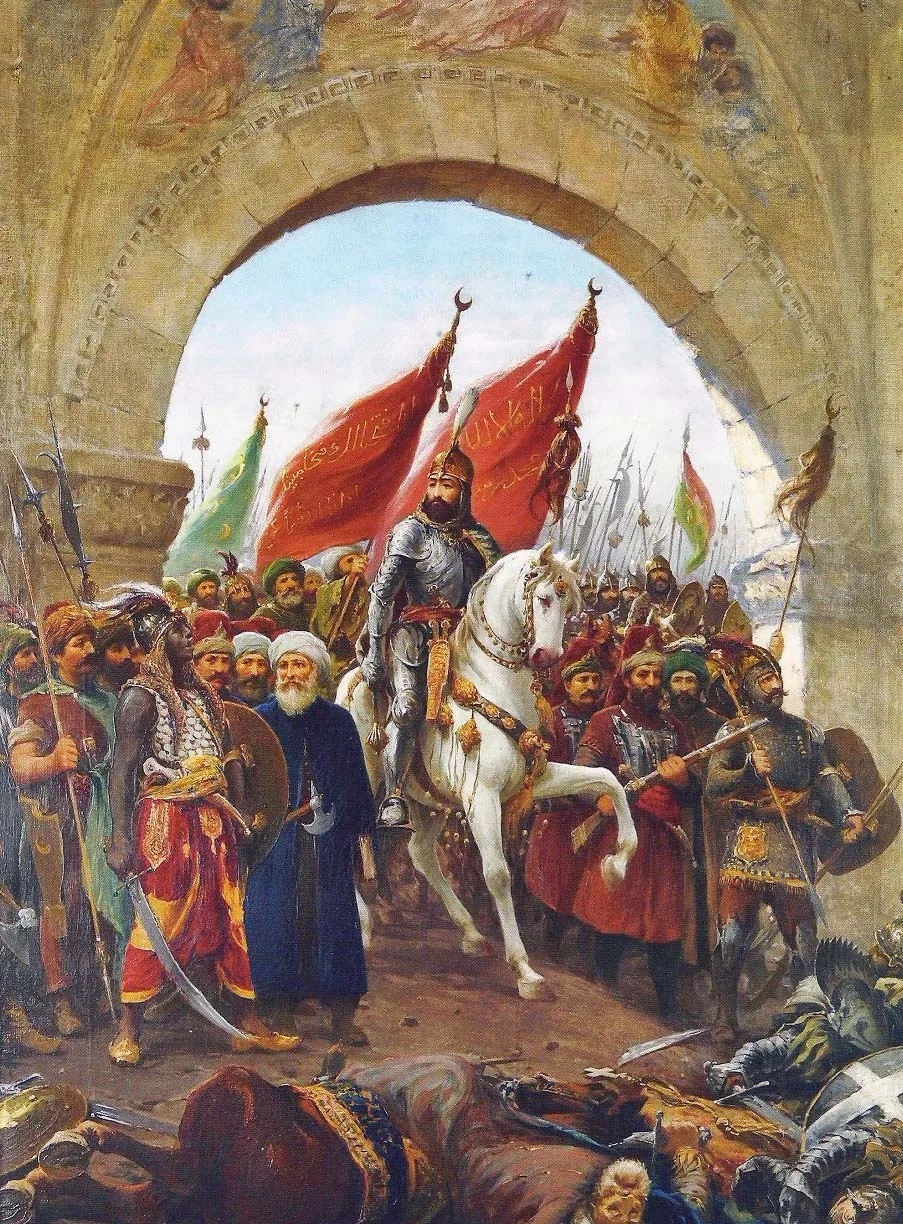 Mehmed II enters Constantinople, painted by Fausto Zonaro, court painter in Istanbul from 1896 to 1909Wikimedia Commons, Fausto Zonaro, Public domain (Zonaro GatesofConst.jpg)
Sources
- Nicolò Barbaro, Giornale dell’assedio di Costantinopoli (1453).
- Doukas, Historia Turco-Byzantina (about 1462).
- Michael Kritovoulos, History of Mehmed the Conqueror (about 1467).
- Laonikos Chalkokondyles, Histories (about 1464).
- Tursun Beg, Tarih-i Ebü’l-Feth (about 1490).
- Steven Runciman, The Fall of Constantinople 1453 (1965).
- Franz Babinger, Mehmed the Conqueror and His Time (1978).
Prev: The assault of 29 MayNext: After the fall, 1453–1454