June 1455 – 1456
Berat, 1455
In summer 1455 Skanderbeg lays siege to Berat with 14,000 men and with the guns and the Neapolitan troops that Alfonso V has sent him. The castle guards the roads from southern Albania to Macedonia and Greece, and it has been Ottoman since 1450, when a force from Gjirokastër took it in a night attack. After a bombardment its commander promises to surrender if no relief comes within a month. Skanderbeg rides off with part of his army towards Vlorë to watch its garrison, and he leaves his brother-in-law Karl Muzakë Thopia with half the horsemen on the Osum river below the castle.
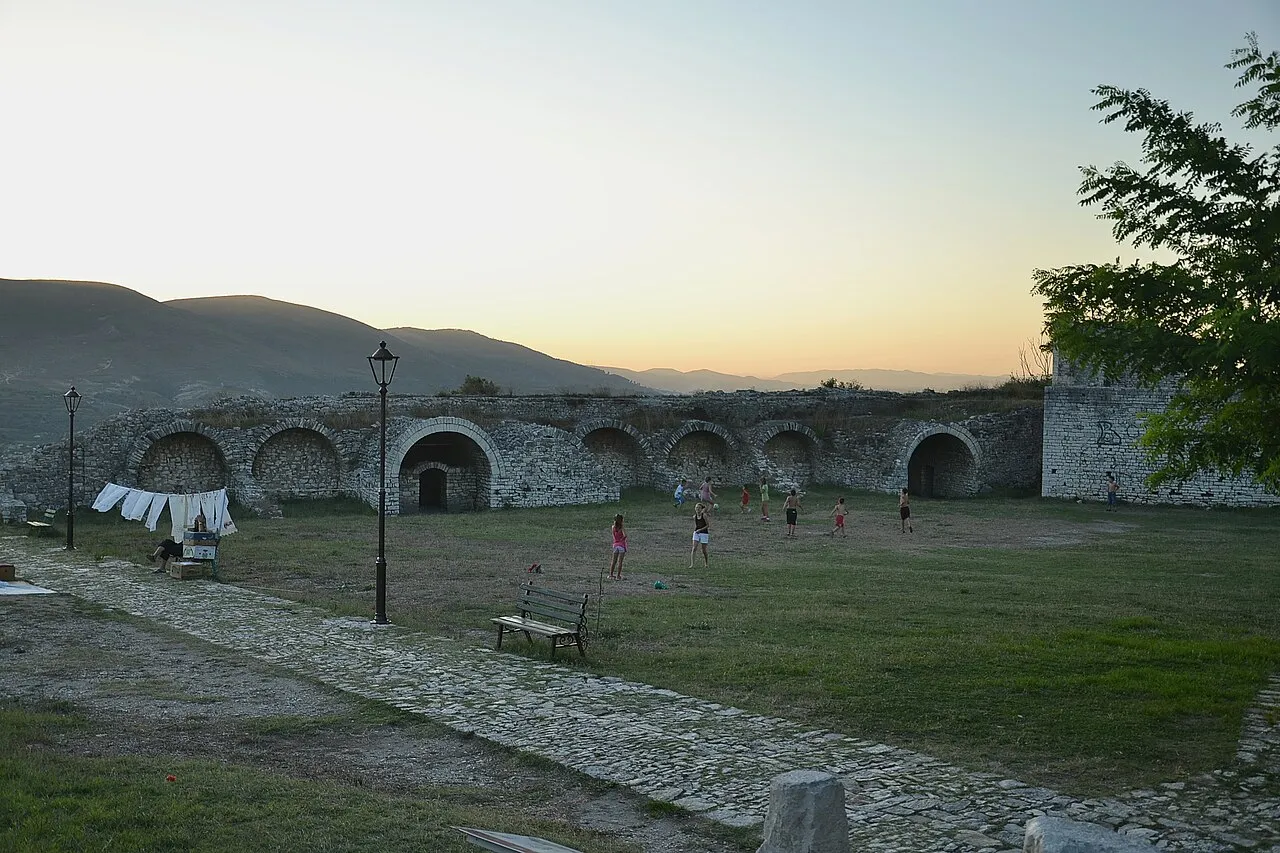 Inside the castle of BeratWikimedia Commons, Pudelek, CC BY-SA 4.0 (Berat Castle (by Pudelek) 2.JPG)
In mid July 1455 Isak Bey arrives with a relief army of 20,000 men and surprises the Albanian horsemen while they rest on the river bank. Vrana Konti beats back several attacks, but the Albanian army breaks and flees. About 6,000 of Skanderbeg’s men are killed, among them Muzakë Thopia and most of the Neapolitans, and most of the dead are men of Gjergj Arianiti. Skanderbeg rides back too late, and Berat stays Ottoman.
After the defeat Moisi Golemi, the lord of Debar and one of Skanderbeg’s commanders, goes over to the Ottomans. In 1456 he comes back from Edirne with 15,000 men and is beaten by Skanderbeg’s 10,000 at Oranik near Debar, on 18 May by Hodgkinson’s account or in late March by Babinger’s. Moisi then returns to Skanderbeg, who pardons him and gives him back his lands. In the same year Skanderbeg’s nephew George Strez Balšić sells the fortress of Modrič to the Ottomans for 30,000 silver ducats, and when this is found out he is sent to prison in Naples.
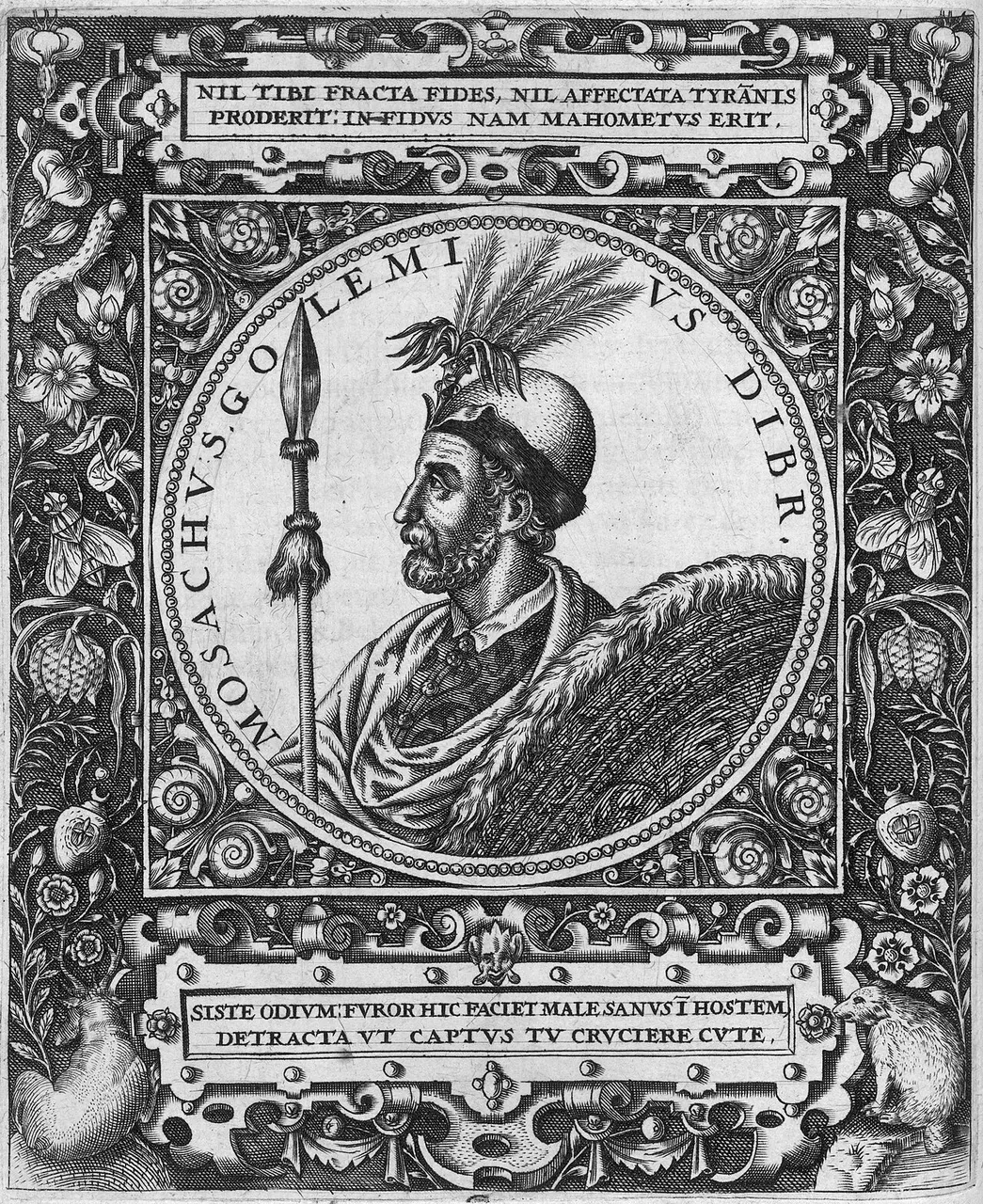 Moisi Golemi in Jean-Jacques Boissard’s lives of the sultans, 1596Wikimedia Commons, Jean-Jacques Boissard, Public domain (Moisi Arianit Golemi (166345643).jpg)
Sources
- Marin Barleti, Historia de vita et gestis Scanderbegi Epirotarum principis (about 1508).
- Ludwig von Pastor, The History of the Popes, vol. 2 (1891).
- Fan S. Noli, George Castrioti Scanderbeg (1405–1468) (1947).
- Franz Babinger, Mehmed the Conqueror and His Time (1978).
- Harry Hodgkinson, Scanderbeg: From Ottoman Captive to Albanian Hero (1999).
- Kristo Frashëri, Gjergj Kastrioti Skënderbeu: jeta dhe vepra, 1405–1468 (2002).
- Gennaro Francione, Skënderbeu, një hero modern (2003).
- Oliver Jens Schmitt, Skanderbeg: Der neue Alexander auf dem Balkan (2009).
Prev: Skanderbeg and Aragon, 1451–1453Next: Albulena, 1457