14 July 1456
The battle on the Danube
When news comes that Hunyadi is gathering a relief army, Mehmed holds a council. Karaca Pasha, the beylerbey of Rumelia, asks to cross the Danube with part of the army and stop Hunyadi there. The commanders of Rumelia oppose him, and the council decides to keep the whole army before the fortress. Hunyadi camps across the river without hindrance.
On 14 July 1456 Hunyadi comes down the Danube with his boats, about 200 of them and only one a galley, against the Ottoman fleet that closes the river above the city. About 40 boats from the fortress join the attack. After five hours of fighting the Christians have sunk three large Ottoman galleys and taken four large boats and 20 smaller ones.
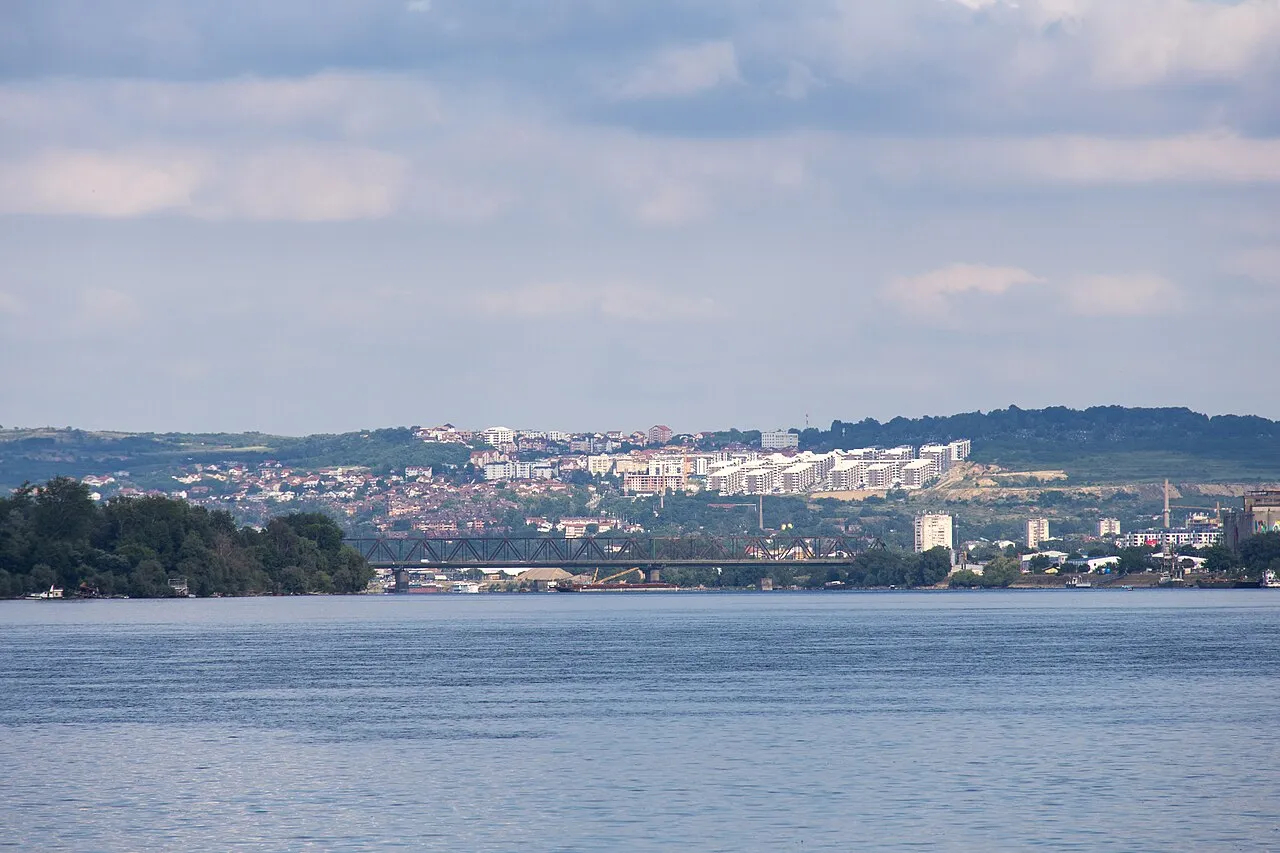 The Danube and Belgrade seen from ZemunWikimedia Commons, Alexkom000, CC BY 4.0 (2026-06-06 Danube and Belgrade seen from Zemun 1.jpg)
With the river open, Hunyadi brings his troops and food into the fortress, and he keeps bringing in men by boat. Before he came the fortress held about 6,000 soldiers and 2,500 crusaders by one account. The defenders gain heart, and the Ottomans now besiege a fortress that they cannot cut off.
Sources
- Laonikos Chalkokondyles, Histories (c. 1464).
- Michael Kritovoulos, History of Mehmed the Conqueror (about 1467).
- Tursun Beg, Tarih-i Ebü’l-Feth (about 1490).
- Aşıkpaşazade, Tevârîh-i Âl-i Osmân (late 15th century).
- Konstantin Mihailović, Memoirs of a Janissary (about 1500).
- János Thuróczy, Chronica Hungarorum (1488).
- Antonio Bonfini, Rerum Ungaricarum decades (about 1497).
- Franz Babinger, Mehmed the Conqueror and His Time (1978).
- Kenneth M. Setton, The Papacy and the Levant (1204–1571), vol. 2 (1978).
- Pál Engel, The Realm of St Stephen: A History of Medieval Hungary, 895–1526 (2001).
- Tamás Pálosfalvi, From Nicopolis to Mohács: A History of Ottoman-Hungarian Warfare, 1389–1526 (2018).
Prev: The armies at BelgradeNext: The assault of 21 July