May – 23 December 1457
Albulena, 1457
In 1456 Skanderbeg’s wife Donika bears him a son, Gjon, and his nephew Hamza Kastrioti, until then one of his closest commanders, loses hope of succeeding him and goes over to Mehmed, who offers him much of Albania once it is conquered. At the end of May 1457 Isak Bey and Hamza invade Albania with 50,000 to 80,000 men, and Skanderbeg has 8,000 to 10,000. He holds up the akıncı vanguard in the district of Debar, then withdraws before the main army. He splits his men into small bands in the forests and mountains, with orders not to gather until he gives the signal.
The Ottomans plunder the Mat valley and camp on the plain of Albulena (Ujëbardha) south of the Mat, between Lezhë and Krujë. Their scouts reach the gates of Venetian Lezhë and go on as far as Shkodër, and the Venetians at Durrës spread word that Skanderbeg has fled. Skanderbeg stays in the mountains through July and August. When the Ottomans begin to withdraw, he gathers his men unseen on the hills of Mount Tumenishta, on the east side of the camp, which is its weakest side.
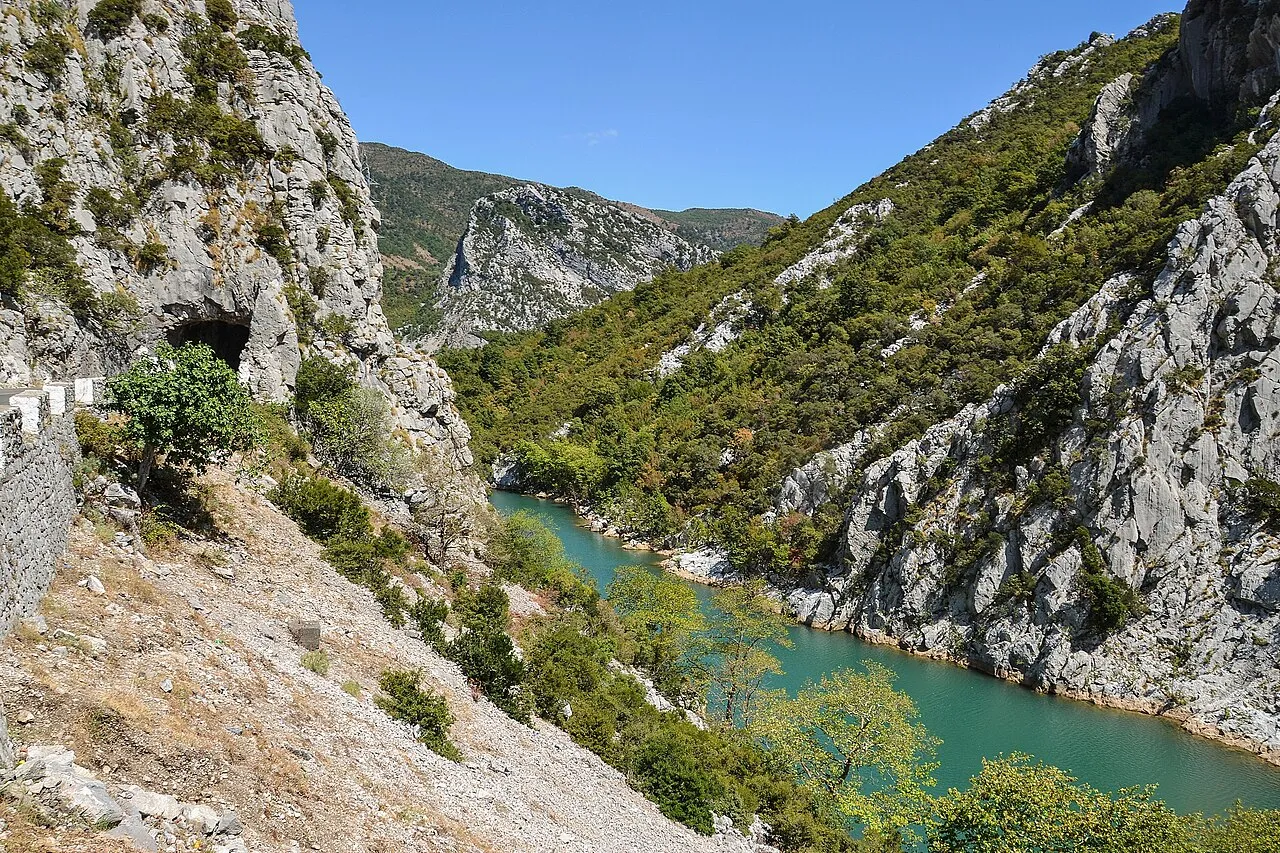 The Mat river in its gorgeWikimedia Commons, Pudelek, CC BY-SA 4.0 (Mat river, Albania.jpg)
On 2 September 1457 Skanderbeg attacks the camp with his army split into three groups. The Ottomans are taken by surprise and flee, and Babinger puts their losses at 15,000 killed and 15,000 taken prisoner, with 24 standards and the whole camp. Hamza is captured and sent as a prisoner to Naples, and Isak Bey escapes. When an Ottoman envoy comes to ransom the prisoners and asks for a truce, Skanderbeg demands Svetigrad and Berat, and Mehmed refuses. On 23 December 1457 Pope Calixtus III names Skanderbeg captain general of the Curia in the war against the Ottomans.
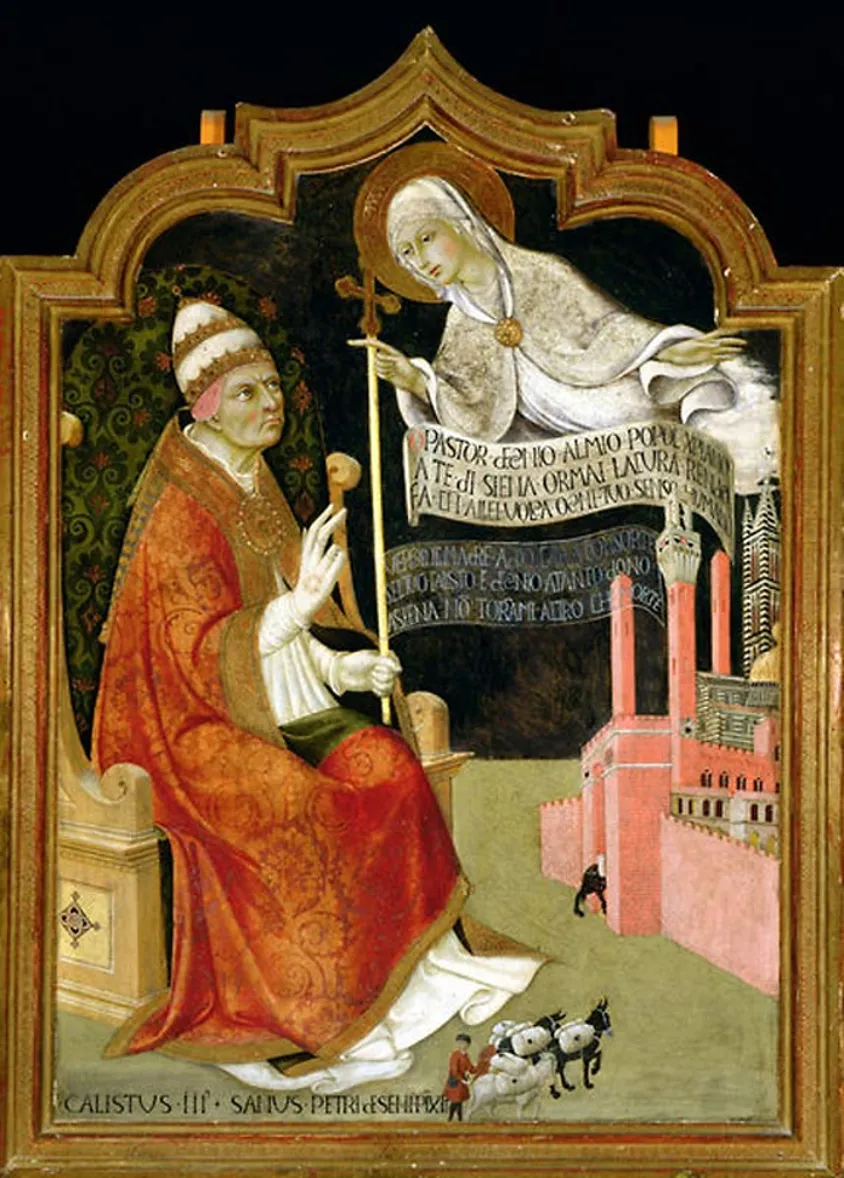 The Virgin commends Siena to Pope Calixtus III, painted by Sano di Pietro in 1455Wikimedia Commons, Sano di Pietro, Public domain (Pope Callixtus III Siena.jpg)
Sources
- Demetrio Franco, Comentario de le cose de’ Turchi, et del S. Georgio Scanderbeg (1480).
- Marin Barleti, Historia de vita et gestis Scanderbegi Epirotarum principis (about 1508).
- Fan S. Noli, George Castrioti Scanderbeg (1405–1468) (1947).
- Kenneth M. Setton, The Papacy and the Levant (1204–1571), vol. 2 (1978).
- Franz Babinger, Mehmed the Conqueror and His Time (1978).
- Harry Hodgkinson, Scanderbeg: From Ottoman Captive to Albanian Hero (1999).
- Kristo Frashëri, Gjergj Kastrioti Skënderbeu: jeta dhe vepra, 1405–1468 (2002).
- Oliver Jens Schmitt, Skanderbeg: Der neue Alexander auf dem Balkan (2009).
Prev: Berat, 1455Next: Corinth and Athens, 1458