1409 – 1420
Bursa and Edirne under Mehmed I
In Bursa Mehmed builds a complex on the hill east of the town, with a mosque, a medrese, a public kitchen and a bath. The Green Mosque, begun in 1412 under the vizier Hacı İvaz Pasha, is finished in December 1419 or January 1420 by the inscription over its portal. Its halls form a reversed T, with iwans and rooms for travelling dervishes around a domed court with a fountain. It takes its name from the green and blue tiles inside, which an inscription at the mihrab calls the work of the masters of Tabriz.
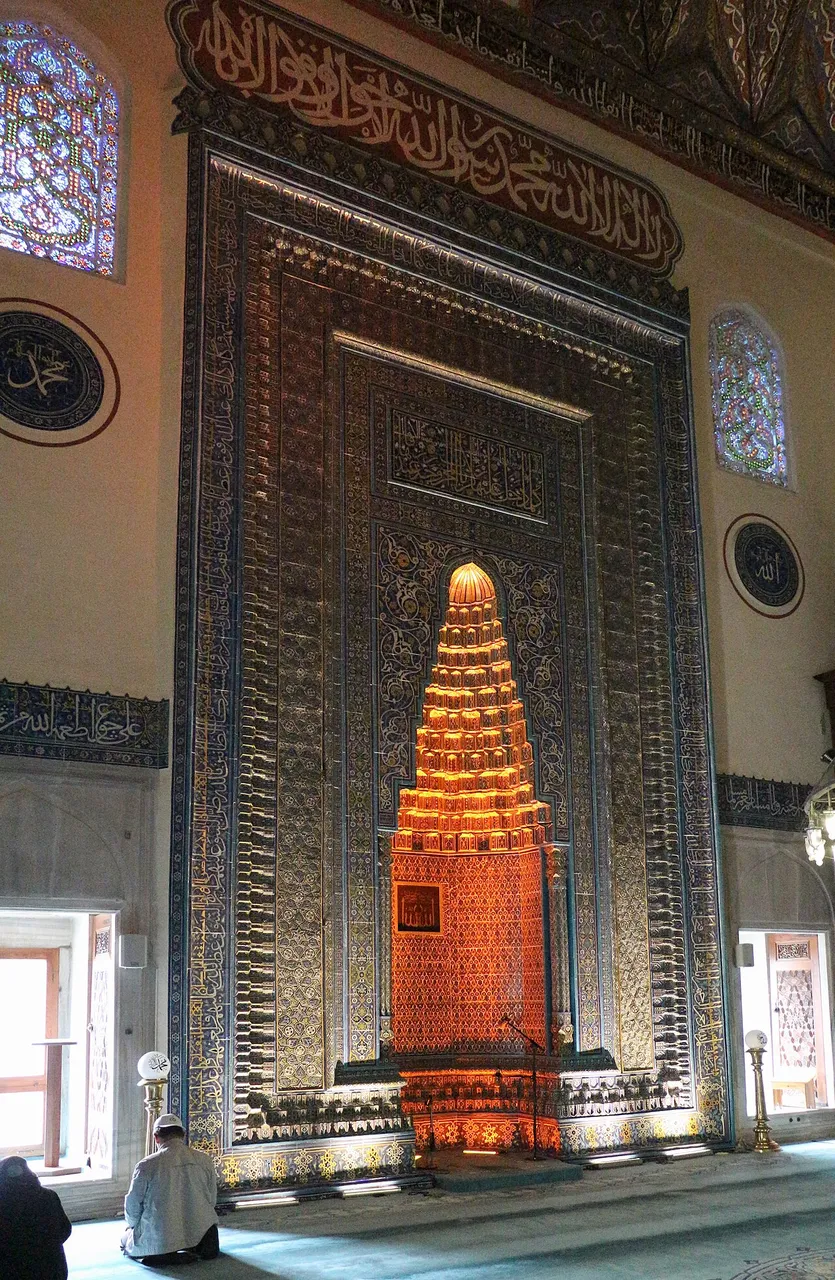 The tiled mihrab of the Green Mosque at BursaWikimedia Commons, Bernard Gagnon, CC BY-SA 3.0 (Yeşil Cami - Mihrab.jpg)
In Edirne, which Mehmed makes his main seat, the Old Mosque that his brother Süleyman began in 1402 is finished in 1414: a hall of nine domes on four pillars, built by the architects Hacı Alaeddin and Ömer bin İbrahim. At Didymoteicho, a favourite residence of the early sultans, the mosque begun under Bayezid and named after Mehmed is finished in 1420, and Mehmed founds a medrese at Merzifon. His grand vizier Bayezid Pasha builds a mosque, a public kitchen and a medrese in his home town of Amasya, endowed in 1418.
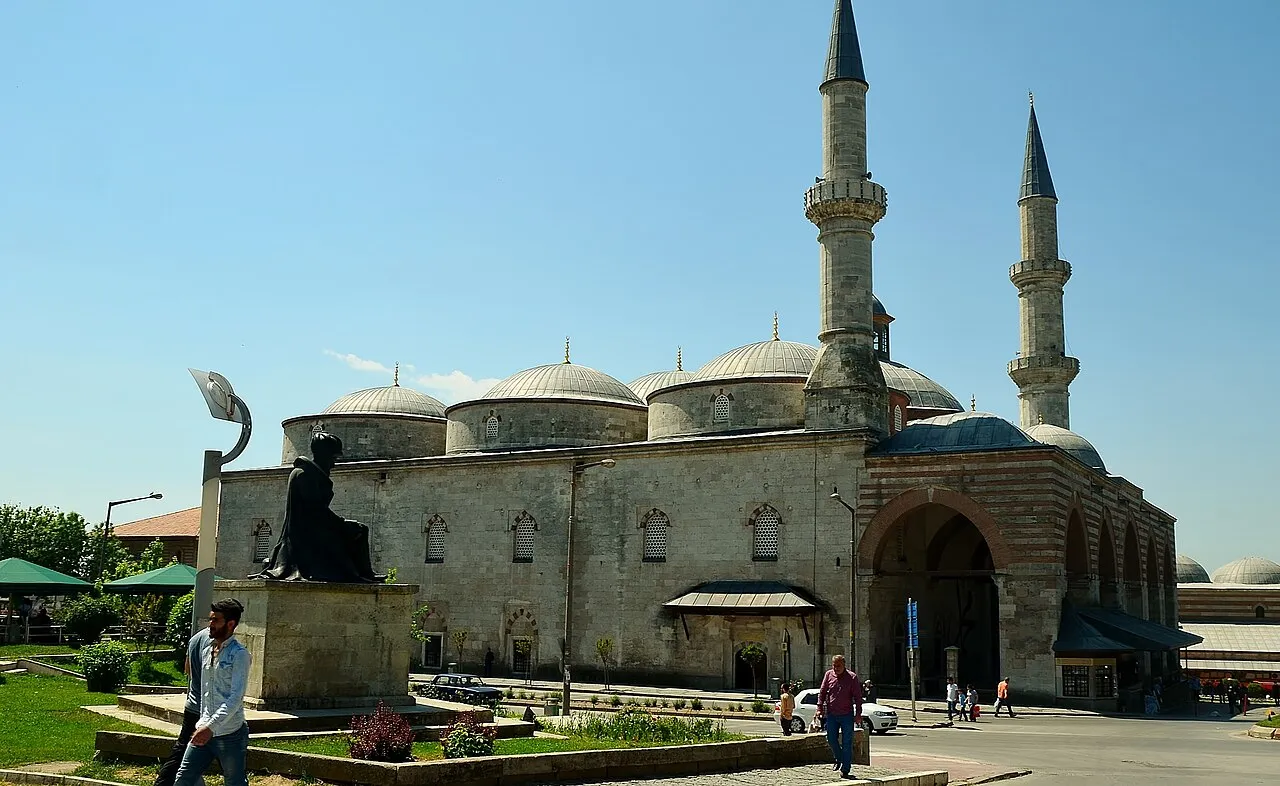 The Old Mosque at Edirne, finished under Mehmed I in 1414Wikimedia Commons, CeeGee, CC BY-SA 4.0 (EskiCamiEdirne (2).JPG)
Süleyman Çelebi, imam of Bayezid’s Ulu Cami in Bursa, finishes in 1409 his Vesîletü’n-Necât, known as the Mevlid, the first and best known Turkish poem on the birth of the Prophet. The poet Ahmedi, who dies in 1413, writes the İskendernâme, a book of Alexander in verse meant for Bayezid and after 1402 dedicated to Emir Süleyman. It holds the earliest account of Ottoman history that survives.
Sources
- Süleyman Çelebi, Vesîletü’n-Necât (1409).
- Ahmedi, İskendernâme (early 15th century).
- Aptullah Kuran, The Mosque in Early Ottoman Architecture (1968).
- Godfrey Goodwin, A History of Ottoman Architecture (1971).
- Doğan Kuban, Ottoman Architecture (2010).
- Cemal Kafadar, Between Two Worlds: The Construction of the Ottoman State (1995).
Prev: Candar and Samsun, 1417–1420Next: Mehmed’s death, 1421