1403
The Treaty of Gallipoli, 1403
Süleyman reaches Gallipoli on 20 August 1402 and takes over the Ottoman lands in Europe from Edirne. To secure peace in Europe while his brothers contend for Anatolia, he negotiates with Venice, Genoa and John VII, regent in Constantinople for Manuel II, who is in Paris. The treaty is concluded at Gallipoli in January or early February 1403 with Byzantium, Venice, Genoa with Chios, the Knights of Rhodes and the Duke of Naxos.
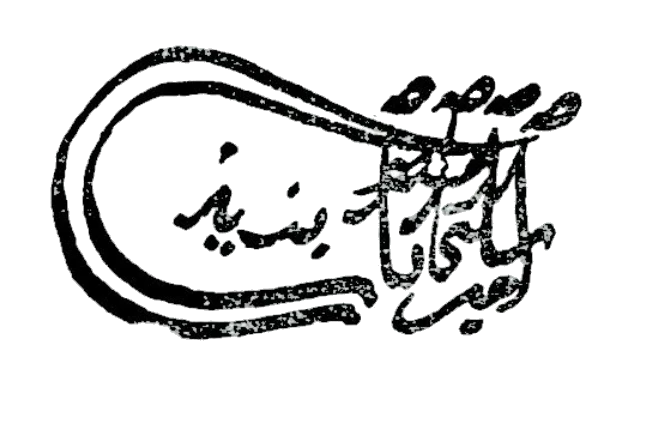 The tughra of Süleyman Çelebi, drawn by Süheyl ÜnverWikimedia Commons, Süheyl Ünver, CC0 (Tughra of Süleyman Çelebi.png)
Süleyman, who calls the emperor “my father”, gives back Thessalonica with the Chalcidice, the land around Constantinople from Panidos on the Sea of Marmara to Mesembria on the Black Sea, and the Northern Sporades. Byzantium no longer pays tribute. Venice receives a strip of the mainland opposite Negroponte, the Genoese colonies and Naxos are freed of tribute, and Stefan Lazarević keeps his lands with the tribute and service he owed Bayezid. Gallipoli stays Ottoman.
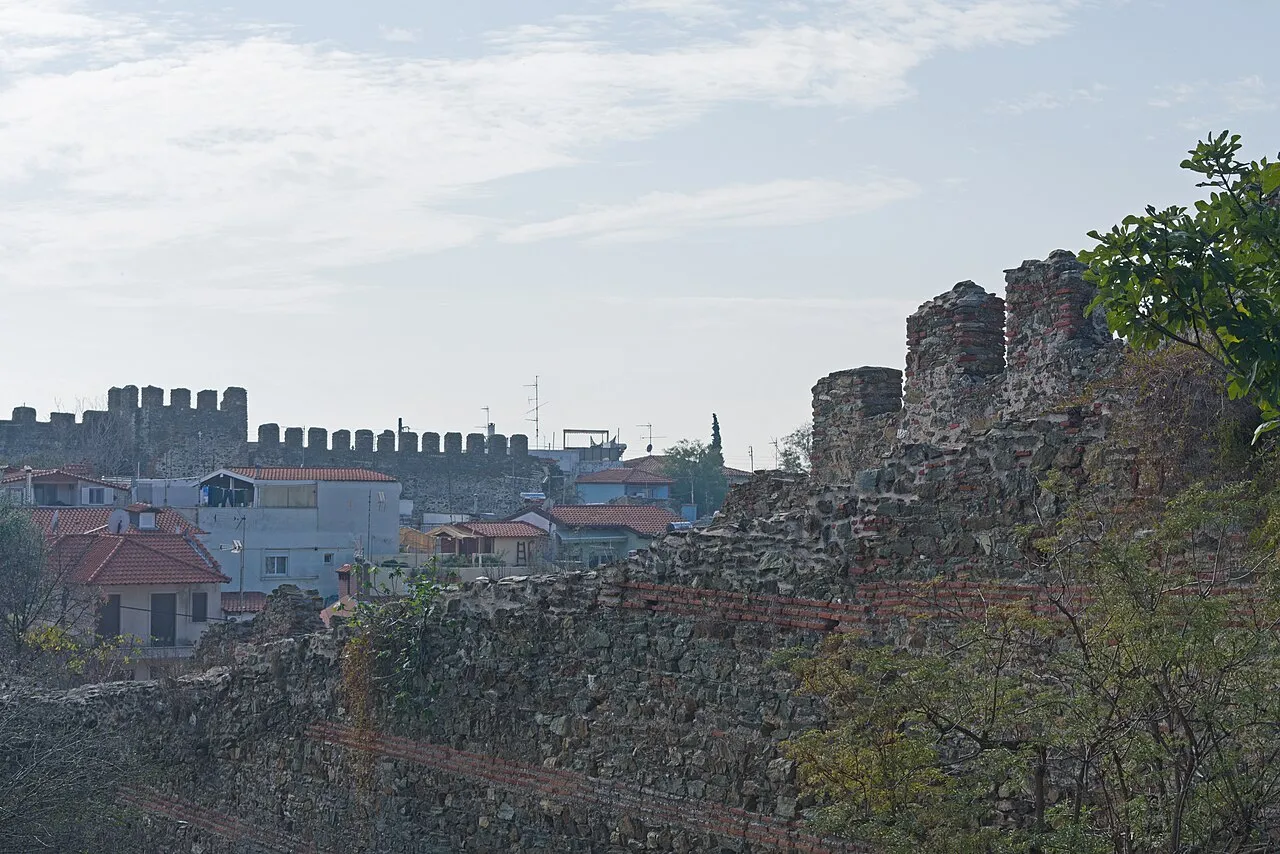 The western and northern walls of ThessalonikiWikimedia Commons, Ymblanter, CC BY-SA 4.0 (Thessaloniki Western and Northern Walls from Odos Agrafon.jpg)
Manuel returns on 9 June 1403, confirms the treaty and sends John VII to Lemnos. After a quarrel the two emperors come to terms, and John rules Thessalonica as emperor from the end of 1403 until his death in 1408. Stefan Lazarević becomes a vassal of King Sigismund of Hungary at the end of 1403 or early in 1404, receives Belgrade and Mačva, and makes Belgrade his capital in 1405.
Sources
- Doukas, Historia Turco-Byzantina (about 1462).
- George T. Dennis, “The Byzantine–Turkish Treaty of 1403”, Orientalia Christiana Periodica 33 (1967), 72–88.
- Nevra Necipoğlu, Byzantium between the Ottomans and the Latins (2009).
- John W. Barker, Manuel II Palaeologus (1391–1425) (1969).
- Dimitris J. Kastritsis, The Sons of Bayezid (2007).
- Jovanka Kalić, “Veliki preokret”, in Istorija srpskog naroda, vol. 2 (1982), 64–74.
Prev: Tripolje, 1402Next: İsa and Mehmed, 1403