February – December 1411
Musa’s siege of Constantinople, 1411
Musa rules the Ottoman lands in Europe from Edirne, with Çandarlı İbrahim as his vizier and Sheikh Bedreddin of Simavna as kadıasker, the chief judge of the army. He relies on the akıncı lords of the frontier and sets Süleyman’s treaties aside, and his troops take back most of the lands ceded to Byzantium in Thrace, Macedonia and Thessaly.
To punish Manuel II for backing Süleyman, Musa blockades Constantinople from August 1411 and besieges Thessalonica. In the autumn his army attacks Selymbria, where Süleyman’s young son Orhan, the Byzantine candidate for the throne, is staying. In September Venice makes peace with Musa at Selymbria.
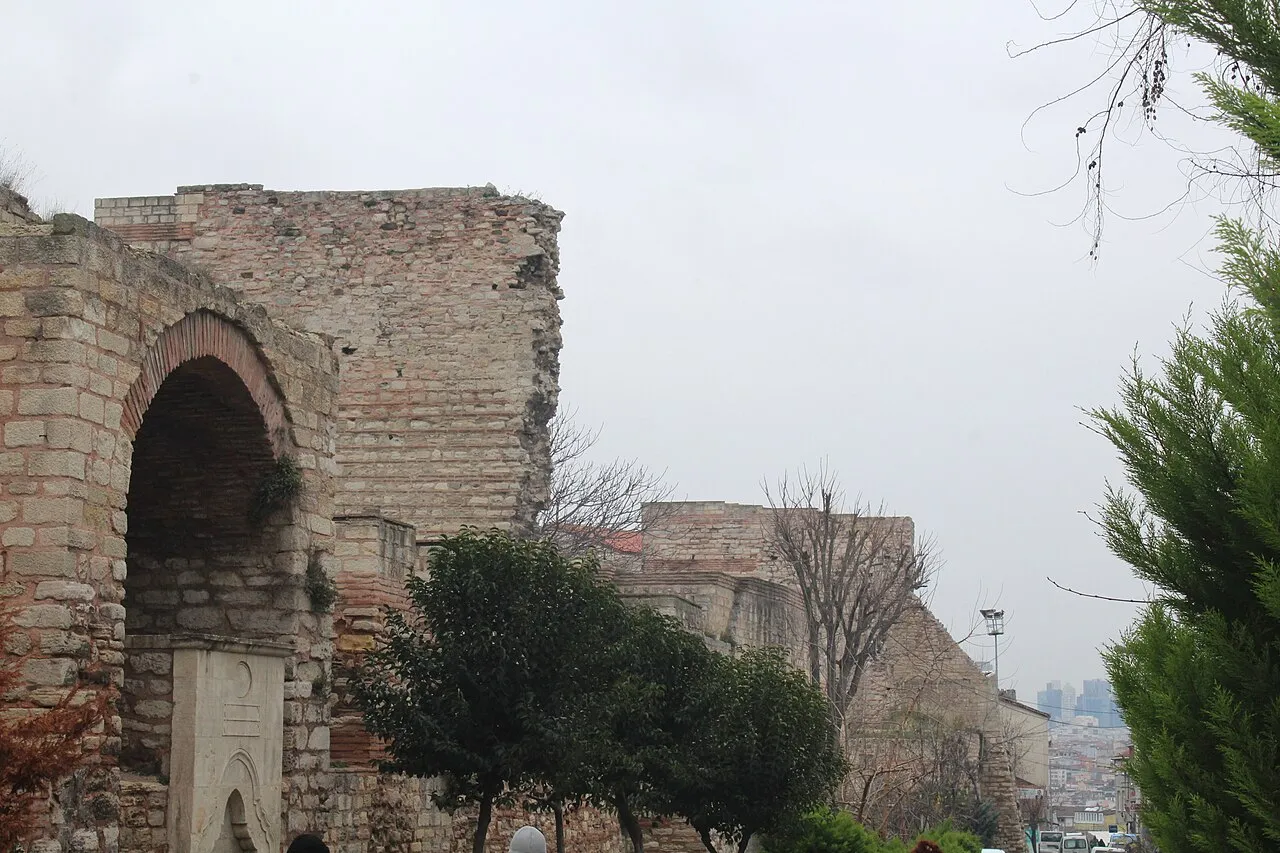 The palace of the Porphyrogenitus by the Blachernae walls of ConstantinopleWikimedia Commons, Jaba1977, CC BY-SA 4.0 (Palace of the Porphyrogenitus (8).jpg)
Đurađ Branković, serving in Musa’s army, escapes an attempt on his life into Selymbria and returns by Thessalonica to Serbia. There he makes peace with his uncle Stefan Lazarević and accepts him as overlord. Manuel sends envoys to Mehmed at Bursa and offers him an alliance against Musa on the terms Süleyman had held.
Sources
- Doukas, Historia Turco-Byzantina (about 1462).
- Konstantin the Philosopher, Life of Despot Stefan Lazarević (1431).
- Dimitris J. Kastritsis, The Sons of Bayezid (2007).
- Nevra Necipoğlu, Byzantium between the Ottomans and the Latins (2009).
- Jovanka Kalić, “Veliki preokret”, in Istorija srpskog naroda, vol. 2 (1982), 64–74.
- Donald M. Nicol, The Last Centuries of Byzantium, 1261–1453 (2nd ed., 1993).
Prev: Musa in Rumelia, 1409–1411Next: İnceğiz and Serbia, 1411–1412