1416 – 1420
Sheikh Bedreddin, 1416
Sheikh Bedreddin of Simavna, a scholar of Islamic law and a Sufi who had studied at Konya and Cairo, had served Musa as kadıasker. After Musa’s fall Mehmed removes him and sends him with his family to İznik on a stipend. His disciples Börklüce Mustafa and Torlak Kemal preach in the Aegean lands, near Aydın and near Manisa. By Doukas, Börklüce teaches that goods should be held in common and that Christians are as faithful to God as Muslims.
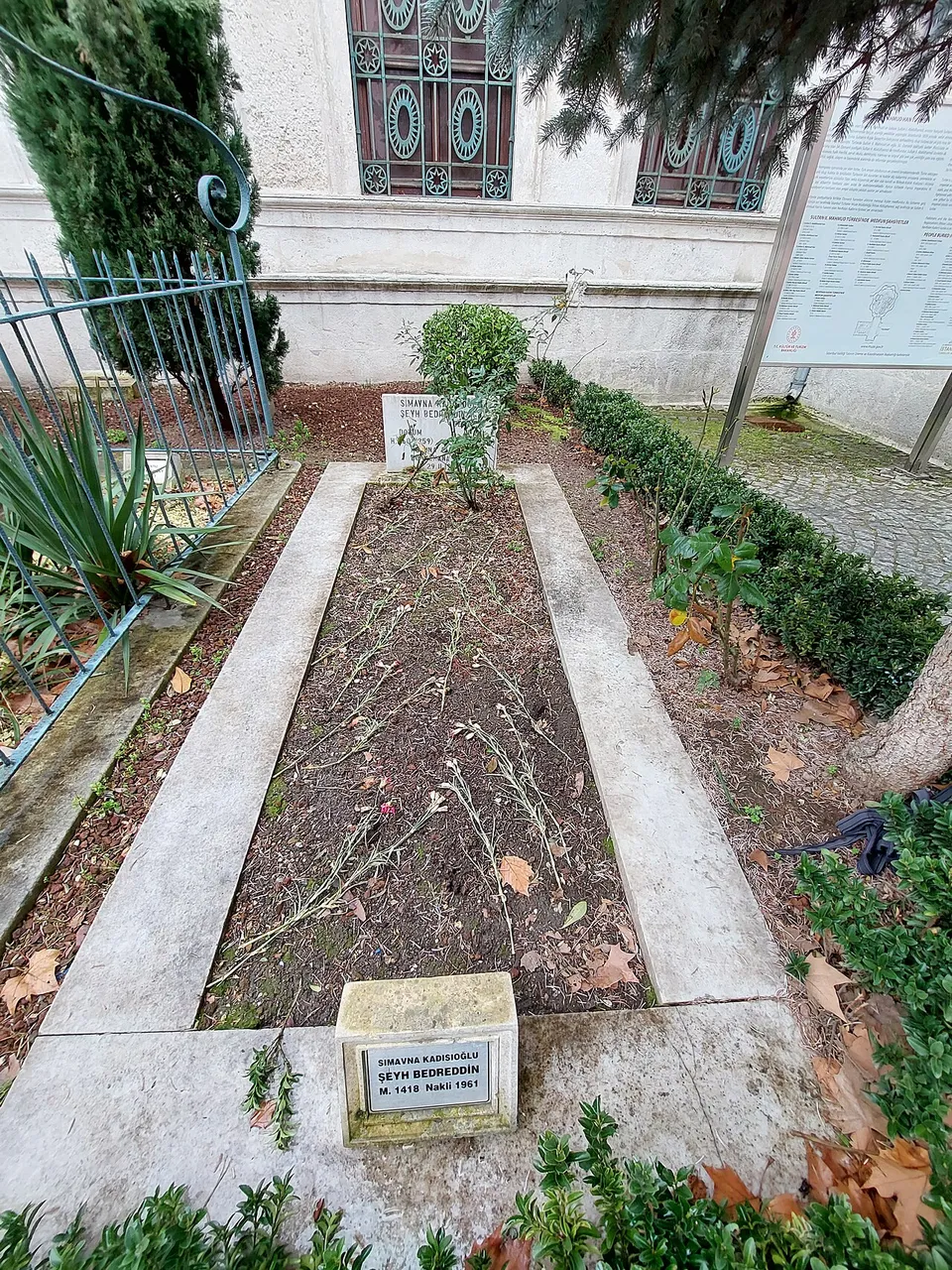 The grave of Sheikh Bedreddin beside the tomb of Sultan Mahmud II in IstanbulWikimedia Commons, Sureta, CC BY-SA 4.0 (Grave of Sheikh Bedreddin 2.jpg)
In 1416 Börklüce’s followers, Turkmen peasants and dervishes with Christians among them, gather on the Karaburun peninsula west of İzmir: 6,000 by Doukas, 4,000 by Şükrullah and 10,000 by İdris of Bitlis. They beat the governor of Saruhan and then Ali Bey, son of Timurtaş, with the troops of Saruhan and Aydın. Mehmed sends his grand vizier Bayezid Pasha with his son Murad and the troops of Rumelia, who kill the rebels without distinction, and Börklüce is crucified on a camel and paraded. Torlak Kemal’s rising at Manisa is put down too, and he is hanged.
Bedreddin leaves İznik by Kastamonu for Sinop and in the summer of 1416 sails to Wallachia, where Mircea receives him. He crosses into Dobruja and raises a revolt in Deliorman among Turkmen settlers and marcher lords whose timars Mehmed had taken away. When his disciples are beaten many of his men leave him, and Bayezid Pasha, crossing to Rumelia, takes him after a small fight. A court of scholars under Mevlana Haydar of Herat tries him before Mehmed at Serres, and he is hanged in the market. The year is 1420 by the date long accepted, or late 1416 if the trial took place while Mehmed was at Serres after the campaign against Mustafa.
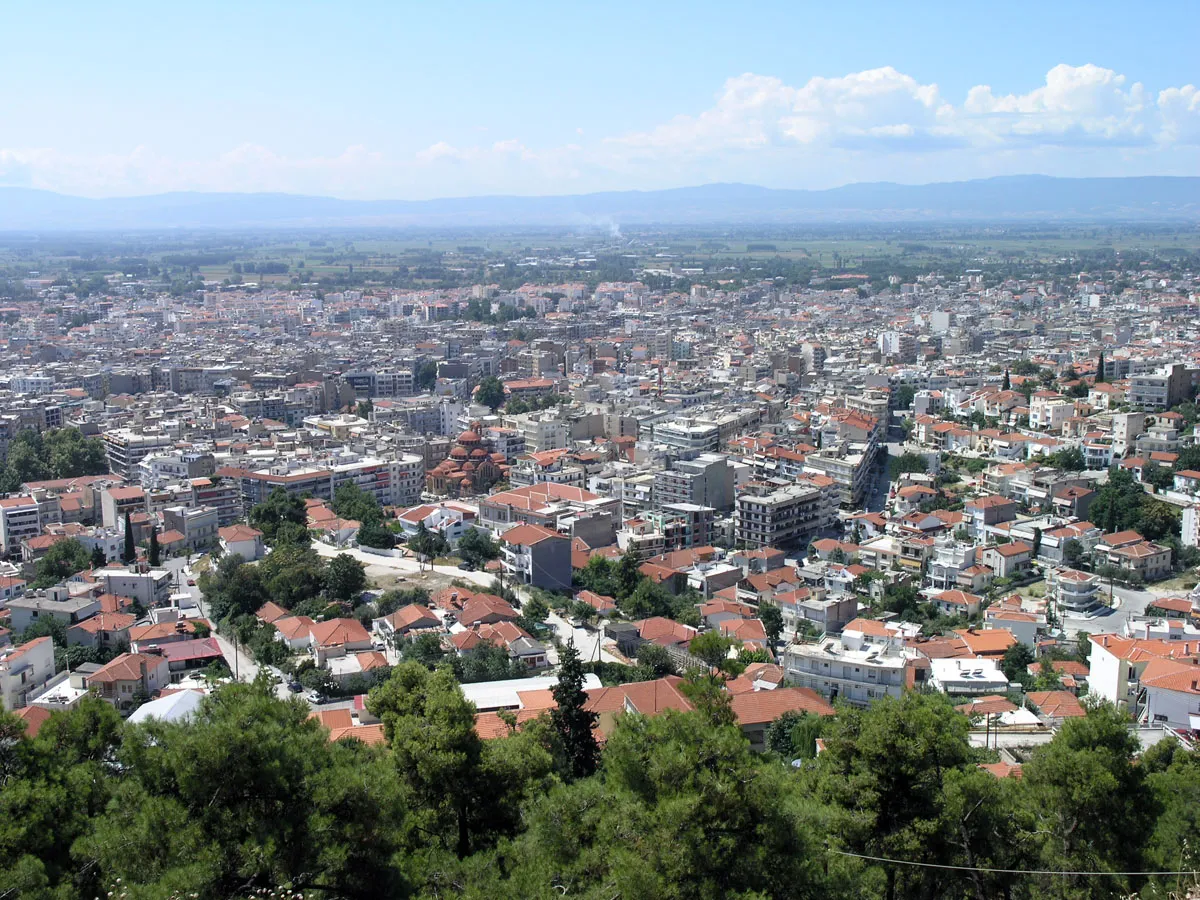 Serres seen from its acropolisWikimedia Commons, Marsyas, CC BY-SA 3.0 (Serres overview.jpg)
Sources
- Doukas, Historia Turco-Byzantina (about 1462).
- Halil bin İsmail, Menâkıb-ı Şeyh Bedreddin (15th century).
- İdris-i Bitlisî, Heşt Bihişt (early 16th century).
- Michel Balivet, Islam mystique et révolution armée dans les Balkans ottomans: vie du cheikh Bedreddîn (1995).
- Cemal Kafadar, Between Two Worlds: The Construction of the Ottoman State (1995).
- Dimitris J. Kastritsis, The Sons of Bayezid (2007).
Prev: Mustafa Çelebi, 1416Next: Wallachia and Valona, 1417–1420