Autumn 1402 – 1403
Timur’s settlement, 1403
Timur gives the Anatolian beyliks back to their old dynasties. Karaman goes with Konya to Mehmed, a son of the Alaeddin whom Bayezid had executed, Germiyan to Yakub at Kütahya, and Aydın, Saruhan and Menteşe to their former houses. İsfendiyar of Candar, who submits to Timur, is confirmed in Kastamonu, Kalecik, Tosya and Çankırı.
Bayezid’s sons keep what Timur leaves them, as his vassals. Süleyman rules the lands in Europe from Edirne, İsa takes Bursa and the north-west of Anatolia with Timur’s leave, and Mehmed holds Amasya with Tokat and Sivas.
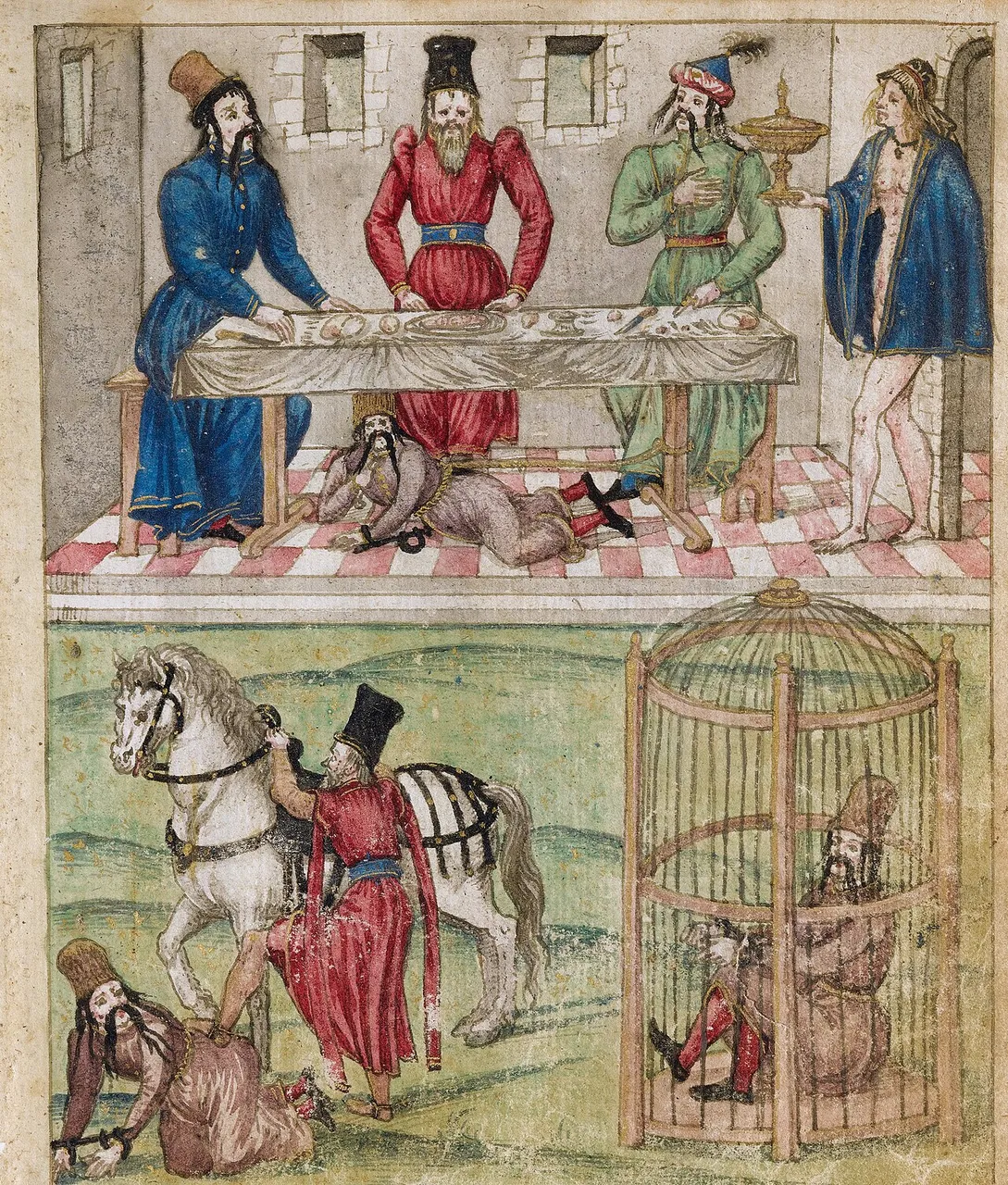 The captive Bayezid tied to Timur’s table and held in a cage, in a south German album of before 1561Wikimedia Commons, unknown painter, Public domain (Timur the Great's imprisonment of the Ottoman Sultan Bayezid (cropped).jpg)
Bayezid dies a captive in Timur’s camp at Akşehir on 8 March 1403, of illness by the Timurid historians, by poison he took himself according to Âşıkpaşazâde and Oruç Bey. Ibn Arabshah tells of an iron cage, while Yazdi writes that Timur treated his captive with respect. Muhammad Sultan, Timur’s grandson and heir, dies of his wounds near Afyonkarahisar a few days later, and Timur leaves Anatolia that year. He dies at Otrar (Farab) on the Syr Darya on 17 or 18 February 1405, at the start of a campaign against China.
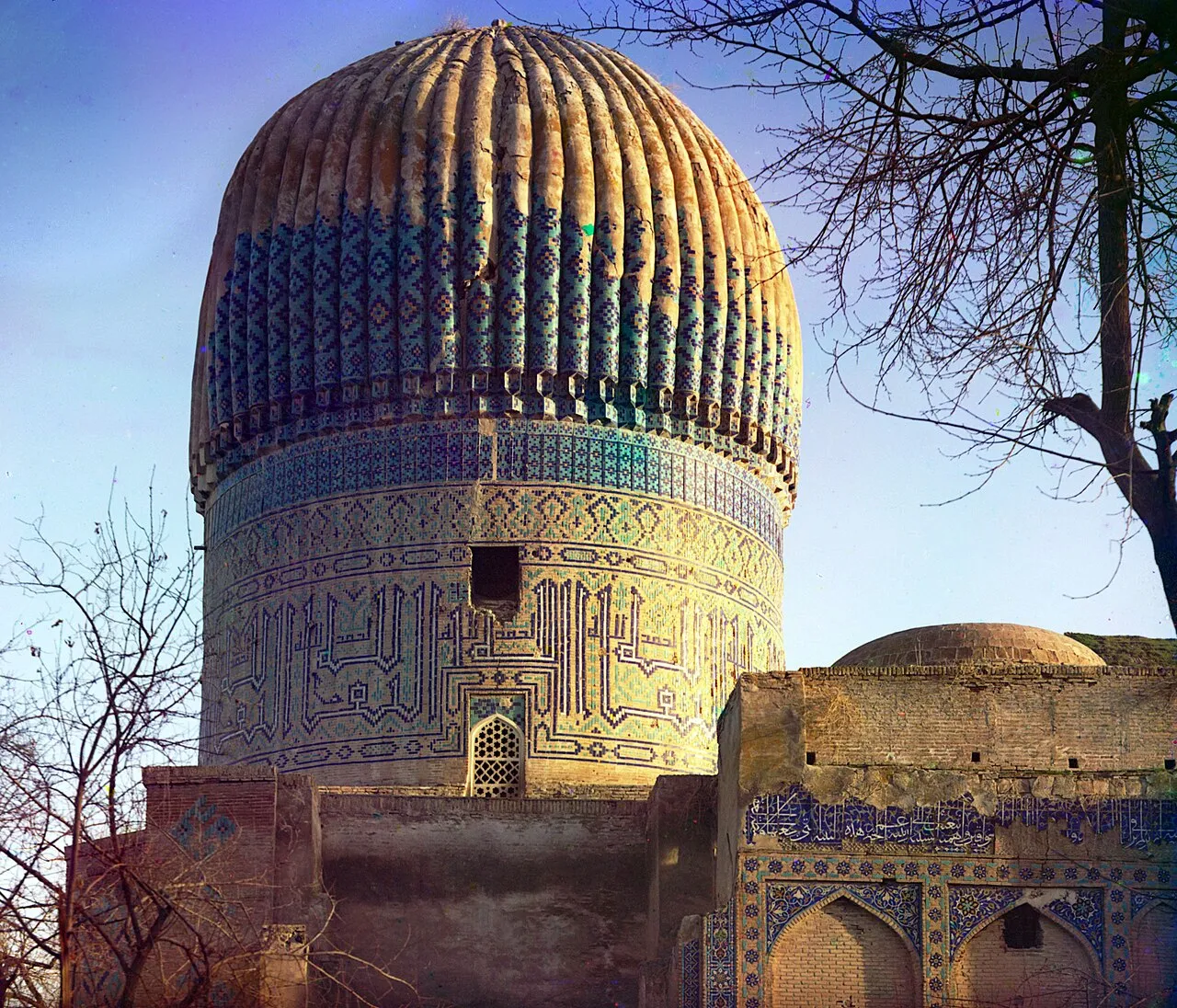 The Gur-e Amir at Samarkand, where Timur is buried, photographed by Sergei Prokudin-Gorskii between 1905 and 1915Wikimedia Commons, Sergei Prokudin-Gorskii, Public domain (Tomb-of-Timur-east-side-Prokudin-Gorskii.jpeg)
Sources
- Sharaf ad-Din Ali Yazdi, Zafarnama (1425).
- Ibn Arabshah, ʿAjāʾib al-maqdūr fī nawāʾib Tīmūr (1435).
- Âşıkpaşazâde, Tevârîh-i Âl-i Osmân (late 15th century).
- Mehmed Fuad Köprülü, “Yıldırım Bayezid’in esareti ve intiharı hakkında”, Belleten 1 (1937), 591–603.
- Dimitris J. Kastritsis, The Sons of Bayezid (2007).
- Colin Imber, The Ottoman Empire, 1300–1481 (1990).
Prev: Bursa and Smyrna, 1402Next: Tripolje, 1402