6 July 1809, afternoon
MacDonald’s column
Towards 1 pm Napoleon sees the smoke of Davout’s attack beyond the tower of Markgrafneusiedl and orders a general advance. MacDonald forms 23 battalions, about 8,000 men, into a hollow block about 800 m wide and 550 m deep and marches on Süssenbrunn, the junction of the Austrian grenadiers and III Corps. Austrian guns in front and infantry on both flanks cut the formation to half its strength, and the Guard cavalry beside it does not charge. The attack stops towards 2 pm a few hundred metres short of Süssenbrunn, which Wrede’s Bavarians and the Young Guard take later.
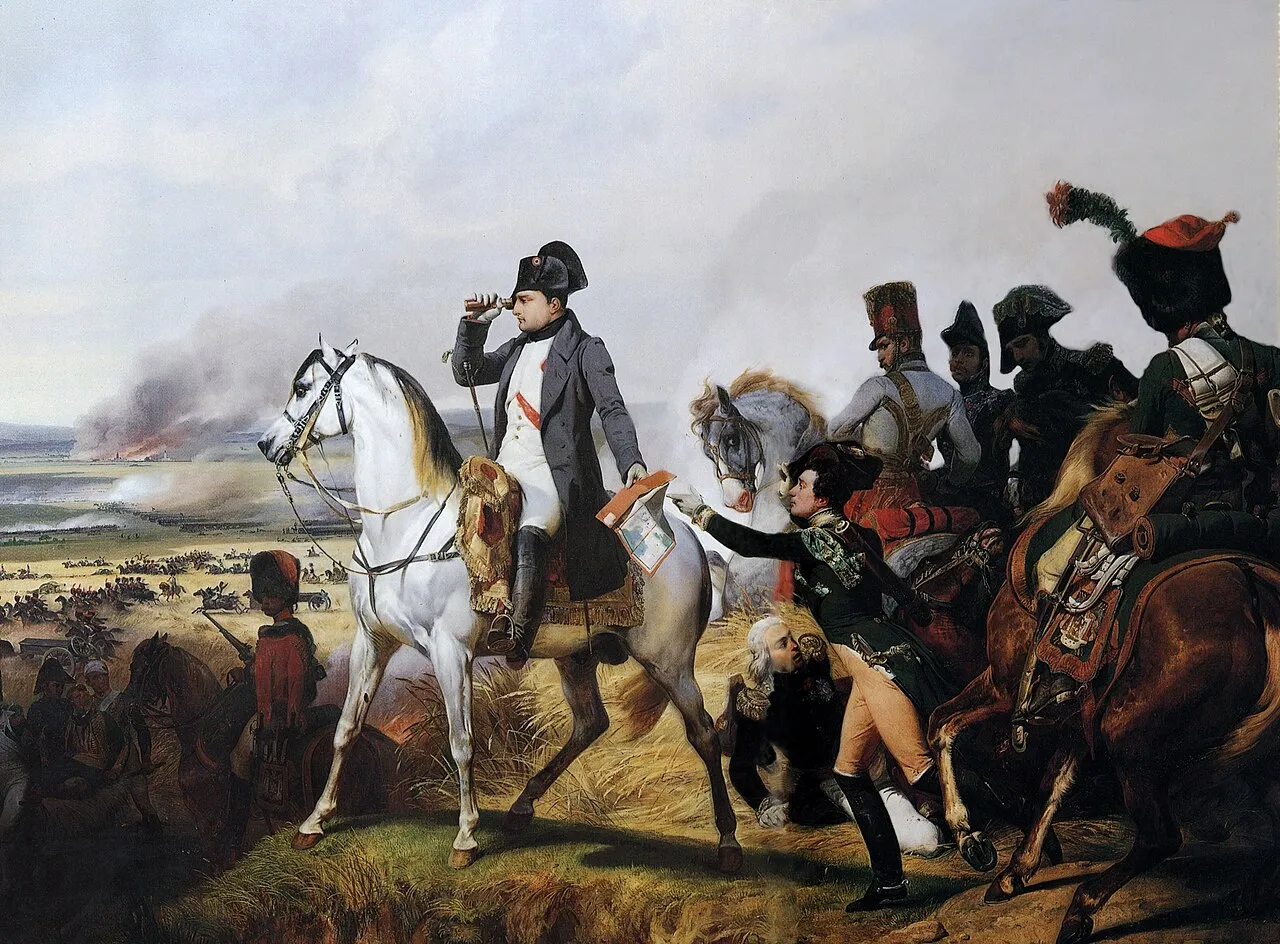 Napoleon at the battle of Wagram, painting by Horace Vernet, 1836Wikimedia Commons, Horace Vernet, Public domain (Napoleon Wagram.jpg)
At about 1 pm Oudinot attacks the plateau without waiting for orders and takes Baumersdorf, and Pacthod’s division with the Italian Royal Guard takes Deutsch-Wagram. On the left Masséna retakes Essling at about 2 pm and then Aspern, and drives Klenau back towards Leopoldau, where the cavalry general Antoine Lasalle is killed shortly before 5 pm.
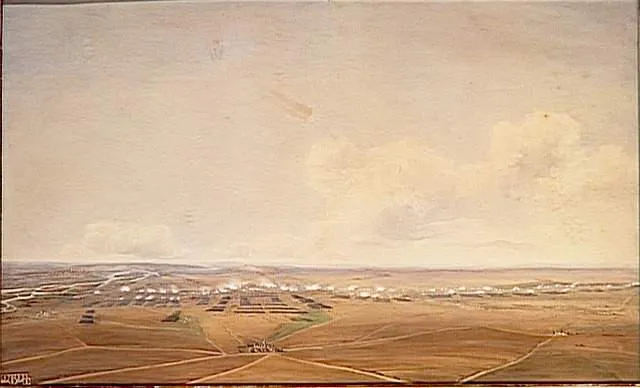 The decisive attack at Wagram, painting by Siméon FortWikimedia Commons, Siméon Fort, Public domain (Decisive attack at Wagram.jpg)
Charles orders the retreat at about 2:30 pm, and by 4 pm the whole Austrian army is withdrawing north-west in good order. A patrol of Archduke John’s army reaches Glinzendorf at about 5 pm, and John turns back on learning that the battle is over. The French lose about 35,000 men and the Austrians about 39,000, and on 7 July Napoleon makes MacDonald a marshal.
Sources
- Gunther E. Rothenberg, The Emperor’s Last Victory: Napoleon and the Battle of Wagram (2004).
- John H. Gill, 1809: Thunder on the Danube, volume III: Wagram and Znaim (2010).
- Ian Castle, Aspern and Wagram 1809 (1990).
Prev: The grand batteryNext: Schönbrunn and the Empire at its height