August 1812 to 20 June 1813
Burgos and the advance of 1813
After Salamanca King Joseph leaves Madrid, which Wellington enters on 12 August 1812, and Soult gives up Andalusia and the siege of Cádiz. Wellington besieges the castle of Burgos from 19 September but cannot take it, and on 21 October he retreats before the united French armies by Salamanca to Ciudad Rodrigo, losing several thousand men on the way.
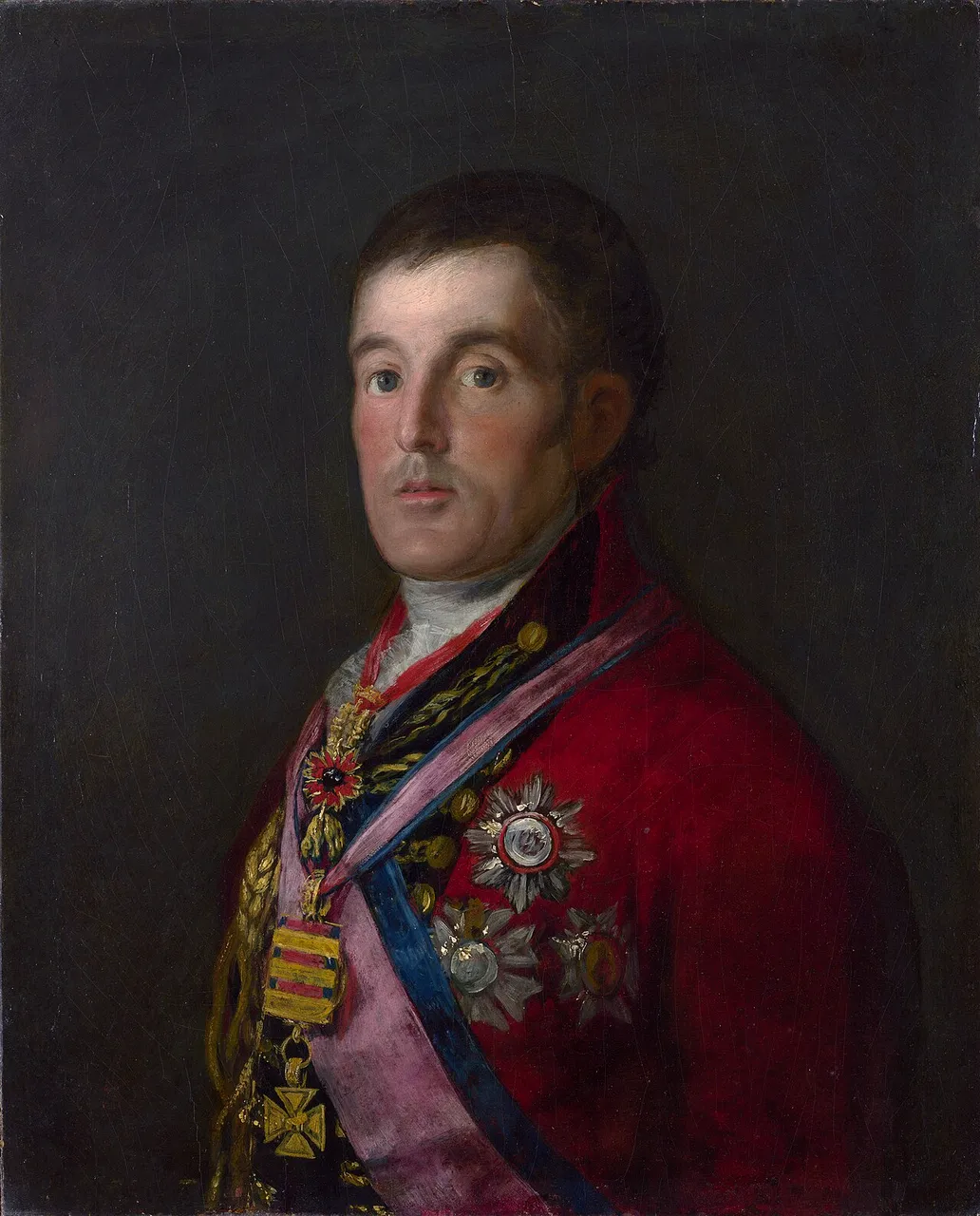 Wellington, portrait by Francisco Goya, 1812 to 1814, National Gallery, LondonWikimedia Commons, Francisco Goya, Public domain (Francisco Goya - Portrait of the Duke of Wellington.jpg)
Napoleon withdraws about 20,000 men from Spain to rebuild his army after Russia, and on 17 March 1813 Joseph leaves Madrid for the last time. From 20 May Wellington marches 121,000 men, 53,749 British, 39,608 Spanish and 27,569 Portuguese, out of northern Portugal. He leads a small force in the centre as a feint, while Sir Thomas Graham takes the larger part of the army through the mountains, across the Esla and round the French right. The French fall back past Burgos towards the Ebro, and Wellington moves his supply base to the ports of the northern coast.
By 20 June Joseph and Marshal Jourdan stand west of Vitoria with the armies of the South under Gazan, of the Centre under d’Erlon and of Portugal under Reille, 57,000 to 60,000 men with 153 guns, and a huge wagon train of booty fills the streets of the town. The Zadorra crosses the battlefield from east to west and loops into a hairpin bend, with the Heights of La Puebla to the south and Monte Arrato to the north-west. Jourdan lies ill with fever all day on 20 June, few orders are given, and d’Erlon leaves three bridges near the bend standing.
Wellington, with 81,000 to 90,000 men and 96 guns, divides his army into four columns. Hill’s 20,000 on the right are to force the defile at La Puebla, Wellington’s right centre is to cross the river at the bend, Dalhousie’s left centre is to cut across Monte Arrato, and Graham’s 20,000 on the left are to march round Monte Arrato and come down the road from Bilbao behind the French.
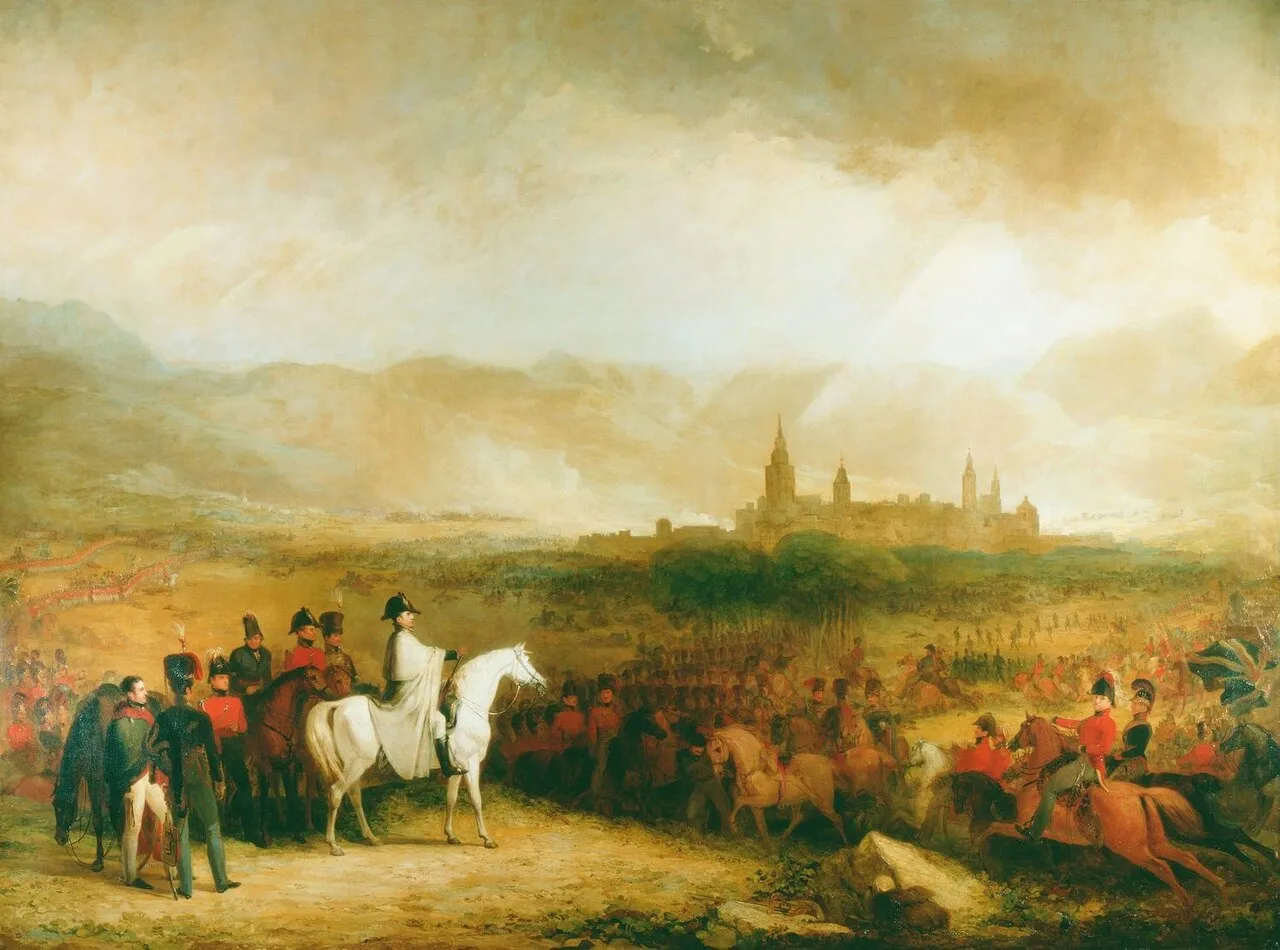 The Battle of Vittoria, painting by George Jones, 1822, Royal CollectionWikimedia Commons, George Jones, Public domain (George Jones (1786-1869) - The Battle of Vittoria - RCIN 407186 - Royal Collection.jpg)
Sources
- Charles Oman, A History of the Peninsular War, vol. VI (1922).
- Ian Fletcher, Vittoria 1813: Wellington Sweeps the French from Spain (2005).
- David Gates, The Spanish Ulcer: A History of the Peninsular War (2002).
Prev: Ferey’s rearguardNext: Hill at La Puebla