August 1808
Vimeiro and Cintra
After Bailén King Joseph leaves Madrid on 1 August 1808, and the French armies in Spain fall back behind the Ebro. Between 1 and 8 August Lieutenant General Sir Arthur Wellesley lands about 16,000 British troops at Mondego Bay in Portugal, where students of Coimbra University hold the fort. With 1,700 Portuguese under Colonel Nicholas Trant he marches south on Lisbon along the coast, close to his supply ships.
On 17 August he attacks General Delaborde, who holds the hills at Roliça with about 4,000 men to delay him. Delaborde falls back twice before the British flanking columns and holds a steep ridge until nearly 4 pm, then withdraws, having lost 700 men against 487 British and Portuguese. Wellesley turns to the coast to cover the landing of 4,000 more troops at Maceira Bay, and takes up a position at the village of Vimeiro.
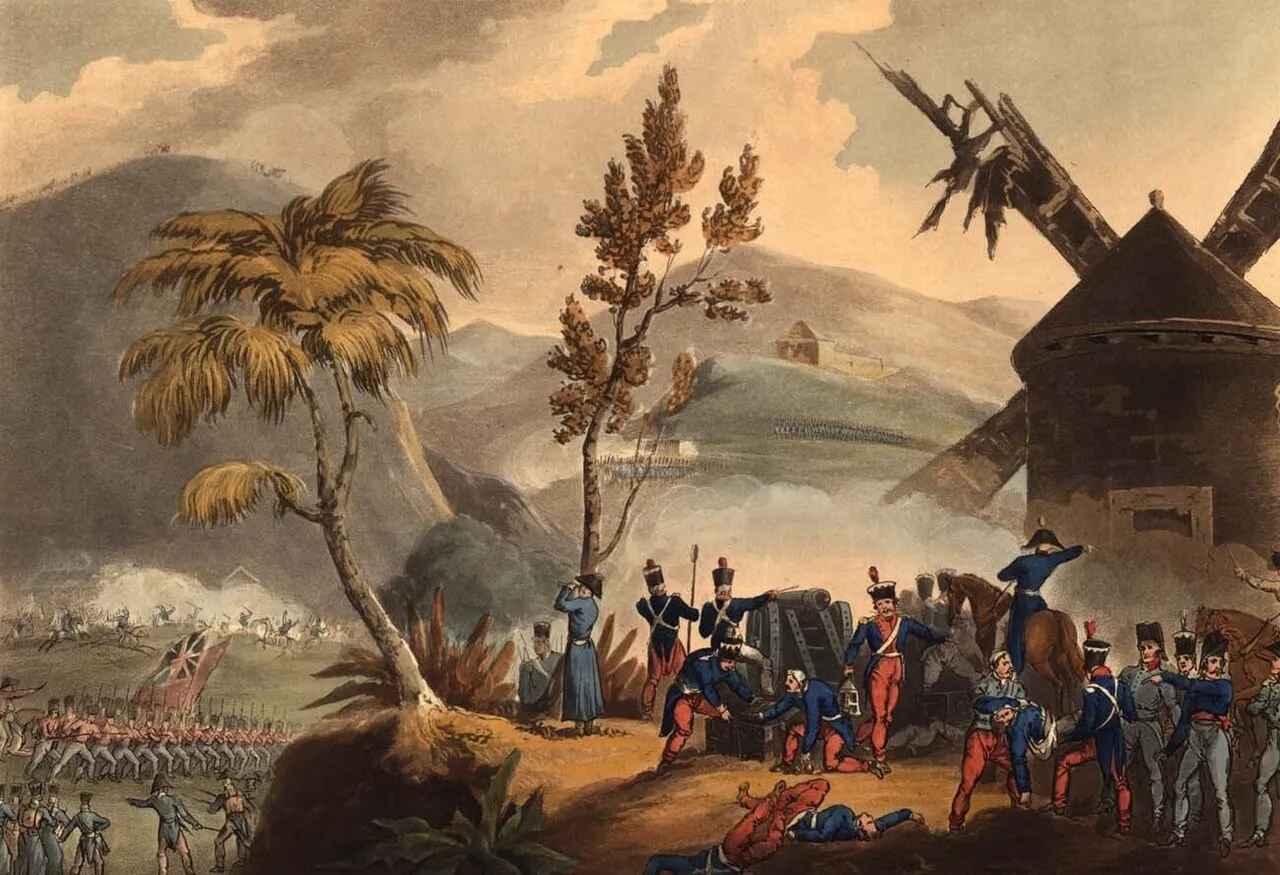 The Battle of Roliça, 17 August 1808, print after William Heath, 1815Wikimedia Commons, William Heath, Public domain (Batalha da Roliça (cropped).jpg)
Junot attacks him there on 21 August with about 14,000 men and 23 guns against 20,000. While Brenier’s brigade swings round to a ridge north-east of the village, Thomières and Charlot attack Vimeiro in column, and British infantry in line break both columns with volleys at close range. Kellermann’s grenadiers get into the village and are thrown out, and the 20th Light Dragoons, pursuing too far, are cut up by Margaron’s cavalry. Solignac and then Brenier attack the north-eastern ridge and are routed, and Brenier is wounded and taken.
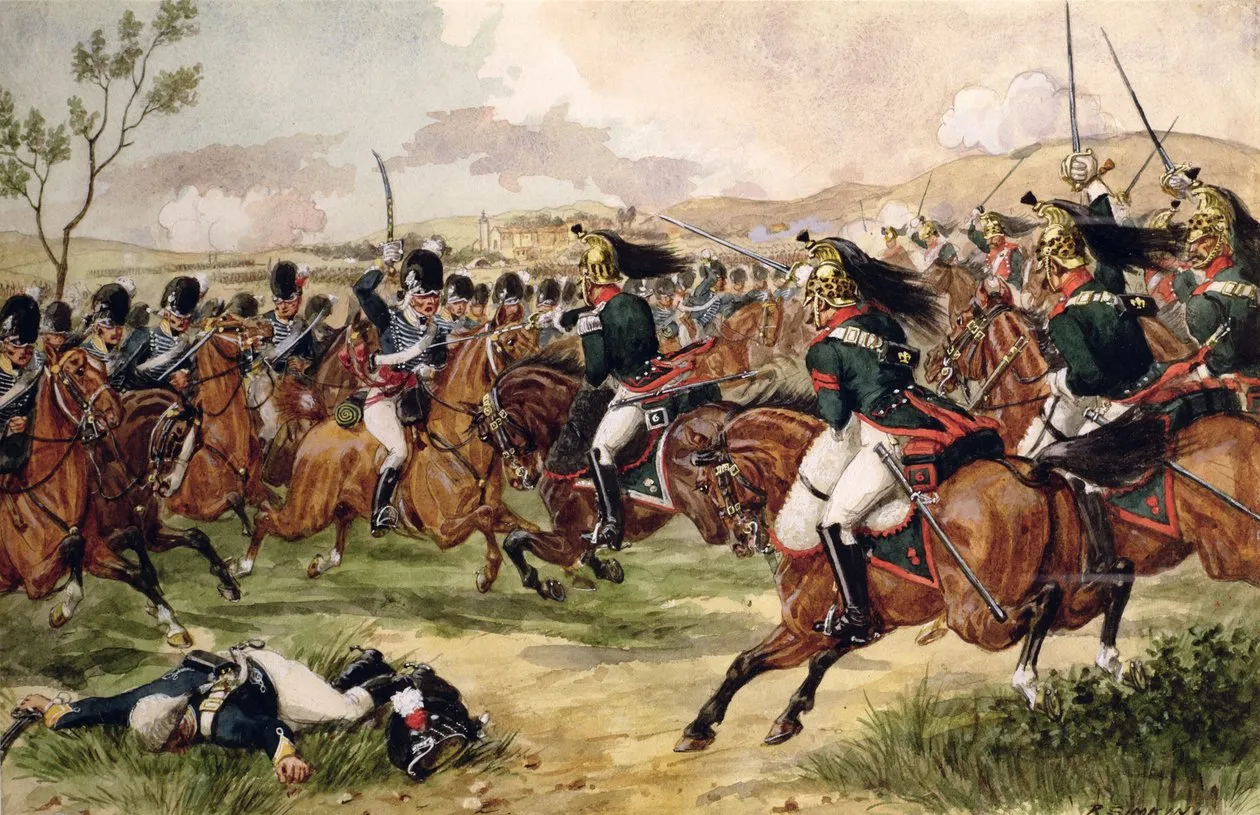 The 20th Light Dragoons charging at Vimeiro, painting by Richard Simkin, about 1890Wikimedia Commons, Richard Simkin, Public domain (The 20th Light Dragoons at the Battle of Vimeiro, 21st August 1808.jpg)
Junot loses about 2,000 men and 13 guns, the British 135 killed, 593 wounded and 51 missing. Sir Harry Burrard, who arrives during the battle and takes command, forbids a pursuit, and Sir Hew Dalrymple takes over from him the next day.
By the Convention of Cintra, signed on 30 August, the Royal Navy carries 20,900 French soldiers back to France with their guns, equipment and loot. The terms cause an outcry in Britain. Dalrymple, Burrard and Wellesley are recalled to an inquiry, which clears all three, and only Wellesley returns to a field command.
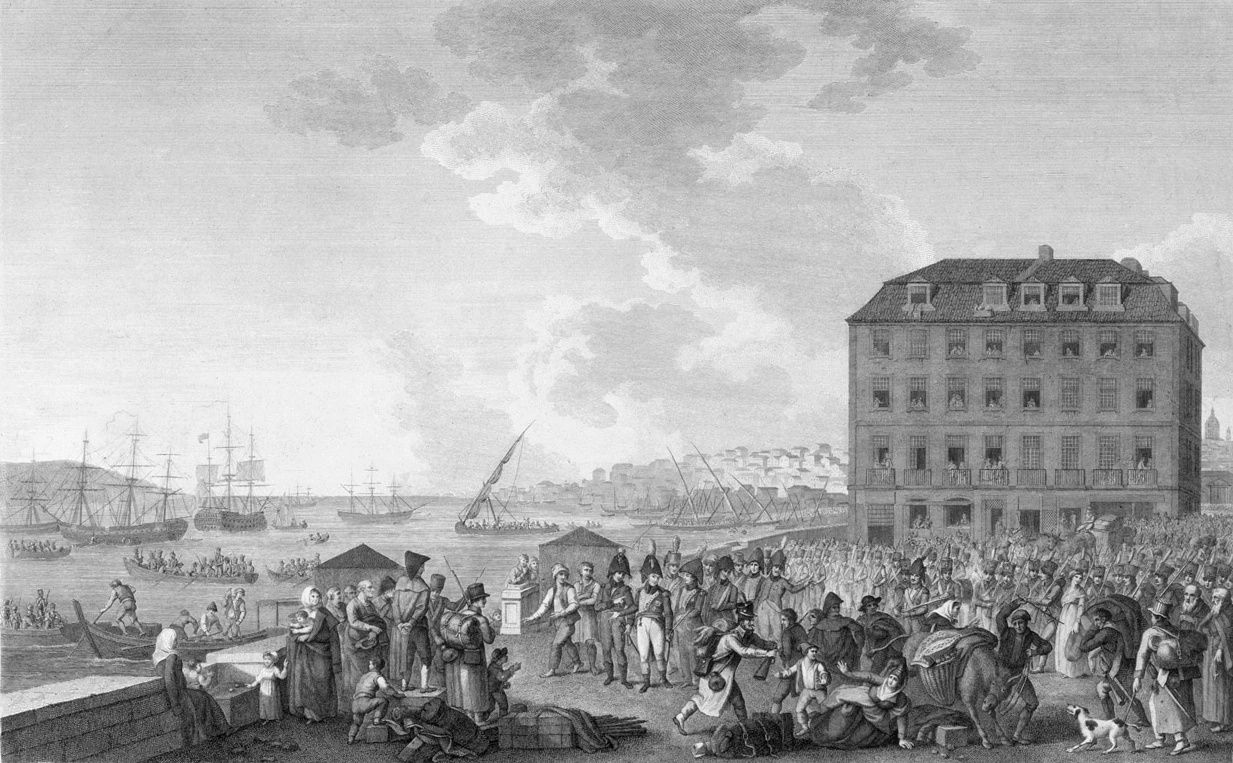 Junot’s army embarking at Lisbon after the Convention of Cintra, print by Henri L’Évêque and Francesco Bartolozzi, 1812Wikimedia Commons, Henri L’Évêque and Francesco Bartolozzi, Public domain (The Embarkation of Genl. Junot, after the Convention of Cintra, at Quai Sodre (Henri L' Évêque, F. Bartolozzi).png)
Sources
- Charles Oman, A History of the Peninsular War, vol. I (1902).
- Robert Burnham and Ron McGuigan, The British Army against Napoleon (2010).
- Michael Glover, Britannia Sickens (1970).
Prev: Vedel’s attack and the surrenderNext: Napoleon in Spain and the retreat to Corunna