December 1812 to January 1813
The end of the Grande Armée
On 3 December Napoleon publishes the 29th Bulletin, the first admission to the outside world of the state of his army. On 5 December he leaves the army at Smorgon and travels to Paris by sledge, leaving Murat in command. The temperature falls to −34 °C on 8 December, and the army is down to about 4,300 combatants and a mass of stragglers.
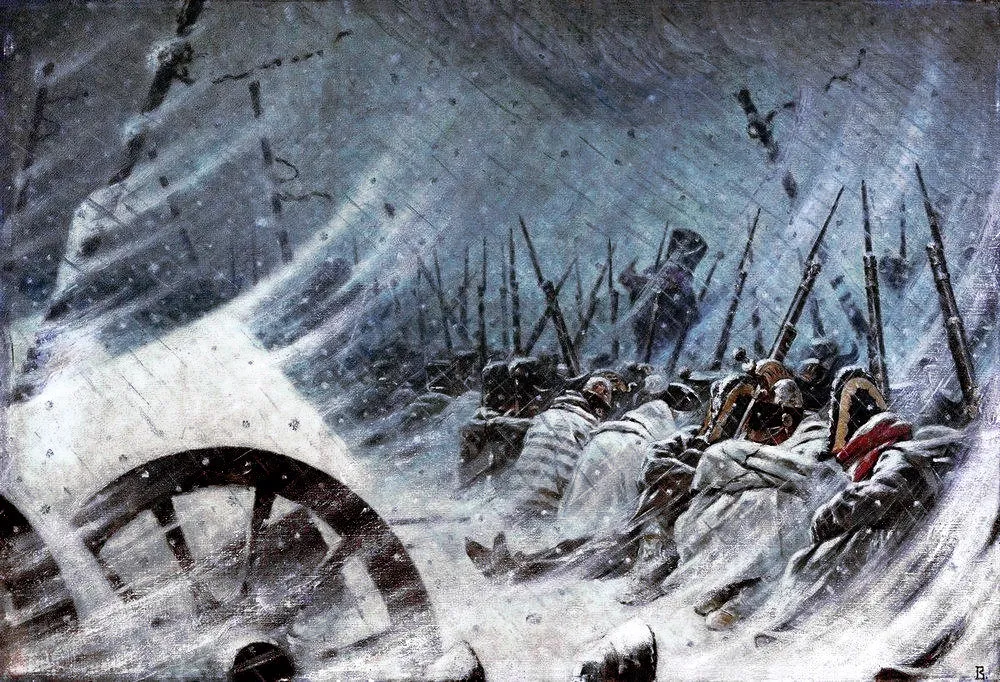 A night bivouac of the Grande Armée during the retreat, painting by Vasily VereshchaginWikimedia Commons, Vasily Vereshchagin, Public domain (Night Bivouac of Great Army.jpg)
The remnants reach Vilnius, where more than 20,000 men are left behind in the hospitals, and then Kaunas. On 14 December Ney’s rearguard crosses the Niemen with barely a thousand men fit for action. The same day Schwarzenberg’s Austrians cross the border further south, and about 36,000 French soldiers are taken prisoner by the Cossacks between 1 and 14 December.
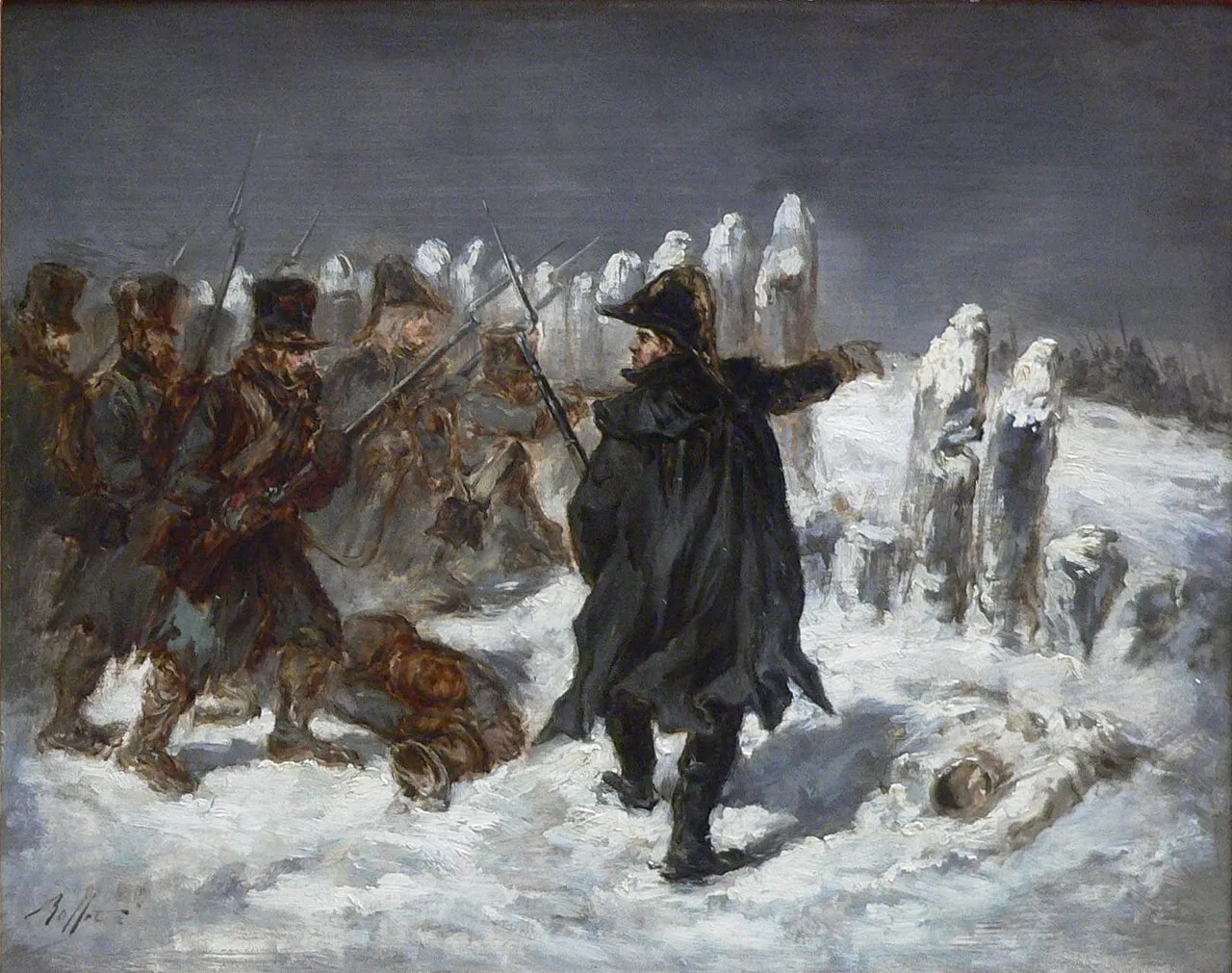 Ney at Kaunas, painting by Auguste RaffetWikimedia Commons, Auguste Raffet, Public domain (Louvre-peinture-francaise-Ney-a-Kowno-p1020309.jpg)
In the north Macdonald leaves Riga on 18 December and falls back towards Königsberg. His Prussian corps under Ludwig Yorck is cut off by the Russians, and on 30 December Yorck signs the Convention of Tauroggen with the Russian general Hans Karl von Diebitsch, which takes his men out of the fighting on his own authority.
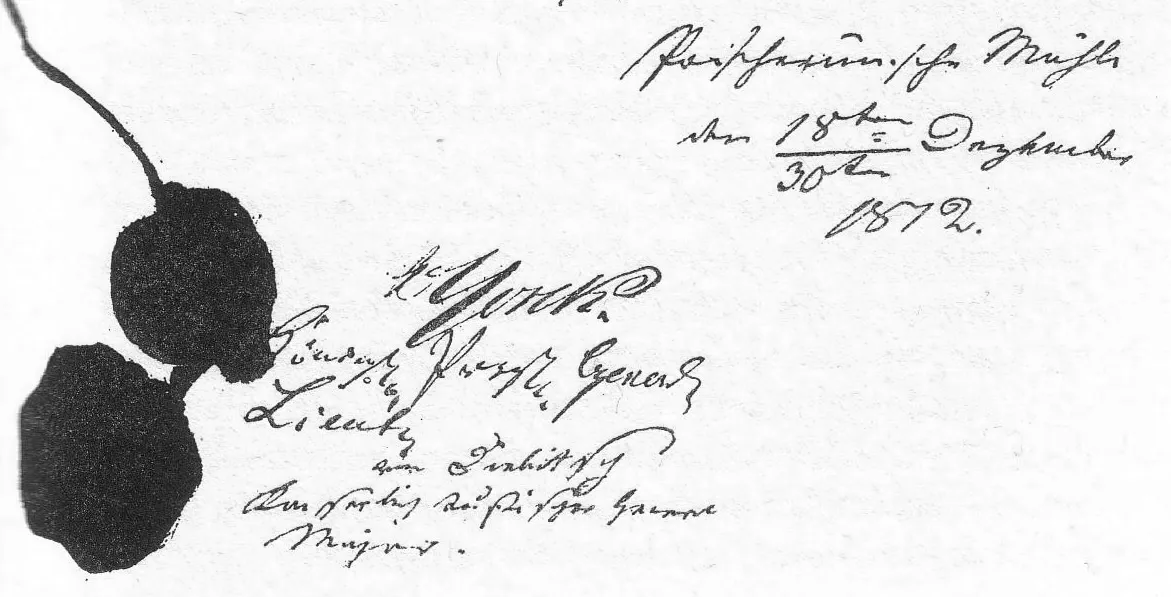 The signatures of Yorck and Diebitsch on the Convention of Tauroggen, 30 December 1812Wikimedia Commons, unknown author, Public domain (Konvention-Tauroggen.jpg)
After Murat also leaves the army, Eugène takes command of its remnants at Posen. In January 1813 about 23,000 men gather behind the Vistula, with another 35,000 Austrians and Prussians. Estimates of the losses vary widely: of about 600,000 men who crossed into Russia, perhaps 110,000 come back, about 100,000 are taken prisoner and more than half of them die in captivity, and Russian military losses are put at about 210,000 dead.
Sources
- Paul Britten Austin, 1812: The Great Retreat (1996).
- Adam Zamoyski, Moscow 1812: Napoleon’s Fatal March (2004).
- Dominic Lieven, Russia Against Napoleon (2010).
Prev: The bridges burnNext: Lützen and Bautzen