August to 20 September 1792
The Prussian invasion
Brunswick’s army crosses the French frontier on 19 August 1792. It counts about 84,000 men: Prussian and Austrian regulars with Hessians and the French émigrés of the Army of Condé. The invaders take Longwy on 23 August and Verdun on 2 September, and move towards Paris through the passes of the Argonne forest. The fall of Verdun sets off the September massacres in Paris.
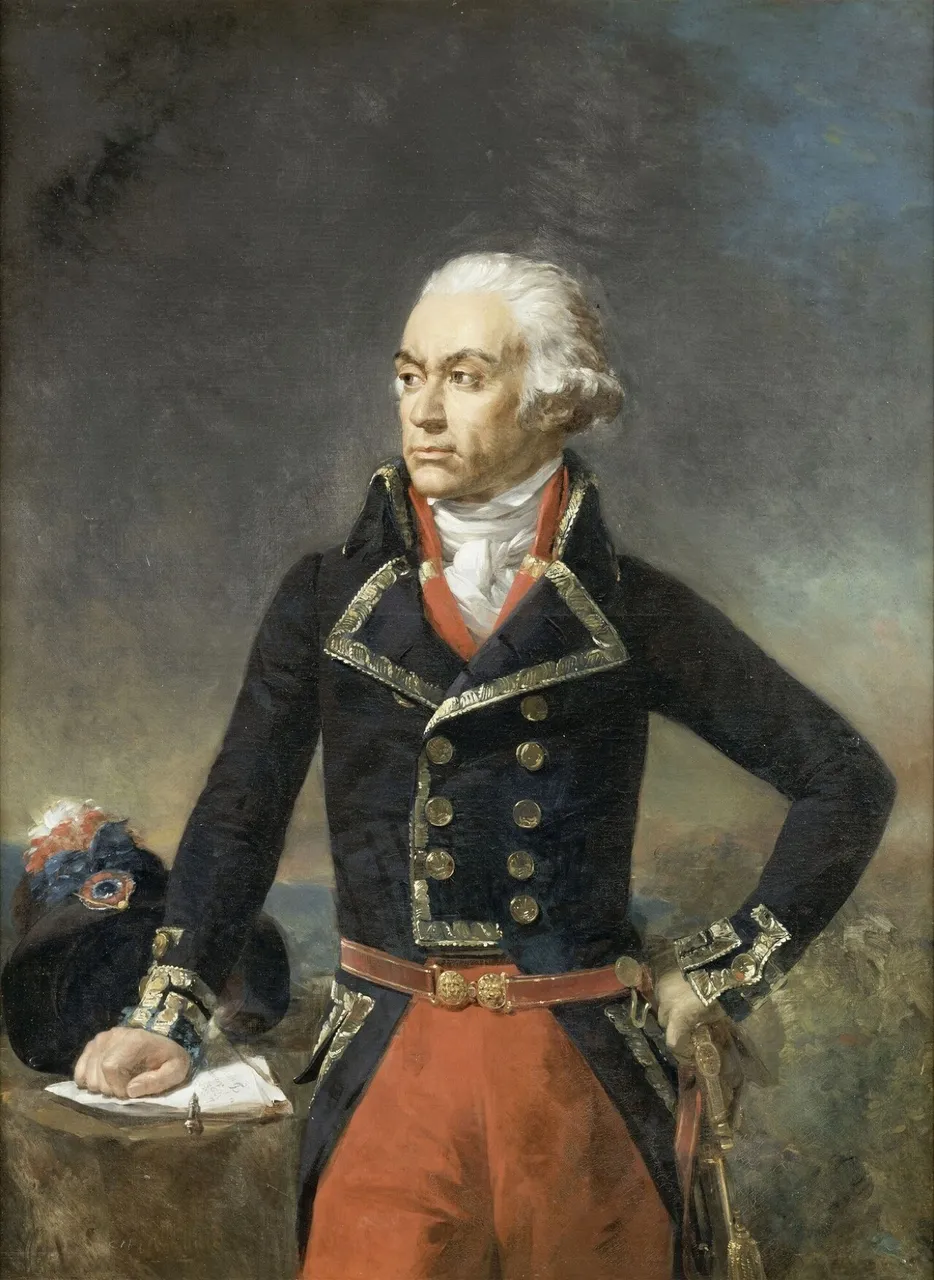 Charles François Dumouriez, portrait by Jean-Sébastien Rouillard, 1834Wikimedia Commons, Jean Sébastien Rouillard, Public domain (Charles-François Dumouriez, général en chef de l'Armée du Nord, par Jean-Sébastien Rouillard (Château de Versailles) (cropped).jpg)
Dumouriez gives up his plan to invade the Austrian Netherlands and turns his army against Brunswick. Kellermann marches the Army of the Centre from Metz and joins him at Sainte-Menehould on 19 September. Together they have about 54,000 men. Just over half of the French infantry are regulars of the old royal army, as are nearly all the cavalry and the artillery, widely regarded as the best in Europe.
The French now stand east of the Prussians, across their line of supply. Heavy rain and sickness weaken the invading army, and Brunswick turns back to give battle, marching through the woods to the north to cut Dumouriez off. On 20 September Kellermann advances his left wing onto the slopes between Sainte-Menehould and Valmy, and Brunswick moves against him with about 34,000 men.
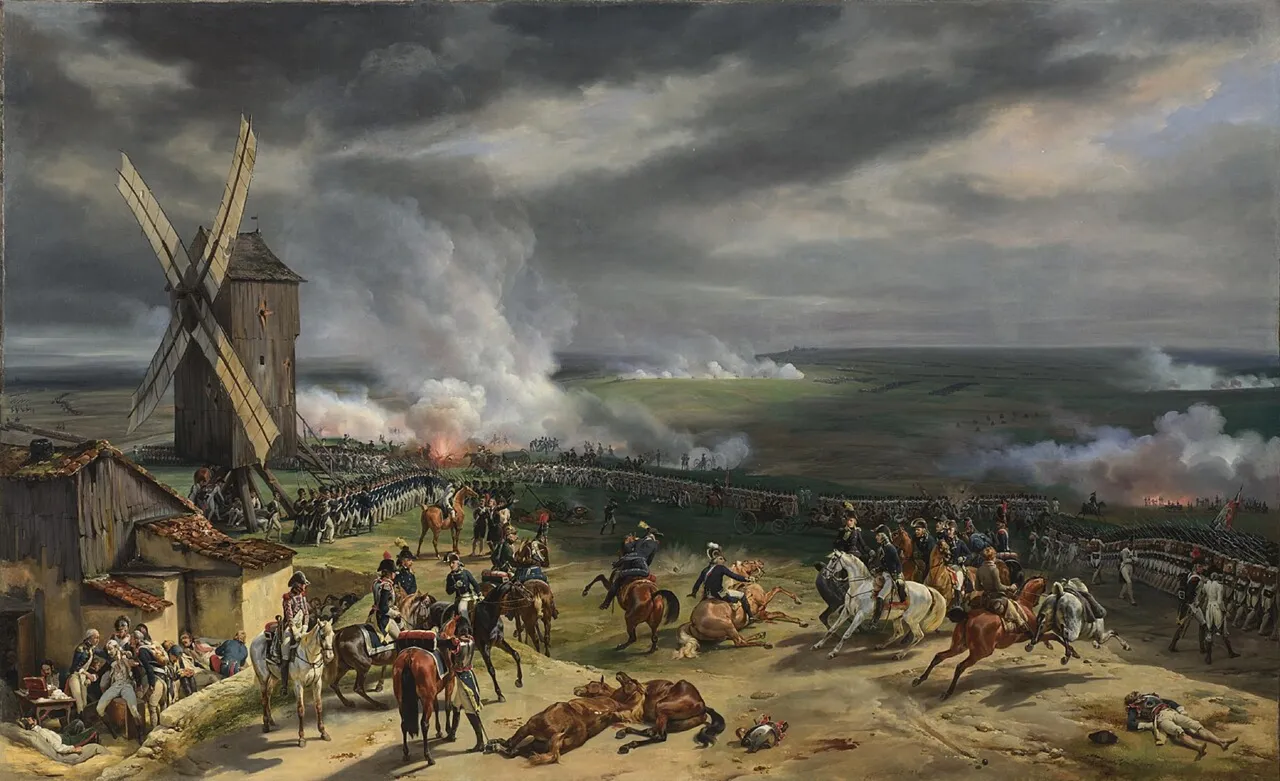 The Battle of Valmy, painting by Horace Vernet, 1826Wikimedia Commons, Horace Vernet, Public domain (Valmy Battle painting.jpg)
Sources
- T. C. W. Blanning, The French Revolutionary Wars 1787–1802 (1996).
- Owen Connelly, The Wars of the French Revolution and Napoleon (2005).
- Munro Price, The Fall of the French Monarchy (2002).
Prev: France declares warNext: The cannonade