March to 20 October 1805
The combined fleet
In March 1805 Napoleon orders his fleets to break out, unite in the West Indies and return to cover the crossing to England. Ganteaume’s 21 ships of the line at Brest cannot get past the blockade. Villeneuve sails from Toulon with 11 ships of the line on 30 March, avoids Nelson by passing west of the Balearic Islands and goes through the Strait of Gibraltar on 8 April. At Cádiz he collects the French Aigle, and six Spanish ships under Federico Gravina follow him to Martinique, where he arrives on 14 May.
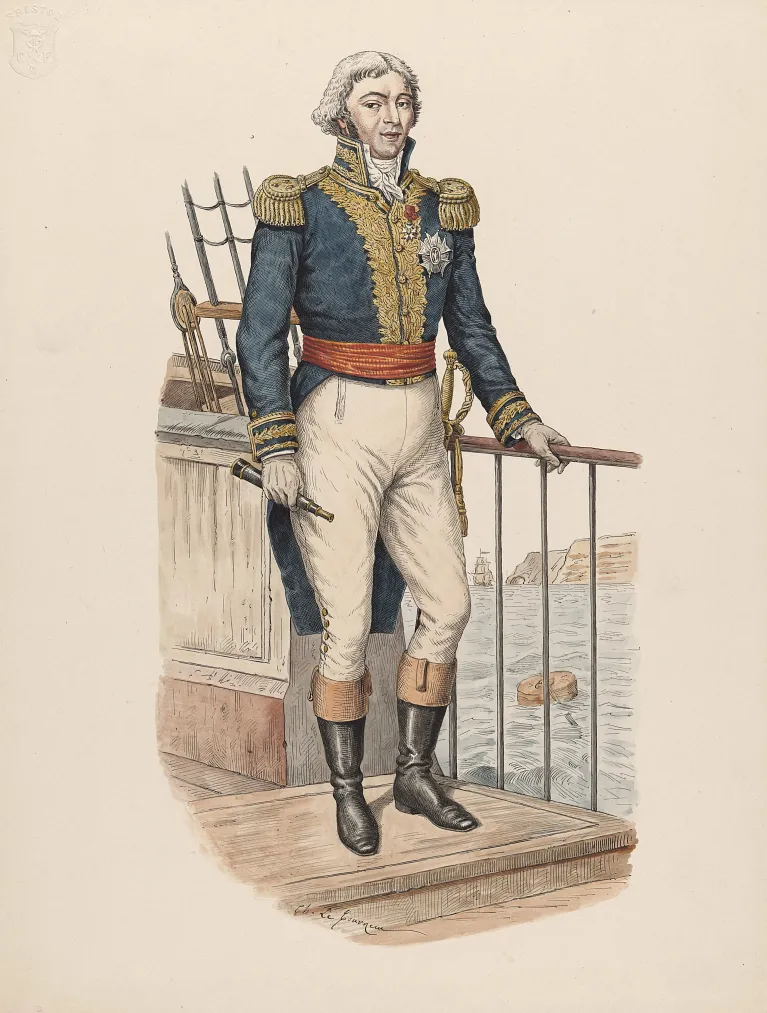 Vice-Admiral Pierre-Charles Villeneuve, portrait by Charles Le CourneurWikimedia Commons, Charles Le Courneur, Public domain (Vice Admiral Pierre-Charles-Jean-Baptiste-Sylvestre De Villeneuve.jpg)
Nelson follows him across the Atlantic and anchors at Barbados on 4 June. Hearing that Nelson is close, Villeneuve sails for Europe on 11 June. On 22 July Robert Calder’s 15 ships intercept his 20 off Cape Finisterre, and in fog and failing light the British take two Spanish ships. Villeneuve puts into Vigo and Ferrol, sails again on 10 August under orders for Brest, then turns south and enters Cádiz.
A British fleet gathers off Cádiz, first under Cuthbert Collingwood, and Nelson arrives to take command on 28 September. He keeps his main force about 80 km offshore, out of sight, and leaves frigates to watch the port. Over dinners aboard HMS Victory he explains his plan to his captains: the fleet will attack in two columns, cut the enemy line in two places and force a mêlée, ship against ship.
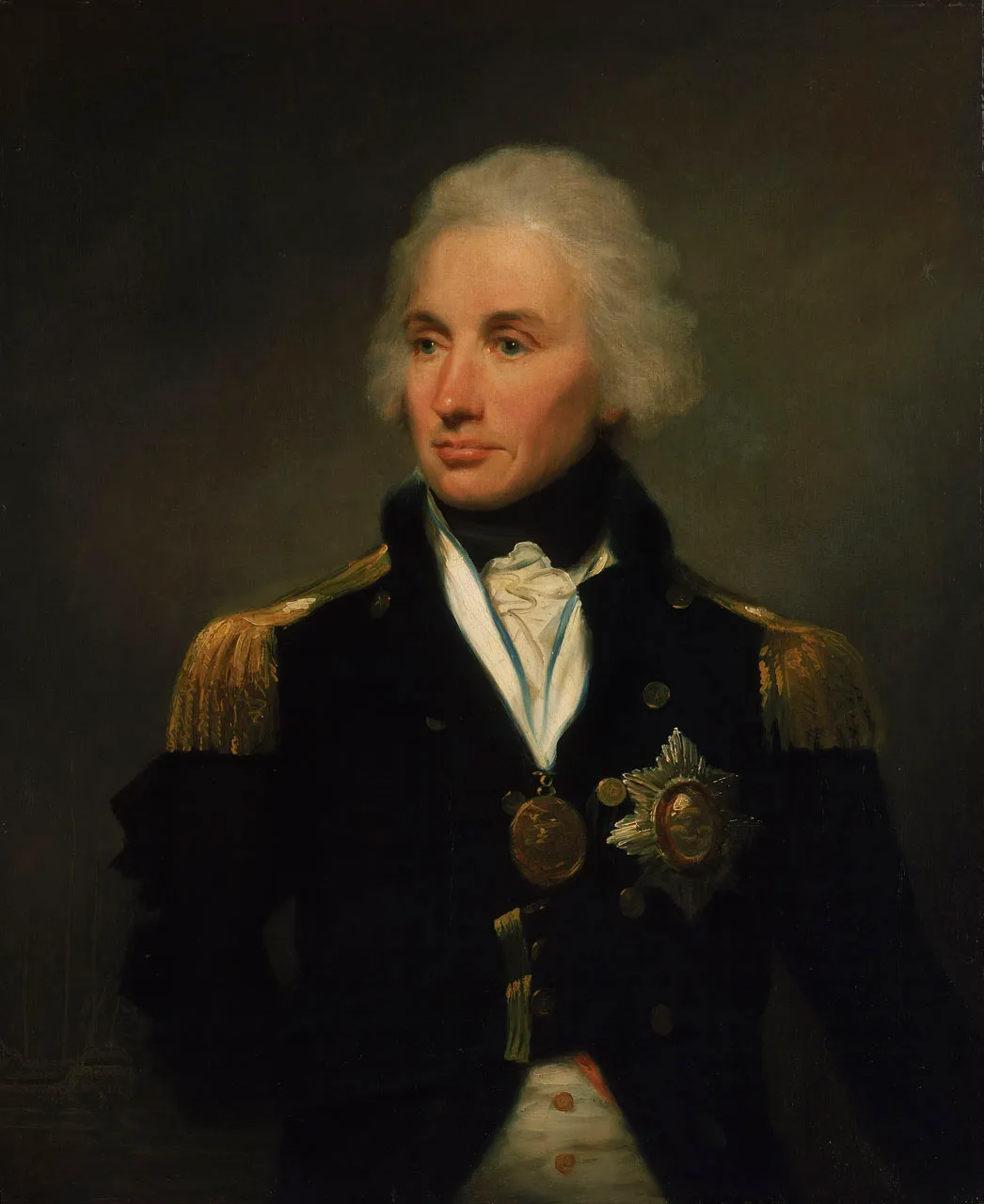 Horatio Nelson, portrait by Lemuel Francis AbbottWikimedia Commons, Lemuel Francis Abbott, Public domain (Vice-Admiral Horatio Nelson, 1758-1805, 1st Viscount Nelson.jpg)
On 16 September Napoleon orders the combined fleet into the Mediterranean to land troops at Naples, and he sends Admiral François Rosily to replace Villeneuve. Learning on 18 October that Rosily has reached Madrid, Villeneuve orders the fleet to sea. In light winds it takes most of 20 October to leave port. The 33 ships of the line set course for the Strait in three columns, and that evening, warned that British ships are following, Villeneuve orders them into a single line.
Sources
- Julian S. Corbett, The Campaign of Trafalgar (1910).
- Mark Adkin, The Trafalgar Companion (2005).
- Roy Adkins, Trafalgar: The Biography of a Battle (2004).
Prev: Mack surrenders at UlmNext: The approach