July 1813 to April 1814
Into France
After Vitoria the allies reach the Pyrenees in early July 1813 and lay siege to San Sebastián and Pamplona. On 11 July Napoleon gives Marshal Soult command of all French troops in Spain. Soult attacks through the passes of Maya and Roncesvalles on 25 July and comes within ten miles of Pamplona, but is repulsed at Sorauren on 28 and 30 July and falls back into France, having lost 1,313 killed, 8,582 wounded and 2,702 captured.
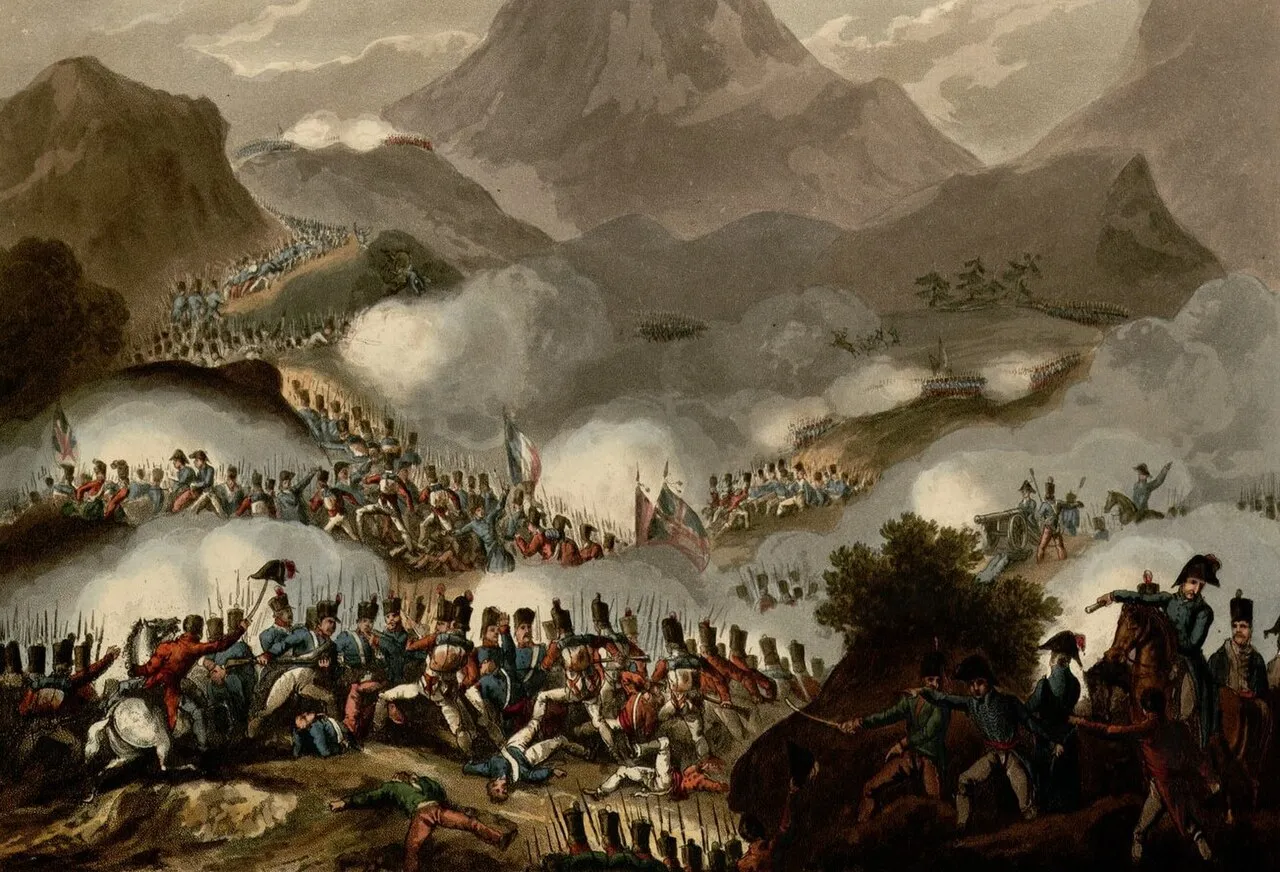 The Battle of the Pyrenees, 28 July 1813, print after William Heath, 1814 to 1815Wikimedia Commons, William Heath, Public domain (Battle of the Pyrenees, July 28th 1813 - Fonds Ancely - B315556101 A HEATH 035 (cropped).jpg)
The allies storm San Sebastián on 31 August and sack and burn the town, and its garrison holds out in the citadel until 8 September. On the day of the storm Soult tries to relieve the town and is beaten off at San Marcial by General Manuel Freire’s Spanish Army of Galicia. On 7 October Wellington crosses the Bidassoa into France in seven columns, one of them near Fuenterrabia where the French think the river cannot be crossed, and Pamplona surrenders on 31 October.
On 10 November Wellington attacks Soult’s three entrenched lines along the Nivelle and drives him back to Bayonne. From 9 to 13 December Soult attacks the allied army, divided by the river Nive, first on one bank and then on the other, and is held off. Wellington sends 25,000 Spanish soldiers back to Spain after their plundering in France.
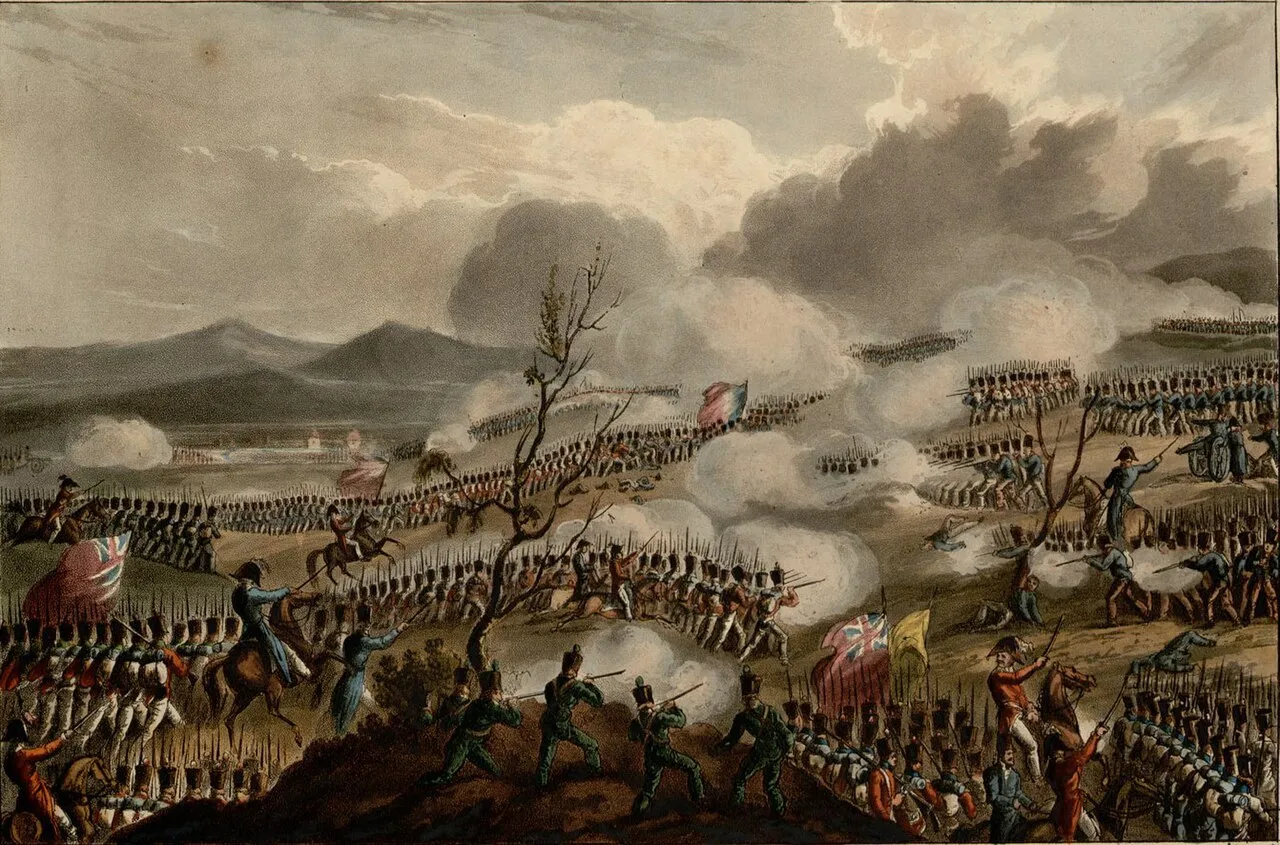 The Battle of the Nivelle, 10 November 1813, print after William Heath, 1814 to 1815Wikimedia Commons, William Heath, Public domain (Battle of Nivelle - November 10th 1813 - Fonds Ancely - B315556101 A HEATH 029.jpg)
Operations resume in February 1814. A landing at the mouth of the Adour opens the siege of Bayonne, and on 27 February Wellington defeats Soult at Orthez. Beresford enters Bordeaux on 12 March without resistance, and Soult falls back by Tarbes to Toulouse.
On 10 April Wellington attacks Toulouse with 49,446 men against Soult’s 42,043. Freire’s two Spanish divisions are thrown back twice from the Heights of Calvinet and Picton’s attacks on the canal bridges fail, but Beresford’s 4th and 6th Divisions, covered by Congreve rockets, take the southern end of the heights and the Calvinet redoubt, at a cost to the allies of 4,558 to 5,500 men against 2,700 to 3,236 French. Soult leaves the city on the evening of 11 April. As Wellington enters on 12 April, word arrives that Napoleon abdicated on 6 April, and Soult agrees to an armistice on 17 April.
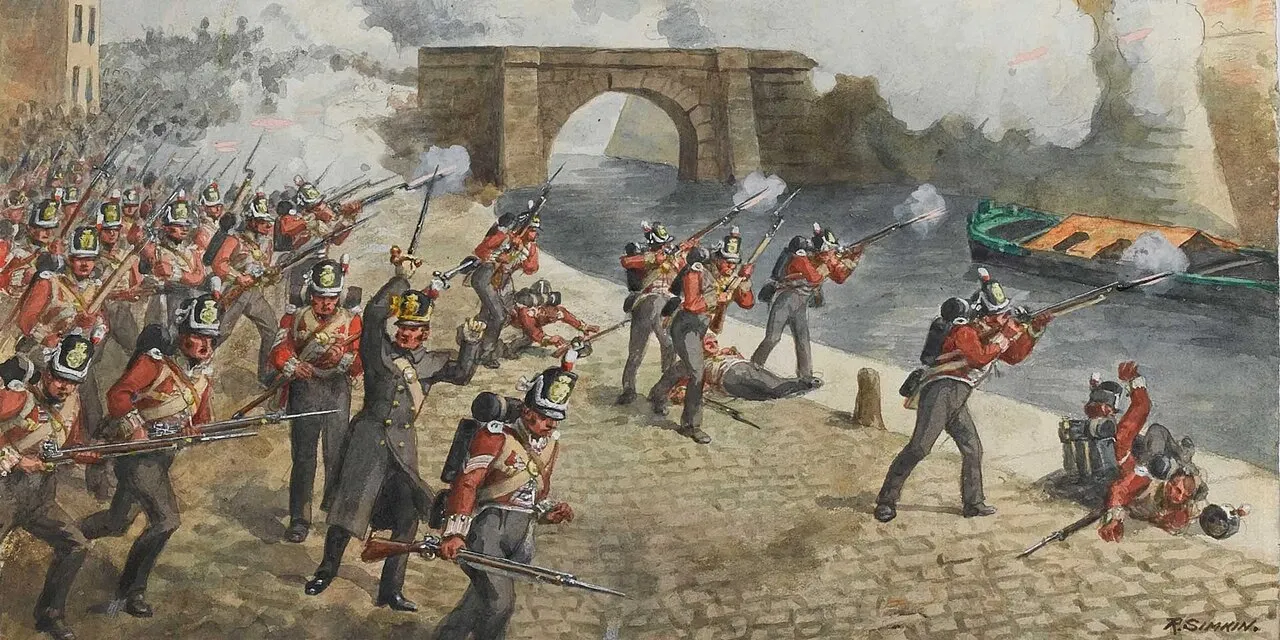 The 27th (Inniskilling) Regiment of Foot at Toulouse, painting by Richard Simkin, about 1900Wikimedia Commons, Richard Simkin, Public domain (The 27th (Inniskilling) Regiment of Foot at Toulouse, April 1814.jpg)
Sources
- Charles Oman, A History of the Peninsular War, vol. VII (1930).
- John Fortescue, A History of the British Army, vol. X (1920).
- David Gates, The Spanish Ulcer: A History of the Peninsular War (2001).
Prev: The routNext: Austria attacks