June to September 1793
Toulon goes over to the Allies
After the arrest of the Girondin deputies on 2 June 1793, Lyon, Avignon, Nîmes and Marseille rise against the Convention. In Toulon the Federalists expel the Jacobins and are soon supplanted by royalists. When the Republic retakes Marseille, the royalist commander Xavier Lebret d’Imbert asks the Coalition for help. On 28 August an Anglo-Spanish fleet under Admiral Samuel Hood and Admiral Juan de Lángara arrives with 13,000 British, Spanish, Neapolitan and Sardinian troops.
D’Imbert hands over the port, its arsenal and the 26 ships of the line based there, about a third of the French navy, and on 1 October proclaims the eight-year-old Louis XVII king. The Allies hold the coastal forts around the inner and outer roadsteads and the heights of Mont Faron north of the city, and their fleet holds the sea. But their troops speak different languages, answer to separate governments and are too few for the long perimeter.
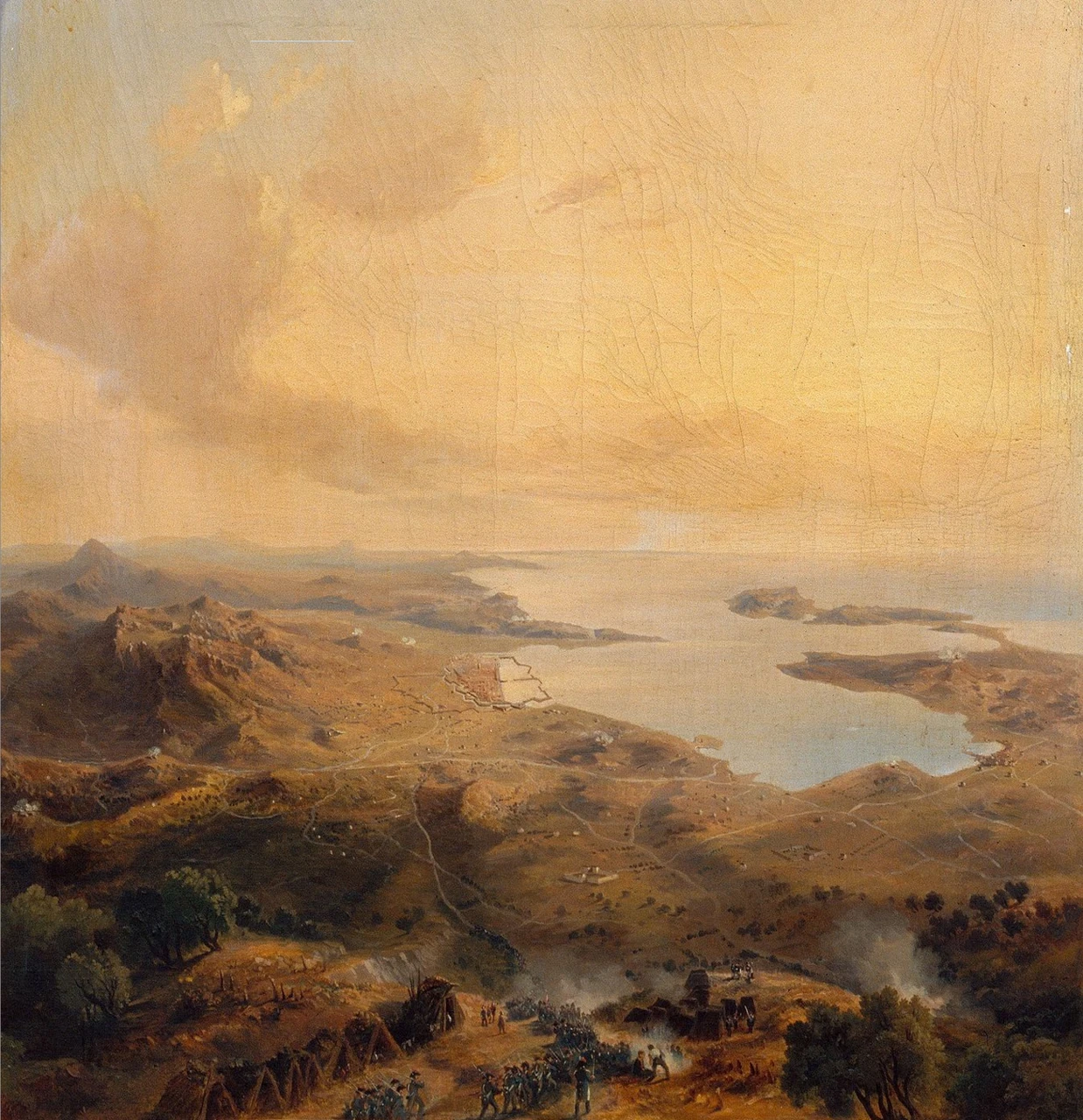 The siege of Toulon, painting by Jean-Antoine-Siméon Fort, 19th centuryWikimedia Commons, Jean-Antoine-Siméon Fort, Public domain (Siège de Toulon.PNG)
Republican troops under General Jean François Carteaux reach Toulon from Marseille on 8 September and take position around Ollioules and La Seyne on the west side. General Jean François Cornu de La Poype with 6,000 men of the Army of Italy holds the east, facing Mont Faron. When the commander of the artillery is wounded at Ollioules, the representatives of the Convention, Augustin Robespierre and Antoine Christophe Saliceti, place a young captain in his post: Napoleon Bonaparte, aged 24, a Corsican like Saliceti, whose family fled the island for Toulon in June.
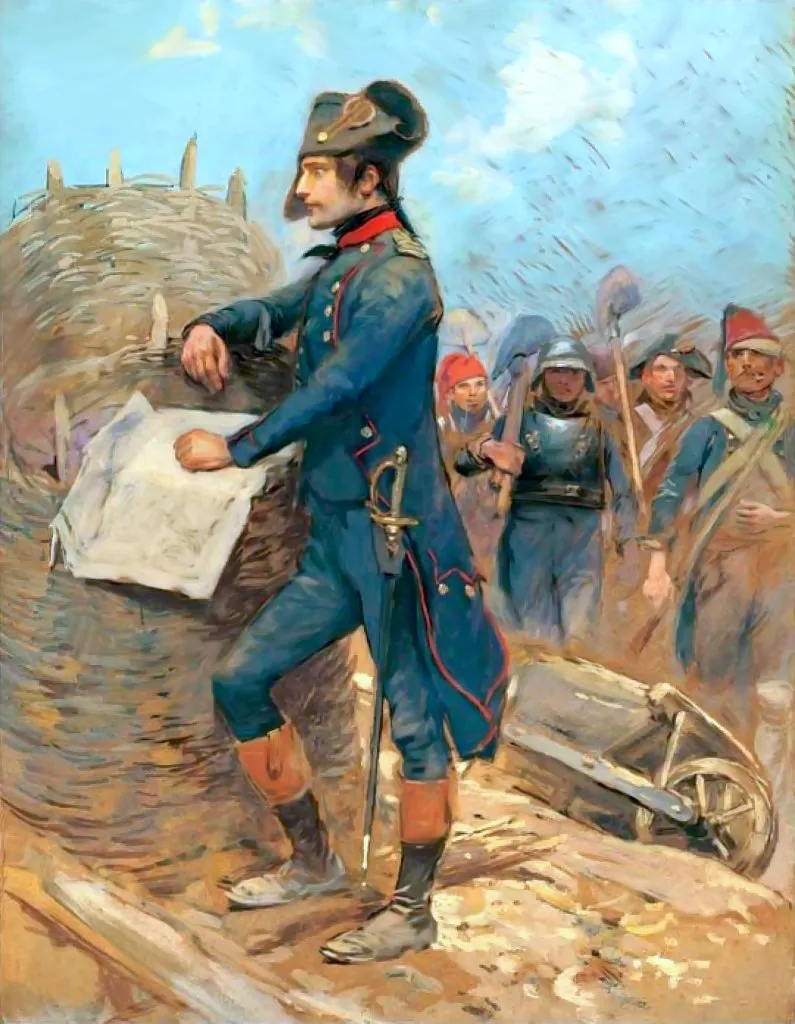 Bonaparte at the siege of Toulon, painting by Édouard Detaille, 19th century, Musée de l’ArméeWikimedia Commons, Édouard Detaille, Public domain (Napoleon à Toulon par Edouard Detaille.jpg)
Bonaparte proposes to take the forts of l’Éguillette and Balaguier on the heights of Le Caire, from where guns can fire on the narrow passage between the inner and outer roadsteads and force the Allied fleet to leave. Carteaux sends only a weak detachment under General Henri François Delaborde, which fails on 22 September. The Allies then fortify the summit of the hill with Fort Mulgrave, which the French call “Little Gibraltar”.
Sources
- Bernard Ireland, The Fall of Toulon: The Last Opportunity to Defeat the French Revolution (2005).
- Robert Forczyk, Toulon 1793: Napoleon’s First Great Victory (2005).
- Andrew Roberts, Napoleon: A Life (2014).
Prev: The First Coalition and the TerrorNext: Bonaparte's batteries