1798 – 1799
The Second Coalition
The expedition to Egypt and the seizure of Malta, whose Knights had made Tsar Paul I their protector, help bring a new coalition together. Naples allies with Austria in May 1798 and with Russia in November, and Russia allies with the Ottoman Empire and Britain in December. Prussia stays neutral, and Britain and Austria fight side by side without a formal treaty. On 29 November a Neapolitan army under the Austrian general Karl Mack occupies Rome, but the French drive it back and under Jean-Étienne Championnet take Naples in January 1799.
War with Austria resumes in March 1799. Archduke Charles defeats Jourdan at Ostrach and at Stockach on 25 March and forces him to withdraw. In Italy the Russian field marshal Alexander Suvorov, commanding the Austrian and Russian armies, defeats Moreau at Cassano on 27 April and enters Milan two days later. He beats Macdonald, coming north from Naples, at the Trebbia in June and Joubert, who is killed, at Novi on 15 August, and by the end of the year the French hold little in Italy beyond Genoa.
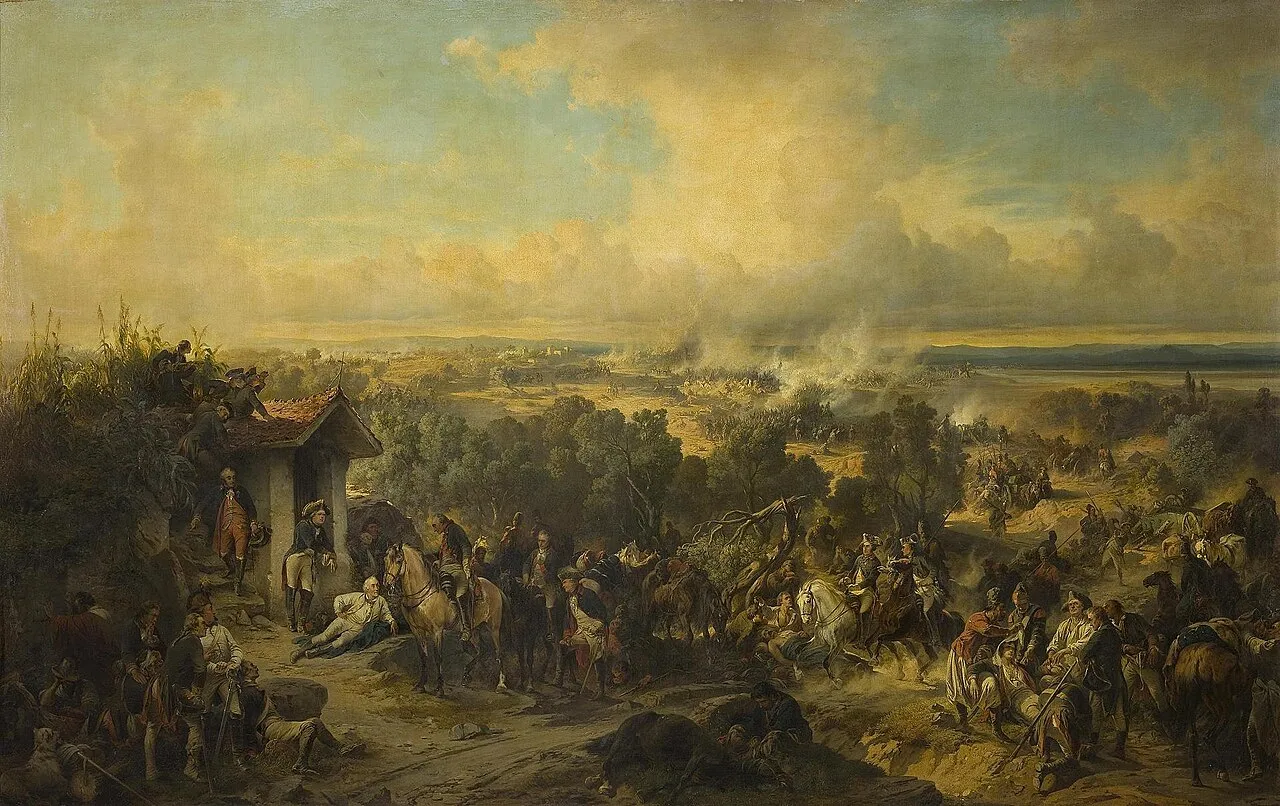 Suvorov at the Battle of the Trebbia, painting by Alexander von Kotzebue, 1857Wikimedia Commons, Alexander von Kotzebue, Public domain (Suvorov Trebbia.jpg)
In Switzerland, Masséna loses the first battle of Zurich in June and holds a line behind the Limmat and the Aare. When Archduke Charles leaves for Germany, Masséna attacks the Russian corps of Alexander Korsakov at Zurich on 25 and 26 September and drives it out, while Soult defeats the Austrians of Friedrich von Hotze on the Linth, where Hotze is killed. Suvorov, crossing the St Gotthard from Italy to join Korsakov, arrives too late and leads his army east over the mountains to safety.
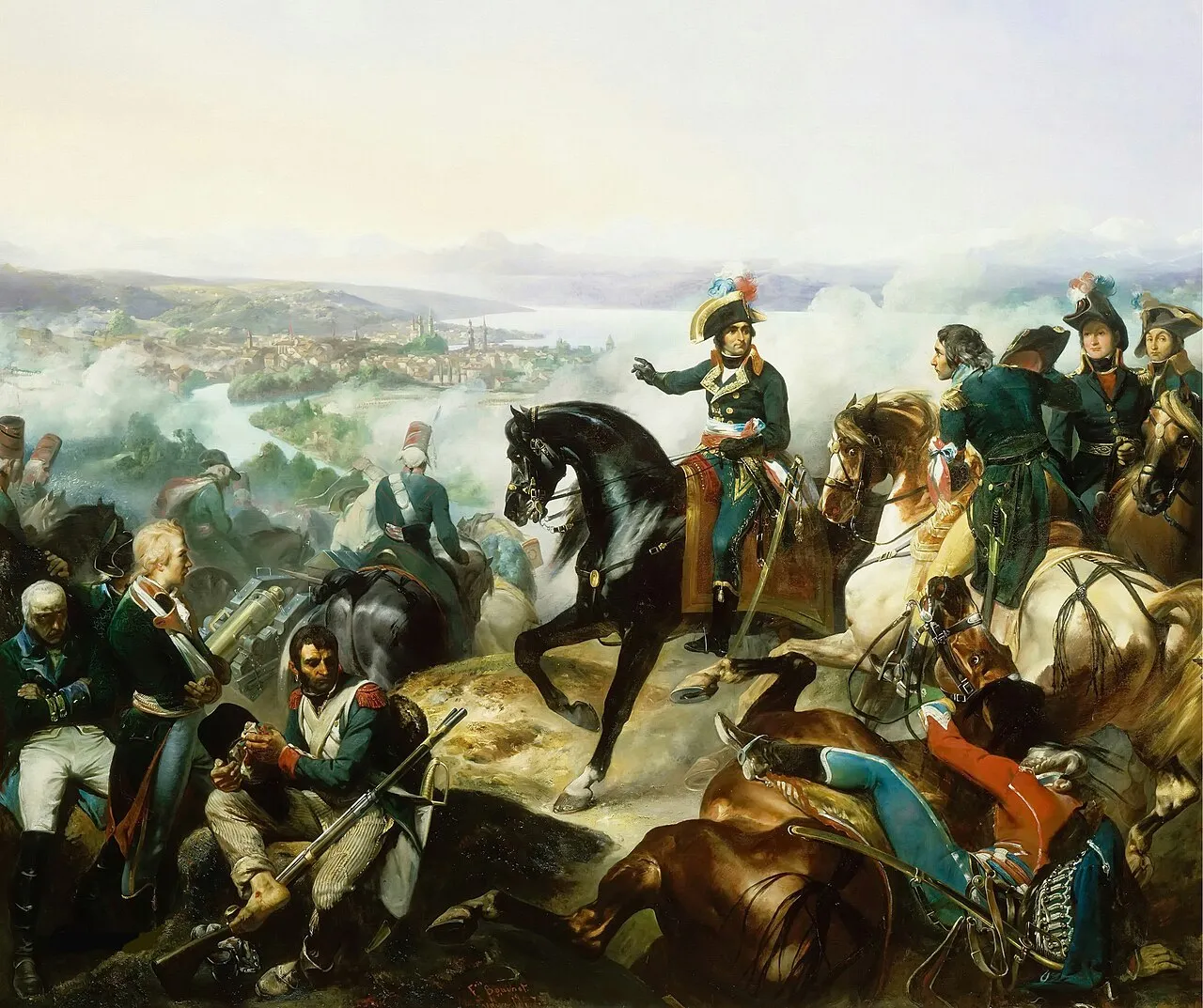 Masséna at the Second Battle of Zurich, painting by François Bouchot, 1835Wikimedia Commons, François Bouchot, Public domain (Battle of Zurich.jpg)
On 27 August an Anglo-Russian army under the Duke of York lands in North Holland, and the Batavian fleet surrenders without firing a shot. After a defeat at Castricum the allies agree at Alkmaar on 18 October to leave, and they are gone by 19 November. Angered by Austria and Britain, Paul I withdraws Russia from the coalition.
Sources
- Timothy Blanning, The French Revolutionary Wars (1996).
- Christopher Duffy, Eagles over the Alps: Suvorov in Italy and Switzerland, 1799 (1999).
- Paul W. Schroeder, The Transformation of European Politics, 1763–1848 (1994).
Prev: Abukir and the end in EgyptNext: Brumaire