April to 2 December 1800
The Rhine and the Inn
From April 1800 Moreau’s Army of the Rhine, about 108,000 men in the field, crosses the Rhine near Basel and drives the Austrian army of Pál Kray east. It fights at Engen and Stockach on 3 May, at Messkirch on 4 and 5 May and at Biberach on 9 May, and on 19 June wins at Höchstädt on the Danube, which forces Kray out of Ulm and back into Bavaria. On 15 July the two sides agree an armistice at Parsdorf.
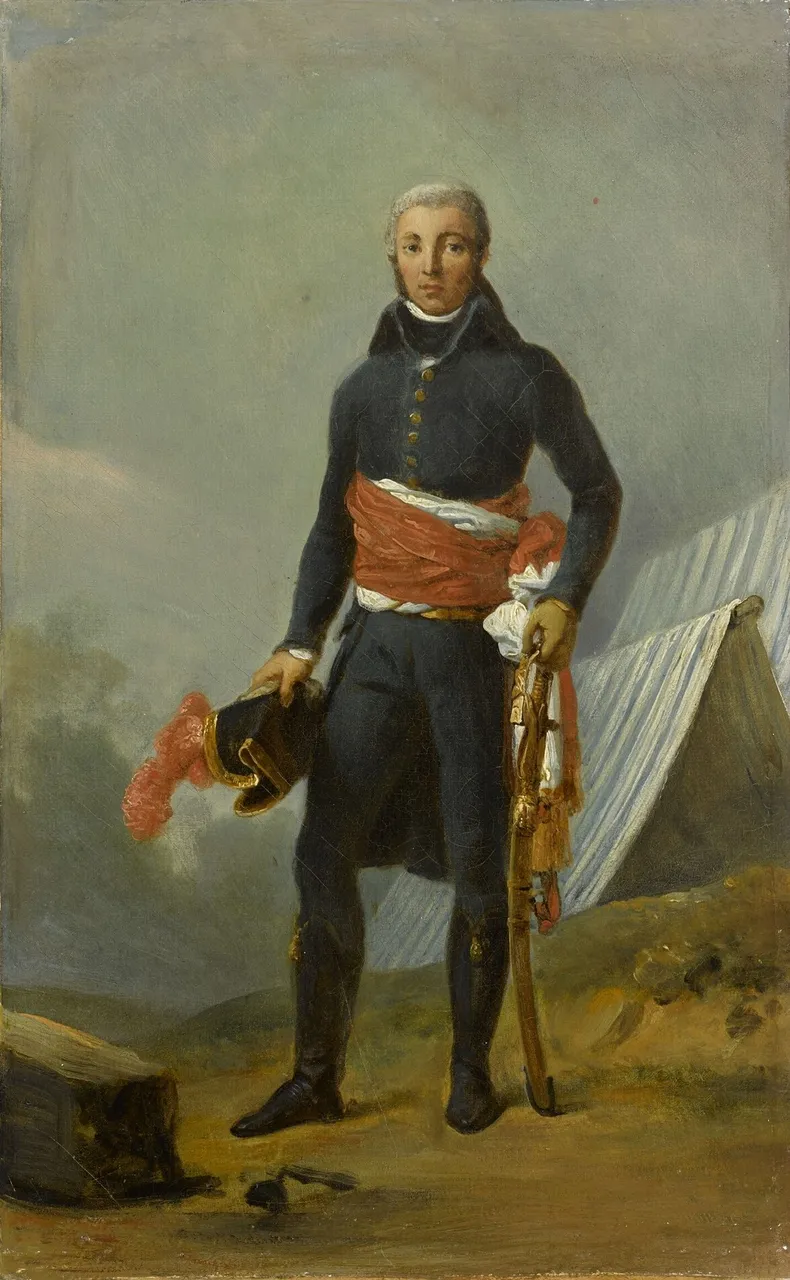 Jean Victor Moreau, portrait by François Gérard, about 1797Wikimedia Commons, François Gérard, Public domain (Général JEAN VICTOR MOREAU.jpg)
Emperor Francis II removes Kray and gives the command to his 18-year-old brother Archduke John, with Franz von Lauer as his adviser and Franz von Weyrother as chief of staff. The armistice lapses on 12 November, and the Austrians advance from the Inn towards Munich. On 1 December they drive back part of Grenier’s wing at Ampfing, losing 3,000 men to the French 1,700.
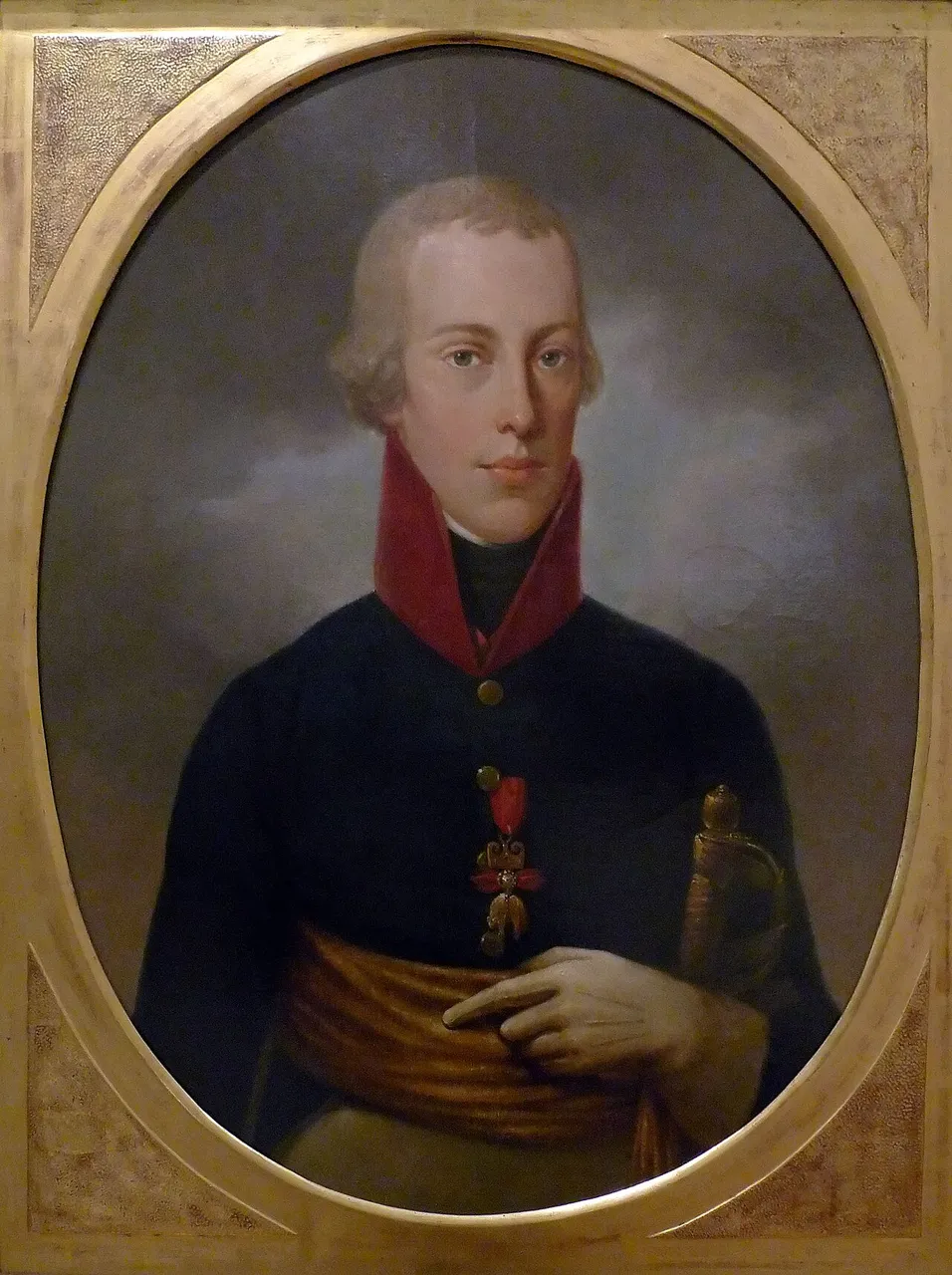 Archduke John of Austria at the age of about 18, portrait by an unknown painterWikimedia Commons, anonymous / Unidentified painter, Public domain (Painting of Archduke Johann of Austria at 18 years of age.jpg)
When Grenier abandons Haag the next day, Archduke John and Weyrother believe the French are retreating and order a pursuit. Moreau decides to fight on the open ground at Hohenlinden, 33 km east of Munich, which the Austrians can reach only through the forest to the east. He holds the plain with four divisions under Legrand, Bastoul, Ney and Grouchy, and keeps those of Richepanse and Decaen to the south near Ebersberg, with orders for Richepanse to march north-east against the Austrian flank.
Sources
- James R. Arnold, Marengo & Hohenlinden: Napoleon’s Rise to Power (2005).
- David G. Chandler, Dictionary of the Napoleonic Wars (1979).
- Gaston Bodart, Militär-historisches Kriegs-Lexikon (1908).
Prev: Desaix and KellermannNext: Out of the forest