June 1794 to January 1795
Fleurus and the Low Countries
In May 1794 Jean-Baptiste Jourdan receives command of about 96,000 men drawn from the Army of the Ardennes and parts of the Armies of the North and the Moselle. His task is to take the fortress of Charleroi on the north bank of the Sambre, which three earlier attempts have failed to do. Jourdan crosses the river for the fifth time on 18 June and lays siege to Charleroi again, and on 25 June its garrison of 2,800 surrenders.
On 26 June the Prince of Coburg attacks Jourdan’s entrenched line around Fleurus to relieve the fortress, with 45,000 infantry, 14,000 cavalry and 111 guns, against about 75,000 French. His main blows fall on both French flanks, and the Allied columns gain ground through the morning. Kléber, Lefebvre, Marceau and Championnet hold or retake their positions, and in the late afternoon Coburg orders his columns to withdraw. Each side loses about 5,000 men by the traditional figures. Above the field the French observation balloon l’Entreprenant reports the Austrian movements, the first use of aerial reconnaissance in battle.
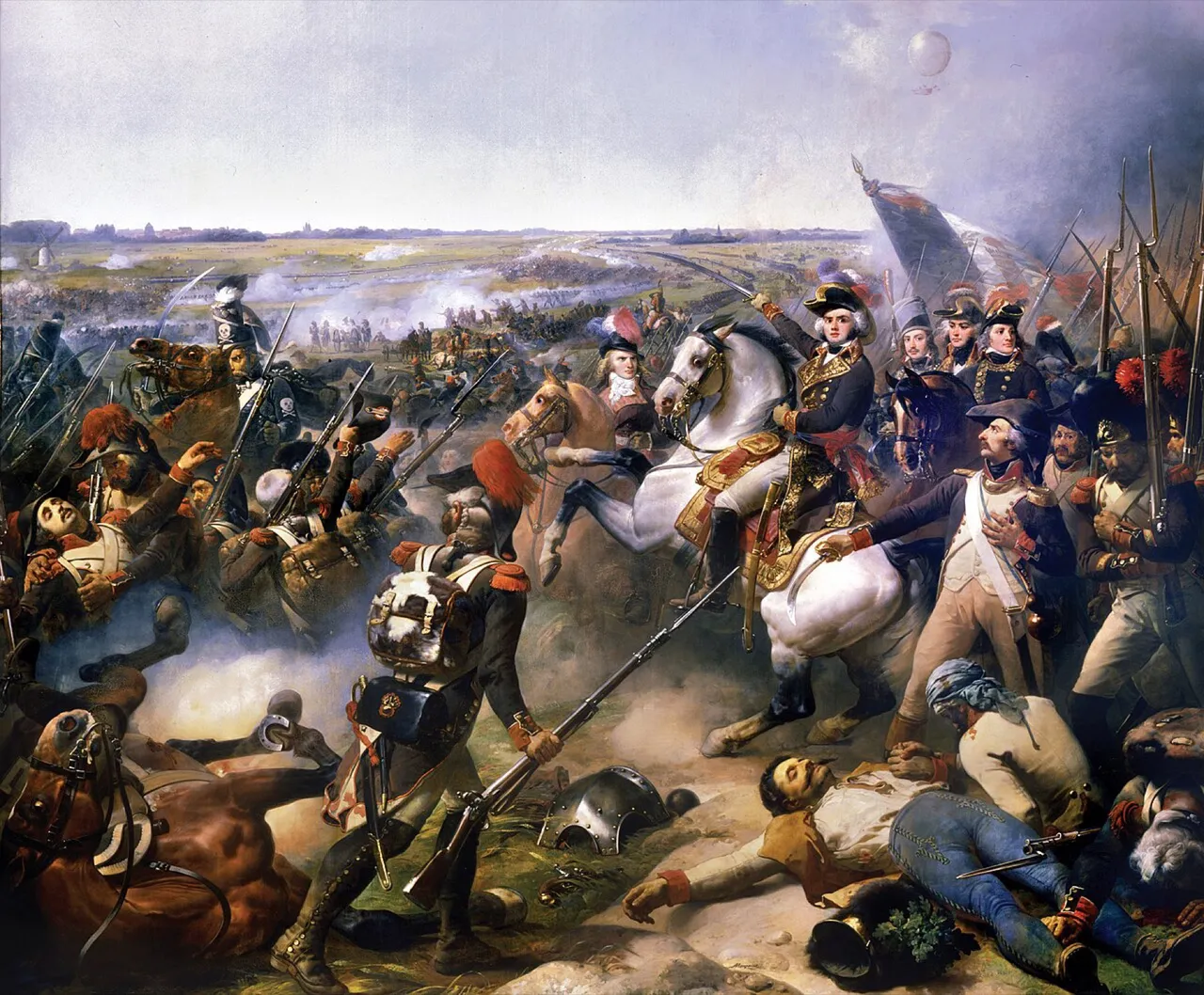 The Battle of Fleurus, 26 June 1794, painting by Jean-Baptiste Mauzaisse, 1837Wikimedia Commons, Jean-Baptiste Mauzaisse, Public domain (Battle of Fleurus, 26 June 1794.jpg)
After Fleurus Jourdan’s force becomes the Army of Sambre and Meuse. Pichegru, commanding on the northern front, enters Brussels on 11 July and takes Antwerp on 27 July, while Jourdan occupies Namur on 17 July and Liège on 27 July. Coburg crosses the Meuse at Maastricht into Germany on 24 July, and the British and Dutch withdraw north to defend the Dutch Republic.
In Paris the victory weakens the case for the Terror. On 27 July Robespierre is arrested, and he is executed the next day with Louis Antoine de Saint-Just, who was with Jourdan’s army at Fleurus as representative of the Convention. In the winter the French overrun the Dutch Republic, and on 18 January 1795 the Batavian Revolution in Amsterdam replaces it with the Batavian Republic, allied to France.
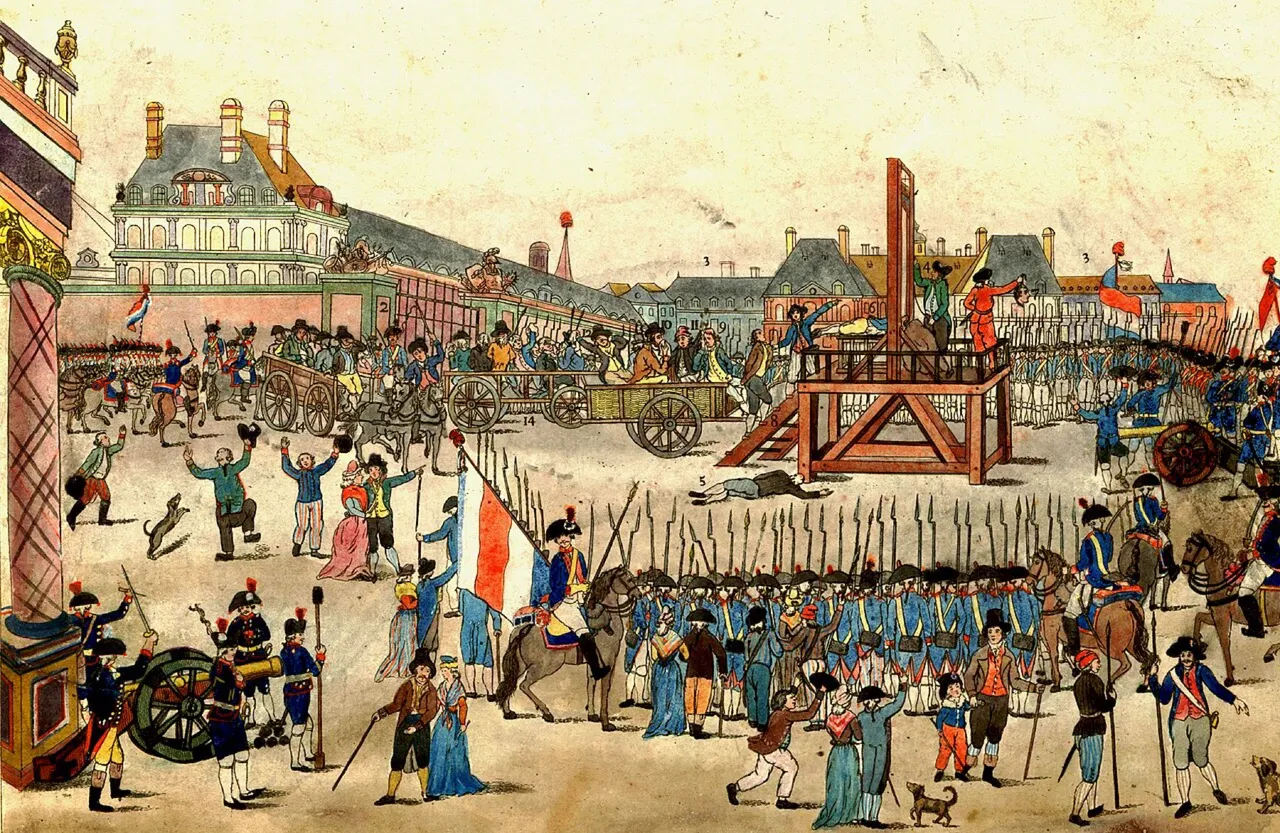 The execution of Robespierre and his supporters on 28 July 1794, print of the timeWikimedia Commons, unknown author, Public domain (Execution robespierre, saint just....jpg)
Sources
- John William Fortescue, British Campaigns in Flanders, 1690–1794 (1918).
- Gunther E. Rothenberg, The Art of Warfare in the Age of Napoleon (1980).
- Digby Smith, The Napoleonic Wars Data Book (1998).
Prev: The Allies leave ToulonNext: The Peace of Basel and the Directory