July 1799 to September 1801
Abukir and the end in Egypt
On 14 July 1799 an Anglo-Ottoman fleet lands an Ottoman army under Mustafa Pasha at Abukir, which takes the castle and entrenches across the peninsula in two lines. Bonaparte gathers about 10,000 men at Damanhur and attacks on 25 July. Lanusse breaks the unfinished first line, and when the Ottomans leave the second to behead the French dead, Murat charges through a gap and captures Mustafa Pasha in his tent. Thousands of Ottoman soldiers drown trying to swim to the ships, and the garrison of the castle surrenders on 2 August.
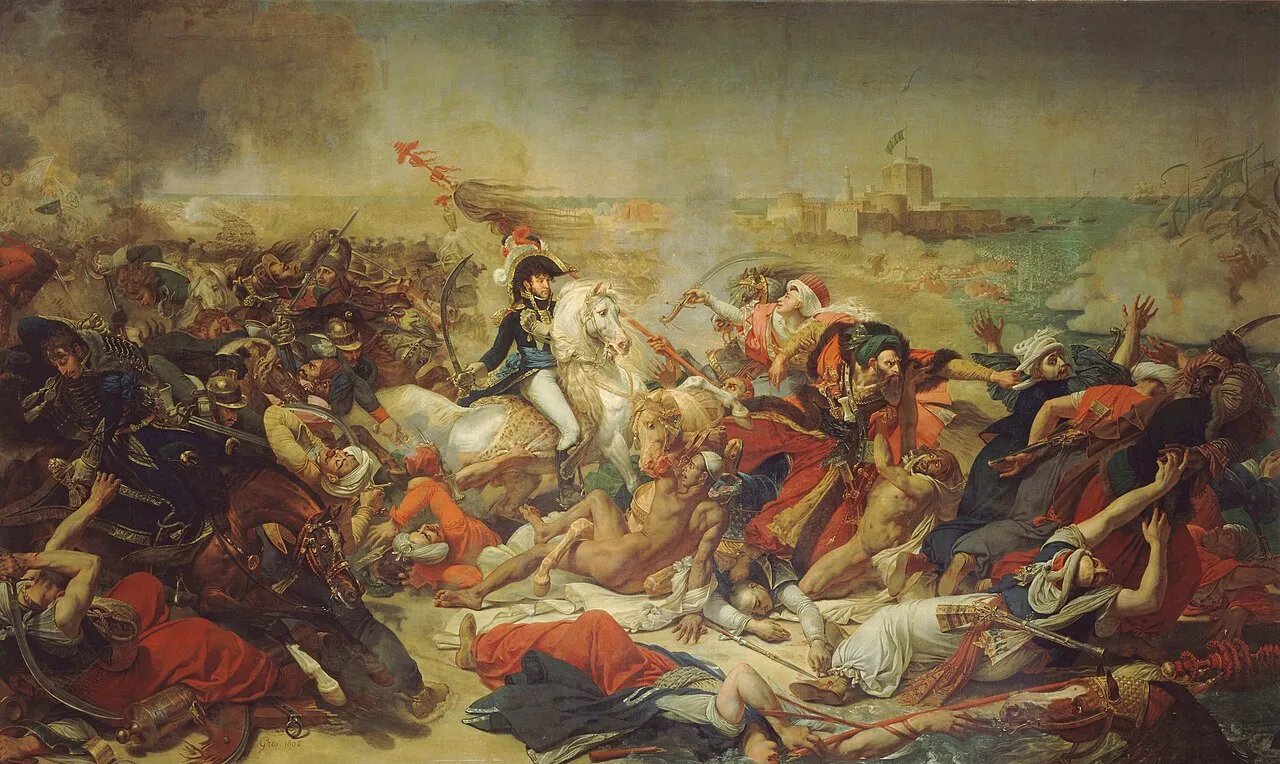 Murat at the Battle of Abukir, 25 July 1799, painting by Antoine-Jean Gros, 1807Wikimedia Commons, Antoine-Jean Gros, Public domain (Antoine-Jean Gros - Bataille d'Aboukir, 25 juillet 1799 - Google Art Project.jpg)
From newspapers that Sidney Smith passes to French envoys during an exchange of prisoners, Bonaparte learns of the coalition’s victories in Italy and the crisis in France. On 23 August he sails from Alexandria in the frigate Muiron with Berthier, Murat, Lannes and a few of the scholars, and leaves the command to Kléber in a letter.
On 24 January 1800 Kléber signs the Convention of El Arish with the grand vizier Kör Yusuf Ziyaüddin Pasha in Smith’s presence, allowing the army to return to France. The British government accepts nothing less than surrender, and on 20 March Kléber defeats the grand vizier’s much larger army at Heliopolis and puts down a second revolt in Cairo. On 14 June he is stabbed to death in his garden in Cairo by Suleiman al-Halabi, a Syrian student, and Jacques-François Menou takes command.
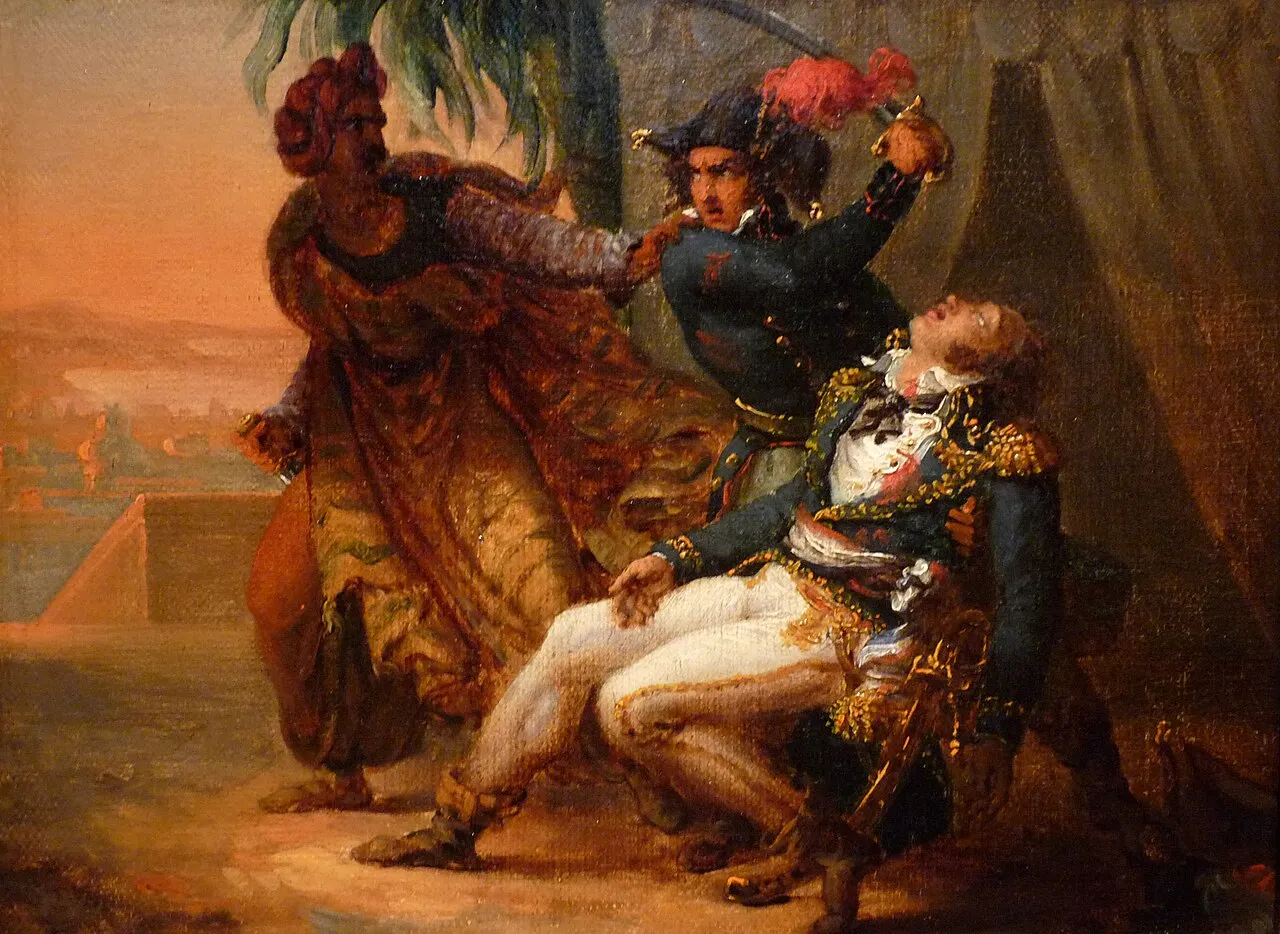 The assassination of Kléber in Cairo, painting in the Musée historique de StrasbourgWikimedia Commons, Ji-Elle, CC BY-SA 3.0 (Musée historique de Strasbourg-Assassinat de Kléber (cropped).jpg)
On 8 March 1801 a British army under Sir Ralph Abercromby lands at Abukir. It defeats Menou outside Alexandria on 21 March, where Abercromby is mortally wounded. British and Ottoman troops take Rosetta and then Cairo, where General Augustin Belliard surrenders with 13,000 men on 27 June. Menou surrenders Alexandria on 2 September, the army is shipped to France in British ships, and the antiquities the French collected, among them the Rosetta Stone found in July 1799, go to Britain.
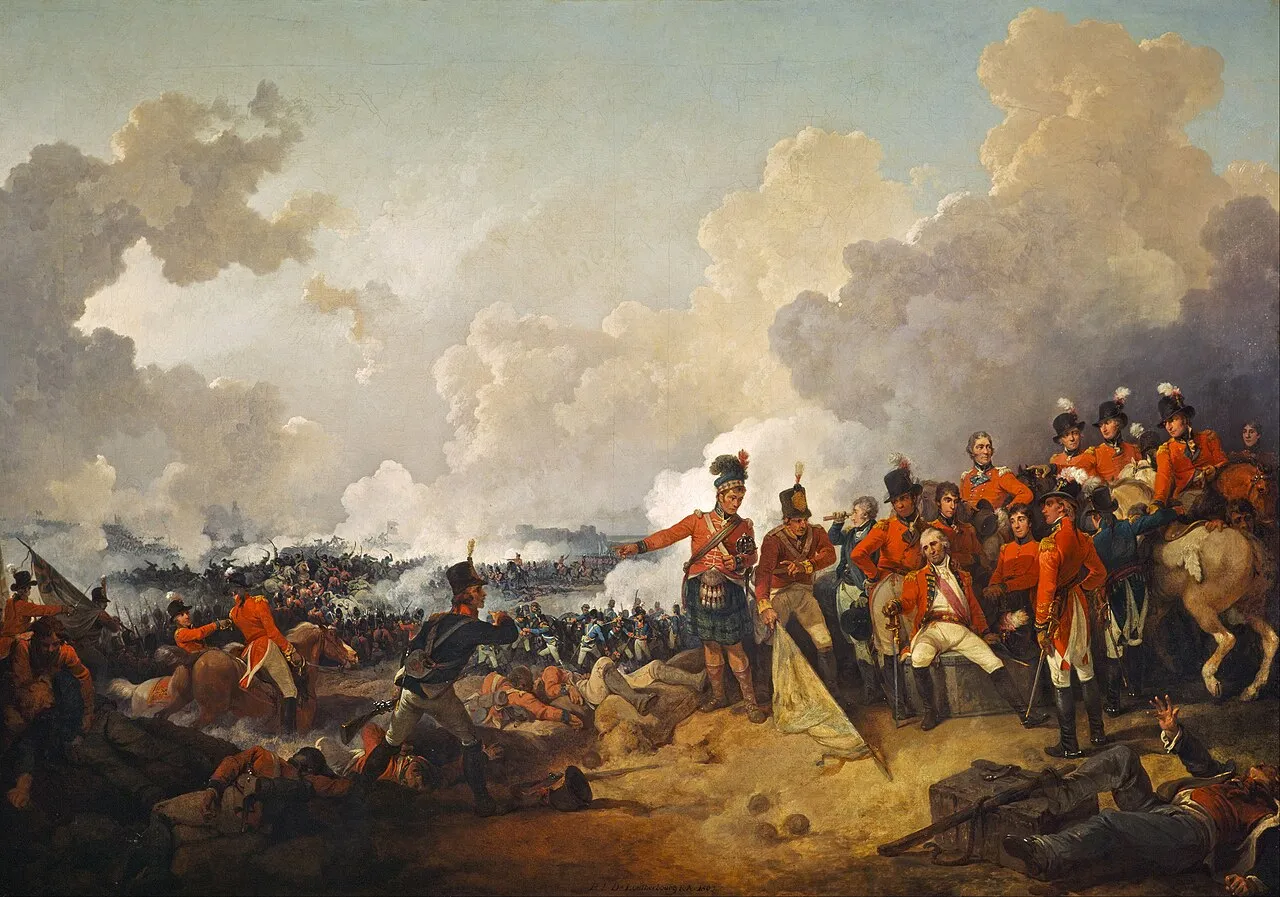 The Battle of Alexandria, 21 March 1801, painting by Philip James de Loutherbourg, 1802Wikimedia Commons, Philip James de Loutherbourg, Public domain (Philip James de Loutherbourg - The Battle of Alexandria, 21 March 1801 - Google Art Project.jpg)
Sources
- Paul Strathern, Napoleon in Egypt (2008).
- Juan Cole, Napoleon’s Egypt: Invading the Middle East (2007).
- Piers Mackesy, British Victory in Egypt, 1801 (2010).
Prev: The retreat to EgyptNext: The Second Coalition