June to September 1813
The armistice and Dresden
On 4 June 1813 both sides agree the Armistice of Pläswitz, later extended to 10 August. Napoleon wants time to rebuild his cavalry. The allies use it to win Austria: on 27 June the Austrian foreign minister Klemens von Metternich signs the Treaty of Reichenbach, by which Austria joins the allies if Napoleon does not accept its terms by a set day. Britain pays Russia and Prussia subsidies of seven million pounds.
At Trachenberg in Silesia the Tsar, the King of Prussia and Crown Prince Charles John of Sweden, the former French marshal Bernadotte, agree a common plan. Three armies are to avoid battle with Napoleon himself and defeat his marshals one at a time: the Army of the North under Charles John around Berlin, 135,000 men, the Army of Silesia under Blücher, 95,000, and the Army of Bohemia under the Austrian field marshal Karl von Schwarzenberg, about 225,000. Napoleon does not meet the Austrian terms, and Austria declares war on 12 August.
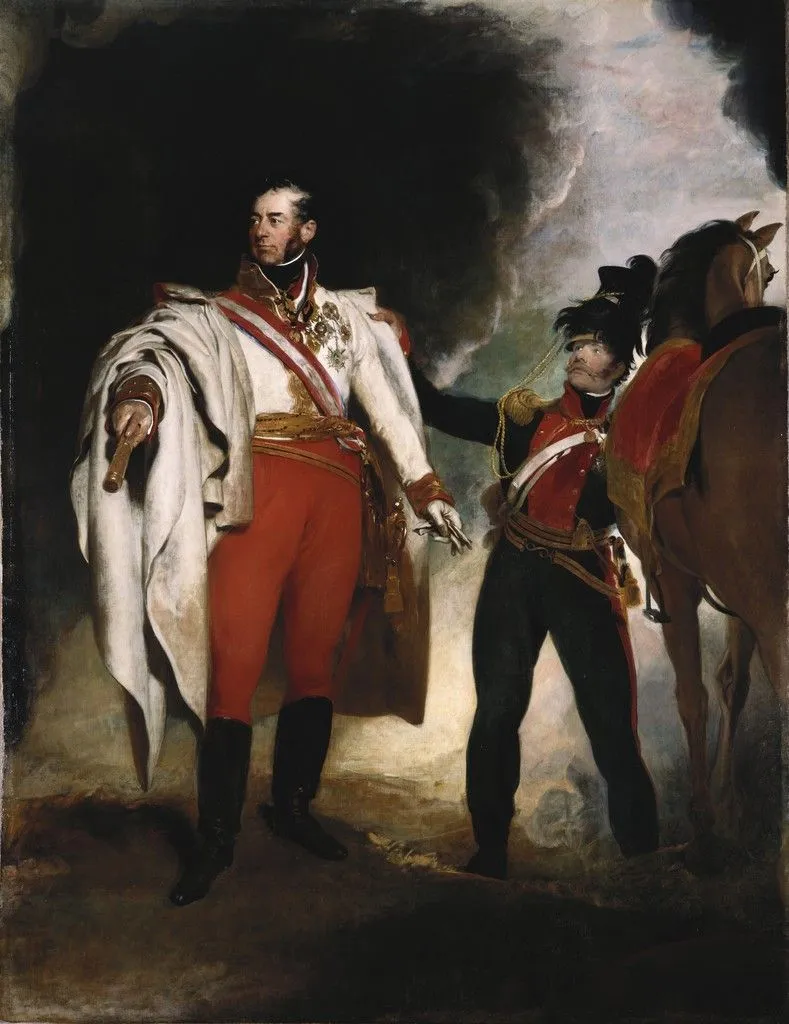 Field Marshal Karl Philipp, Prince of Schwarzenberg, painting by Thomas Lawrence, 1819Wikimedia Commons, Thomas Lawrence, Public domain (Prince Schwarzenberg.jpg)
Napoleon sends Oudinot against Berlin, moves against Blücher in Silesia and leaves Saint-Cyr with about 20,000 French and Saxons in Dresden. On 26 August Schwarzenberg attacks the city from the south with over 200,000 men. Napoleon arrives the same morning with the Guard and Murat's cavalry after a forced march of 140 km in three days, and his counter-attack at 17:30 retakes the suburbs. On 27 August, in heavy rain, Murat's cuirassiers cut off the Austrian left wing beyond the flooded Weisseritz, where wet powder keeps the muskets from firing, and most of its battalions surrender.
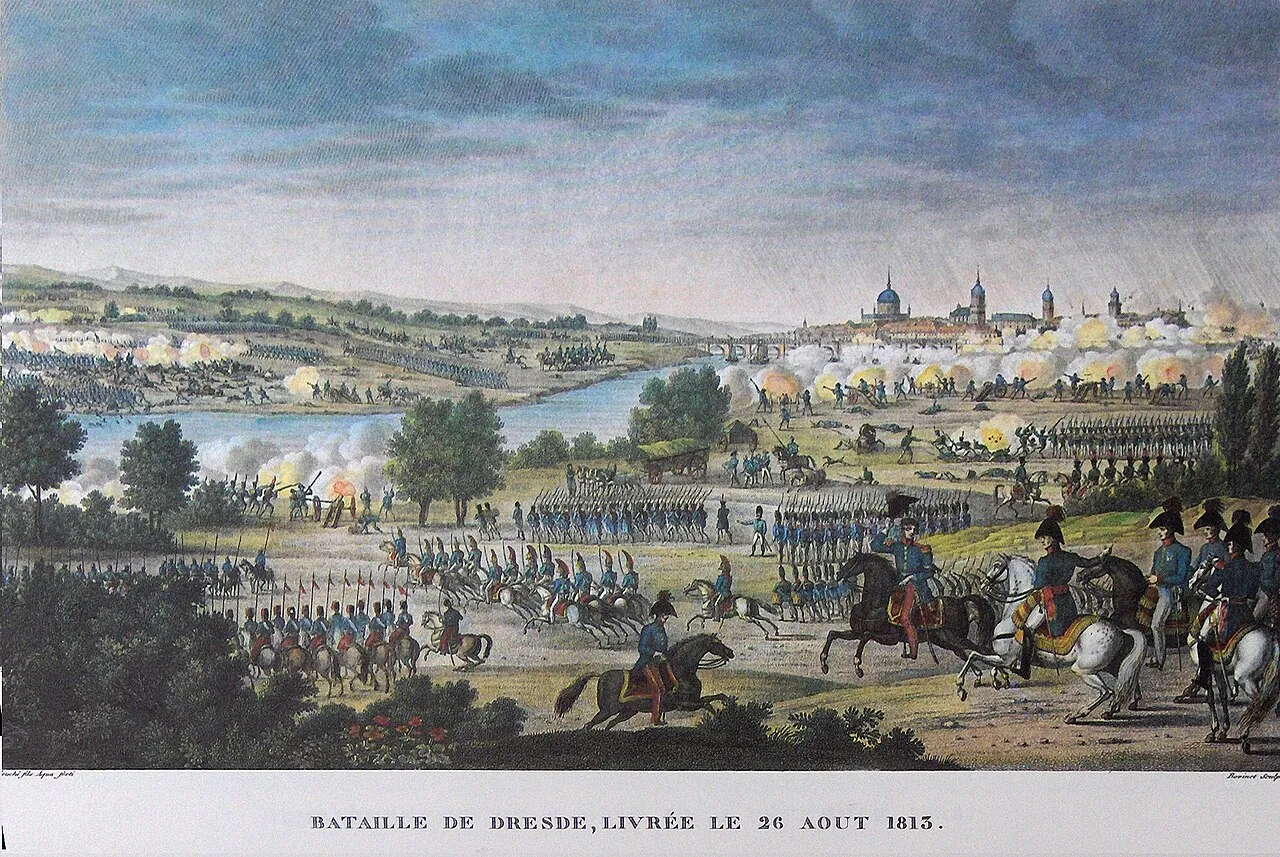 The battle of Dresden, coloured lithograph by Carle Vernet and Jacques François Swebach, early 19th centuryWikimedia Commons, Carle Vernet and Jacques François Swebach, Public domain (Napoleon.Dresden.jpg)
The allies lose 38,000 to 40,000 men and 40 guns, the French about 10,000. The former French general Jean Victor Moreau, an adviser to the Tsar, is mortally wounded beside him.
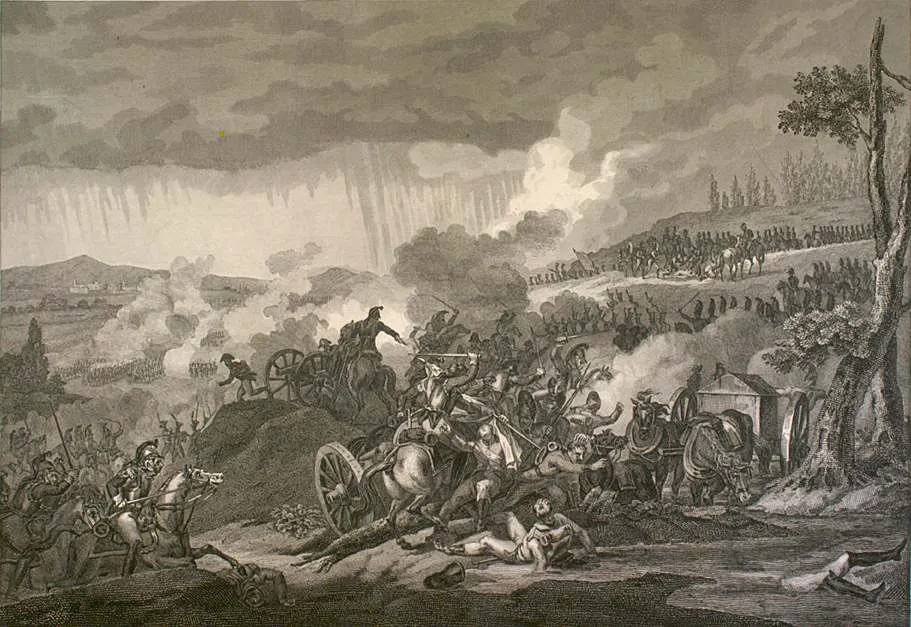 French cavalry attack at Dresden on 27 August 1813, engraving after Thomas Charles NaudetWikimedia Commons, Thomas Charles Naudet, Public domain (Battle of Dresden by Naudet.jpg)
Elsewhere the marshals are beaten. Charles John defeats Oudinot at Grossbeeren south of Berlin on 23 August, and Blücher defeats Macdonald on the Katzbach on 26 August. Vandamme's I Corps, sent over the mountains to cut the allied retreat, is surrounded at Kulm on 29 and 30 August and surrenders. On 6 September Ney, sent against Berlin in turn, is defeated at Dennewitz.
Sources
- David G. Chandler, The Campaigns of Napoleon (1966).
- F. Loraine Petre, Napoleon’s Last Campaign in Germany, 1813 (1912).
- Michael V. Leggiere, Napoleon and the Struggle for Germany (2015).
Prev: Lützen and BautzenNext: The armies close on Leipzig